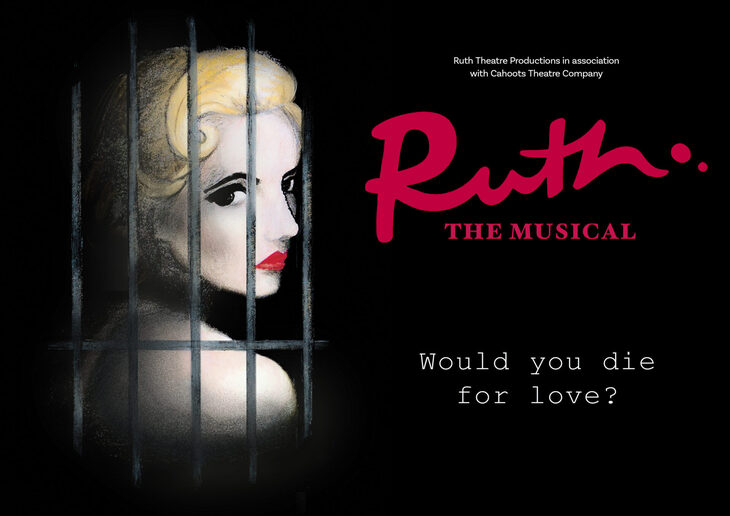
This March, the musical 'Ruth' debuts at Wilton's Music Hall, telling the story of Ruth Ellis — who shot dead her abusive lover David Blakely in 1955, and became the last woman to be executed in the UK. Here, Caroline Slocock explains why she wrote the musical, how she set about it, and if society might view Ruth Ellis differently were she convicted of the murder today.
I'd always been aware of Ruth Ellis' story and I loved the 1985 film Dance With A Stranger, but had no special interest beyond that.
And then one day, many years later, I was sitting and musing about ideas for a stage musical and out of nowhere Ruth Ellis popped into my head. It was one of those lightbulb moments. I could see it and hear it and imagine it so powerfully. I decided there and then that I would write a musical about her.
It's a very operatic story, it has all those big operatic themes — love, death, obsession. And there's a love triangle at the heart of it. It really is packed with drama. I felt it needed that deeper level of emotional storytelling that musicals can bring.
I have to say under normal circumstances I wouldn't rush to write a story about a murderess, but to me Ruth is such an intriguing character. I can empathise with her very easily. She wasn't born evil. She was just very damaged by her upbringing and was abused by men her whole life, and then with David Blakely's violence towards her things spiralled out of control. If she hadn't been given a gun and taught how to use it by a certain individual, I don't believe the murder would have occurred.
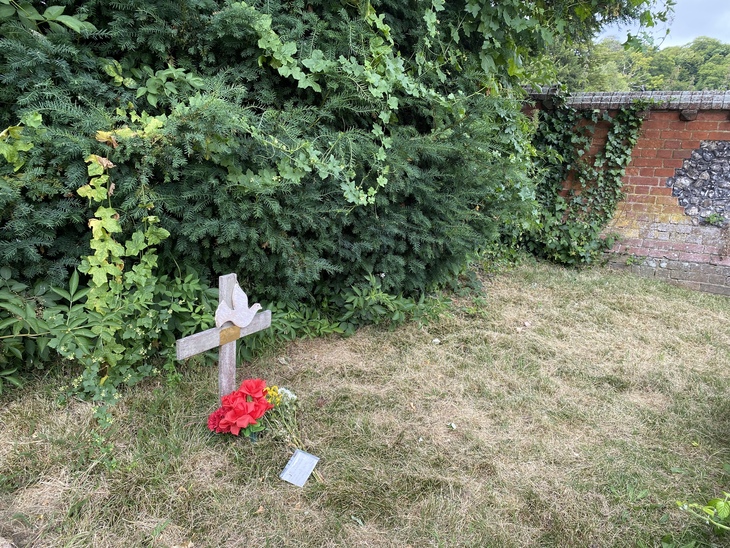
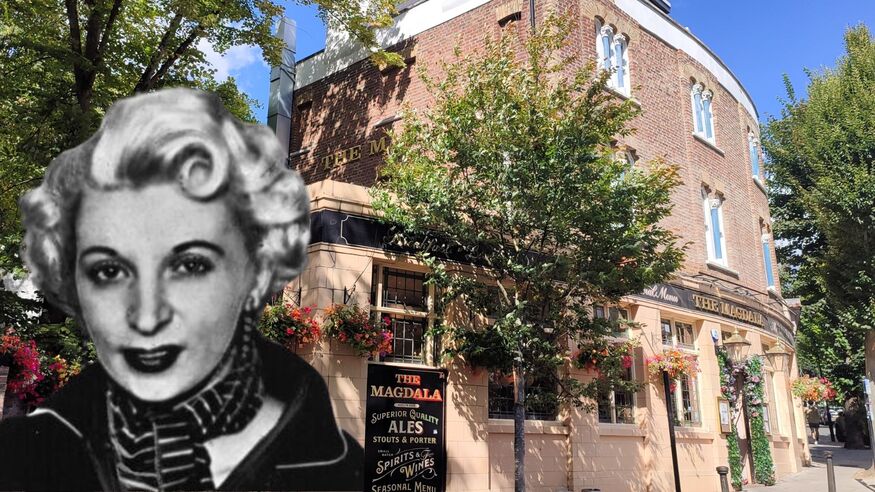
I did a very thorough tracing of her footsteps. It really helped me to get into her character. I went to the Magdala (the Hampstead pub where Ellis shot Blakely) and the house where Blakely was staying that fateful Easter weekend. Also the location in Knightsbridge where the nightclub Ruth worked at was, and her flat. I also visited her grave in Amersham. The emotions were rather overwhelming that day.
I've rooted as much of it as possible in fact. There are thing she says that she actually said in real life. But there is one major leap of imagination I've taken, something that definitely never happened, that is very much at the heart of the story. Not going to expand on that, it would give too much away!
There's a song in the courtroom scene which is particularly timely, given the current tawdry behaviour of certain high-ranking individuals. Ruth's fellow hostesses call out the judge and the barristers for their hypocrisy, singing: "You’re all hippo, hippo, down with the zippo, off with the suit and let it all rippo, gripping and whipping and nipping and dripping hypocrites." That's one of my favourites!
One of the things that always stays with me is Ruth's extraordinary courage and her immediate acknowledgement of her guilt. Three days after the shooting she wrote a letter to David's mother saying "I shall die loving your son". So even before the trial she had accepted that she would probably be sentenced to death and executed.
The defence of 'diminished responsibility' was introduced two years after her death, partly as a response to Ruth's case, so that's a pretty huge legacy. And in this era of #MeToo, viewing her story through the more informed lens of the present day, people's response to the case is very different. There's a greater understanding of what drives women to commit murder.
If Ruth Ellis shot David Blakely today, society would definitely view it differently. There are a number of cases that have been in the news, Sally Challen for one, of women who have murdered their partners after years of abuse, be it physical or mental abuse or coercive control, and the thinking around that whole subject has shifted massively. There's a deeper understanding now of the psychological aspect, although it's still a sad fact that a large proportion of the women in prison today are themselves victims of domestic abuse.
Ruth is on at Wilton's Music Hall, 18-28 March 2026.