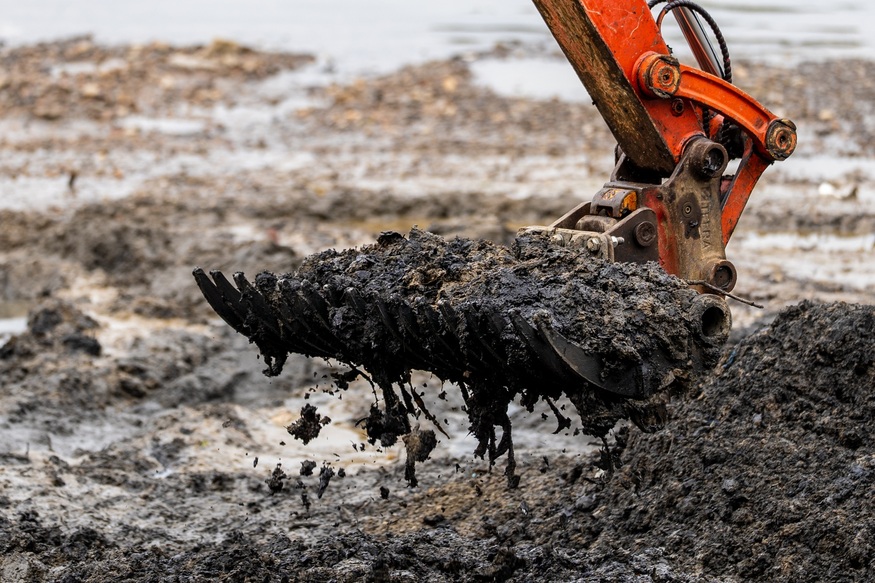
As estimated five million wet wipes have been cleared from a section of the Thames near Hammersmith Bridge.
Port of London Authority, in collaboration with Thames Water and charity Thames 21 spent three weeks clearing the man-made island of filth, which was the size of two tennis courts. Dubbed 'Wet Wipe Island', it consisted of roughly five million wipes, along with towels, scarves, trousers, a car's engine timing belt and false teeth.
"Wet wipes are commonly flushed down toilets, contributing to sewage blockages," says Thames 21, "Sewage-based wet wipes end up in the river after sewage overflows dump them into the water." Over time, the wet wipes are broken down into microplastics which pollute the water. The 'island' phenomenon is common in slow-moving parts of a river, where the waste gradually settles and builds, changing the shape of the river itself.
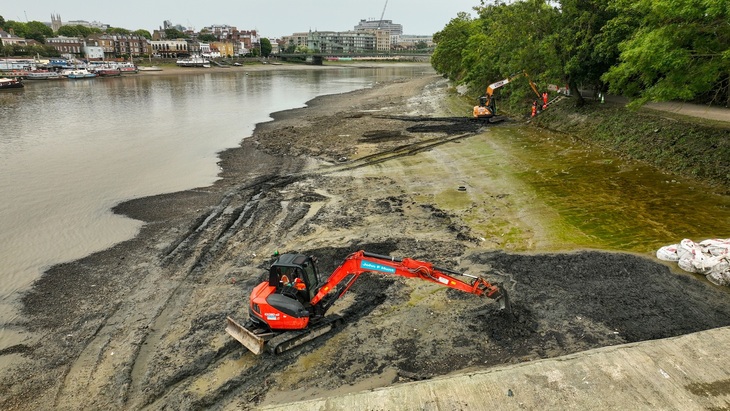
In all, the muck in Hammersmith weighed 114 tonnes and rose as high as one metre in parts — most of it scooped up by two eight-tonne excavators, and taken away in skips to be disposed of responsibly.
Says Port of London Authority's Director of Sustainability, Grace Rawnsley: "After months of planning and hard work, we're so pleased to have finally been able to clear this stretch of the Thames. The reaction of local communities — and of people across the country and beyond — has been really encouraging but also slightly incredulous that this work was needed in the first place."
The Government has published draft legislation that would outlaw wet wipes containing plastics, across the UK.