London has always been a hub of research, but it's also one of the best places in the world to learn about science and its history.
No city on Earth can quite match London's scientific chops. Charles Darwin, Isaac Newton, Rosalind Franklin, Michael Faraday, Alexander Fleming, Edward Jenner... all worked or lived in the capital. Our big institutions such as Imperial College, UCL and King's, and more recently the Francis Crick Institute, have made key contributions to scientific progress.
That heritage is celebrated across the city in numerous museums, plaques and statues. But London is also well blessed with venues that put on talks about the current cutting edge.
Below, we've listed out the most important venues with a scientific, medical or engineering flavour.
Museums and galleries
Science Museum: Scarcely needs an introduction. A temple of science, ranging from steam power to space flight. The museum also puts on regular talks and events, including a monthly Lates evening for adults. Kids, meanwhile, can spend an entire day exploring the Wonderlab gallery. South Kensington, FREE (Wonderlab £££)
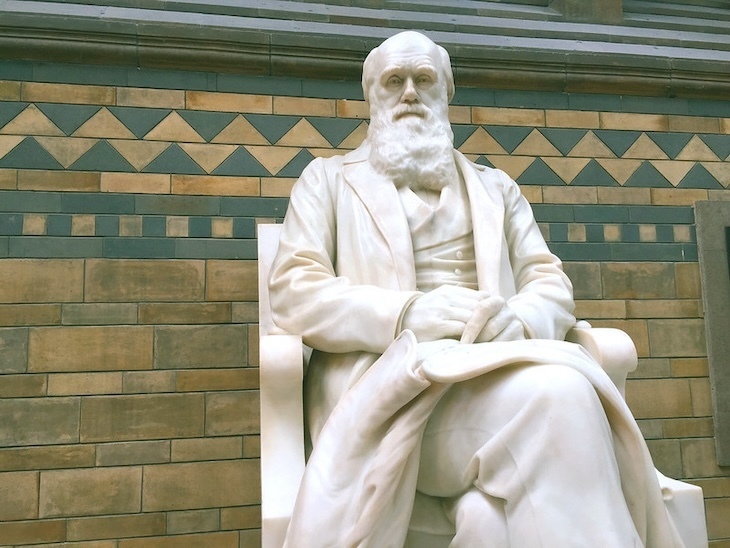
Natural History Museum: The other big hitter in South Ken, the NHM naturally focuses on the natural world. The dinosaur galleries are permanently packed, but head to the upper floors for quieter spaces on mineralogy, mammals and more. The annual Wildlife Photographer of the Year show remains super-popular. The building's flamboyant architecture is worth the trip alone. South Kensington, FREE
Wellcome Collection: A museum and library with a health and medicine slant. The main gallery puts on themed, temporary exhibitions that combine scientific heritage with art and cultural objects. Upstairs lie permanent galleries and the wonderful library. Euston Road, FREE
NOTE: The Royal Observatory is currently closed for refurbishment. In the meantime, the Astronomers Take Over gallery is open down the hill at the National Maritime Museum, featuring a planetarium experience.
Royal Observatory: The home of time and space features multiple galleries examining our place in the cosmos, and the stories of those who helped unravel the mysteries of the universe. Book into the Peter Harrison Planetarium for a cosmic show, and straddle the Prime Meridian. Greenwich, £££
Horniman Museum: A multi-themed museum, perhaps most famous for its natural history collection, which includes the renowned 'over-stuffed walrus'. Visitors can also enjoy an aquarium, galleries on anthropology and musical instruments, and delightful gardens. Forest Hill, mostly FREE
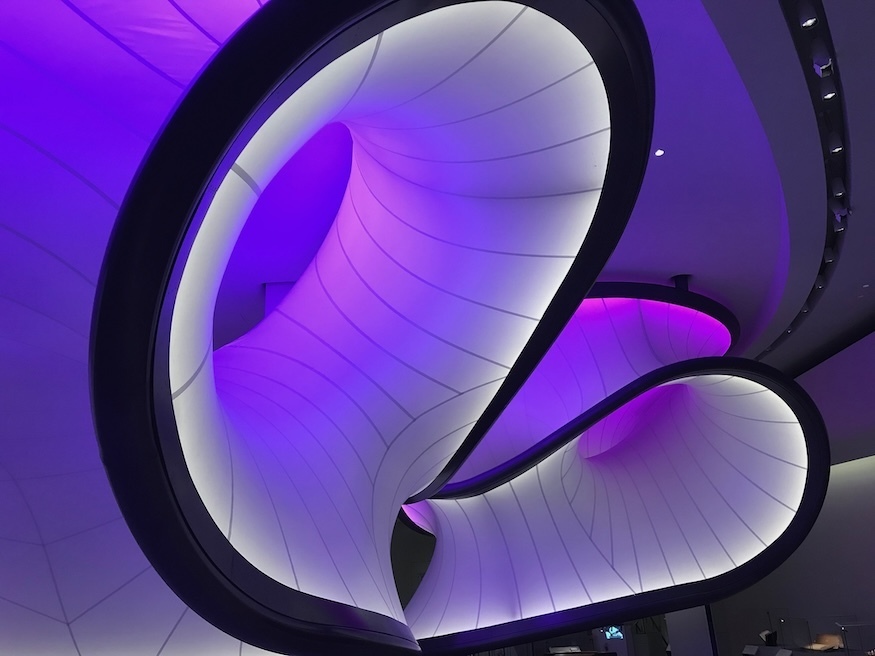
Science Gallery London: Located in an annexe of Guy's Hospital, the gallery showcases art with a scientific, medical or technological slant, usually grouped as part of a themed exhibition. Closing late 2026. London Bridge, FREE
Francis Crick Institute: The towering research institute maintains a small gallery with temporary exhibition on a given theme. Exhibitions usually delve more deeply into current research than other venues, and it's a chance to see where medical science is leading before it hits the headlines. (Also a productive place to hang out if your train is delayed.) St Pancras, FREE
Kirkaldy's Testing Works: A recent rebranding from the slightly puzzling 'Kirkaldy Testing Museum' ("testing what, exactly") makes it more clear that this is a place where industrial materials were tested. Inside, you can see the still-operational machine used to stretch, compress and twist metals to destruction — vital data for architects and engineers. Southwark, £££, prebook only
Brunel Museum: Marc Brunel (with help from son Isambard) engineered the first tunnel under a major river in the first half of the 19th century. The small museum is built into one of the surface buildings at Rotherhithe, and tells the story of this feat of engineering. Visitors also get to descend into the tunnel shaft. Rotherhithe, £££
Specialist medical museums
The list below shows only the larger and more public-facing museums. Many further medical disciplines maintain small exhibitions, neatly compiled on the Medical Museums website.
Alexander Fleming Laboratory Museum: Explore the lab where Fleming chanced across the mould that changed the world and saved millions of lives. (The nearby Wetherspoons pub also has a small display about the breakthrough, as well as a penicillin-themed carpet!) Paddington, FREE
Bart's Hospital Museum: A small museum chronicling the rather large history of Bart's, which goes back some 900 years. Among the medical exhibits, look out for the plaque celebrating the first meeting of Sherlock Holmes and Doctor Watson, which (in the fictive universe) happened right here. The hospital also houses a Pathology Museum, only open to the public for special events. Smithfield, FREE
British Optical Association Museum: London's most central museum (metres from the official centre at Charing Cross), this small but professionally focussed museum looks at the history of glasses, lenses and optical devices. Includes celebrity spectacles. Charing Cross, FREE (but pre-book)
Faraday Museum: The Royal Institution in Mayfair has a peerless history of scientific discovery. 10 of the chemical elements were first isolated here, in laboratories ran by Humphry Davy and Michael Faraday. The building presents some of its historic apparatus in the Faraday Museum, located in the lower-ground floor. Mayfair, FREE
Florence Nightingale Museum: Attached to St Thomas's Hospital, this excellent museum describes the history of nursing, with sizeable displays about the profession's most famous pioneer, Florence Nightingale. Lambeth, £££
Grant Museum of Zoology: Attached to UCL, the much-loved Grant Museum is like a pocket-sized Natural History Museum, without the crowds. Thousands of stuffed and bottled specimens, including the famous jar of moles, are arranged haphazardly around this cabinet of natural curiosities. Bloomsbury, FREE
Hunterian Museum: The museum of the Royal College of Surgeons tells the history of surgery and anatomy, including the advances made by John and William Hunter. The recently updated galleries feature thought-provoking specimens and representations of the human body. Holborn, FREE
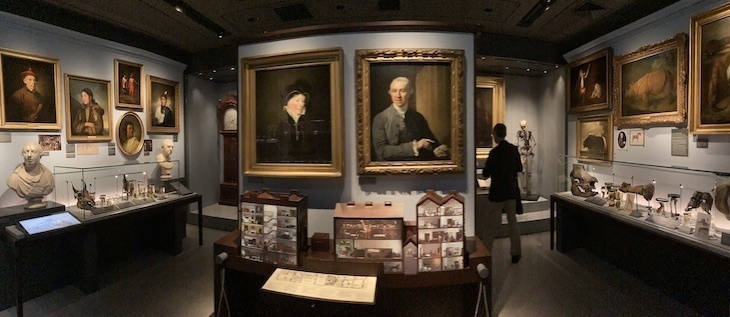
Museum of the Mind: Bethlem Royal Hospital is the successor institution to the notorious Bedlam hospital, founded in medieval times for the (supposed) care of the mentally ill. Its history is told in the Museum of the Mind, which also stages excellent temporary exhibitions about psychiatric healthcare now and in the past. Beckenham, FREE
Old Operating Theatre Museum and Herb Garret: The London museum with the longest name? It's certainly one of the more peculiar cultural spaces, lurking in an old church tower. Learn about surgical practice in the times before anaesthesia, in a place that saw its fair share of amputations and the like. London Bridge, £££
Royal Pharmaceutical Society Museum: Learn about the pharmacist's trade past and present, in this excellent exhibition of powders, pills and unguents. Among the intriguing exhibits is an electric hairbrush, cherry toothpaste, and bear grease (for baldness). Near St Katharine Docks, FREE
Talks, events and festivals
Great Exhibition Road Festival: This annual event in June sees Imperial College and the various South Ken museums put on a big old street party, themed around science, technology and innovation. There's almost too much to see, as you explore not only Exhibition Road itself, but the university campus, museums and surrounding streets. South Kensington, FREE
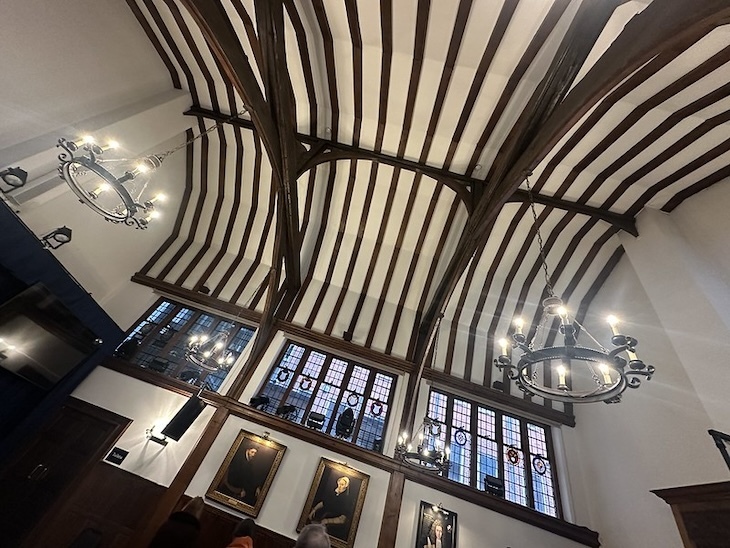
Gresham College: Usually held at Barnard's Inn Hall in Holborn, the college puts on regular free talks for the general public on a wide range of themes. Astronomy is a pet subject, with some top-notch speakers over the years (centuries). Holborn (usually), FREE
Nerd Nite London: Occasional shows where three 'nerds' talk about their pet subjects, sometimes with a science theme. Various venues, £££
Pint of Science: An annual jamboree (in May) of science, matching up research scientists with pub function rooms. Hear about cutting-edge science over a pint or a glass of vino. Various venues, £££
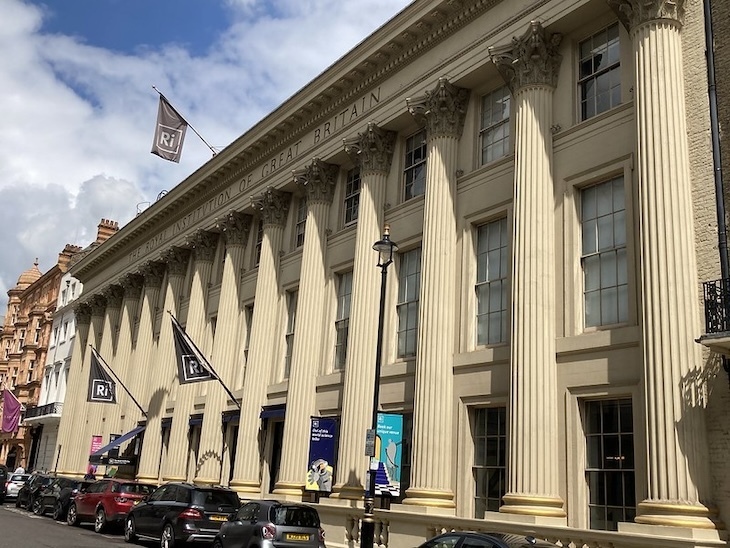
Royal Institution: Founded in 1799, the RI would be a shoe-in as London's oldest science venue, were it not for the similarly named Royal Society (see below). The RI is most famous for the Christmas Lectures aimed at teenagers, but they have a year-round programme of lectures from leading scientists in that famous mauve theatre. Mayfair, £££
Royal Society: The august institute, founded in the time of Newton and Wren, puts on free public lectures throughout the year. Its big event is the Summer Science Exhibition, a multi-day event at which research scientists show off their discoveries and kit to the general public — ask them anything you like. St James's, FREE