"Too old, too weak, too drunken... too stupid or too bad to do anything else."
That was one person's description of nurses in 1867, that person being Florence Nightingale. Perhaps the most famous proponent of all for better nursing practices, Nightingale has a museum dedicated to her in Lambeth — but did you know there's another nursing museum, minutes from Oxford Circus Tube station?

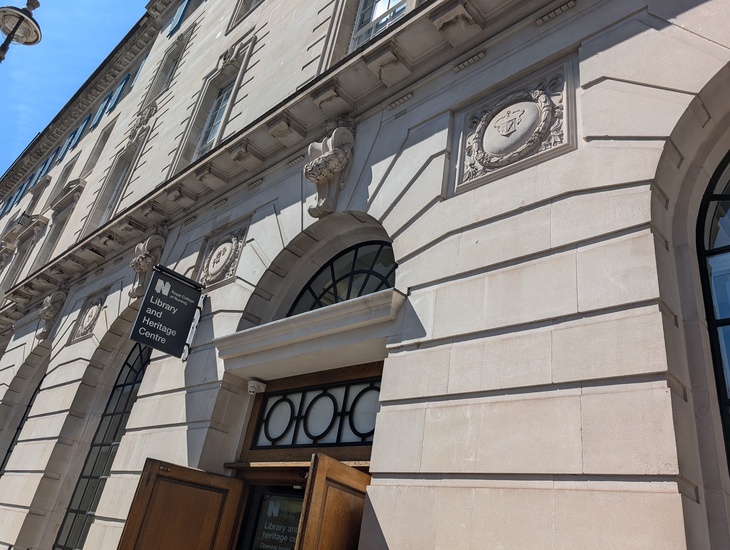
The formation of the College of Nursing in 1916 marked a great step forward in the nursing profession. While nursing itself had already improved vastly since Nightingale's withering appraisal, the college (which later received its royal charter in 1928) dedicated itself to furthering the education, and formalising the qualifications, of nurses. Anyone can visit the Royal College of Nursing's Museum on Cavendish Square, where two pocket-sized spaces — one on the ground level, one below — pull back the sheets on the evolution of a profession that is both noble, and chronically under appreciated.
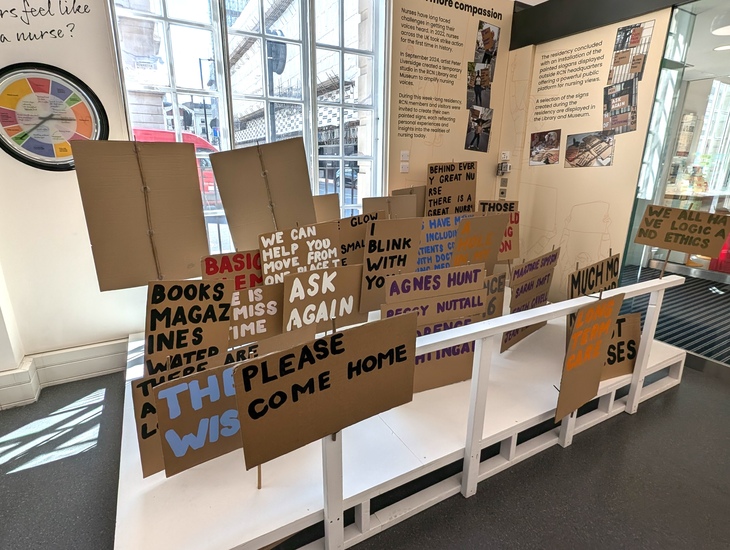
Indeed, there's an underlying ripple of protest from the outset. British nurses have had to fight hard for representation, and continue to do so, and as you enter the museum, you're met by a sea of cardboard banners. The messages, though, are not of outright revolt, but fragments of the personal insights and experiences of RCN nurses, as created in a week-long residency with artist Peter Liversedge.
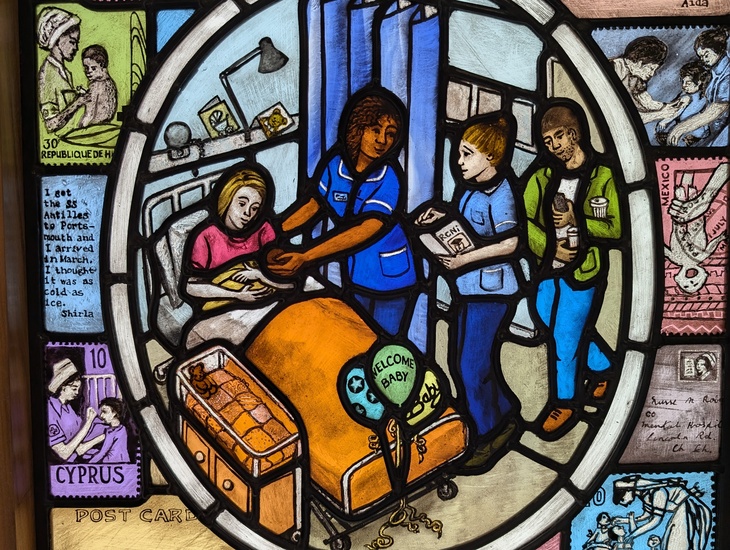
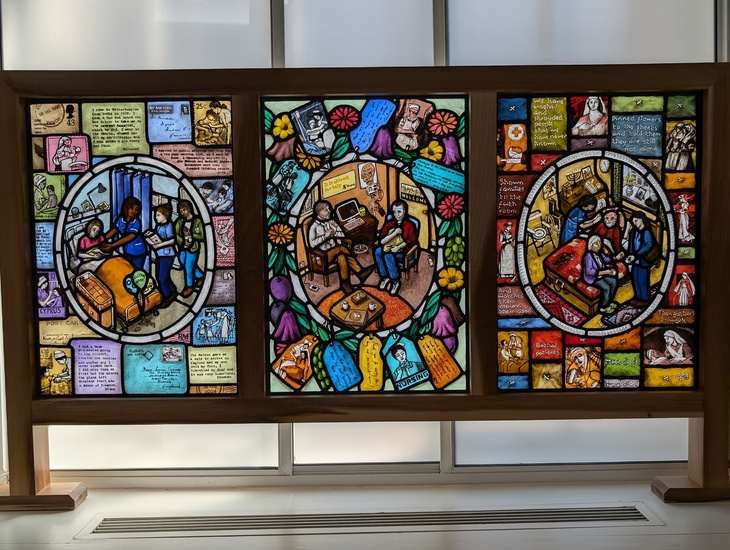
This thread of getting staff involved runs through the entire museum, most spectacularly with a stained glass triptych — a glimmering, whistle-stop story of life through three stages of nursing: child birth, mental health treatment and end of life care. Artful and moving, it seems more human than most stained glass you find in a cathedral. The jewel-coloured panels were designed by Rachel Mulligan, before being created by RCN members at various workshops.
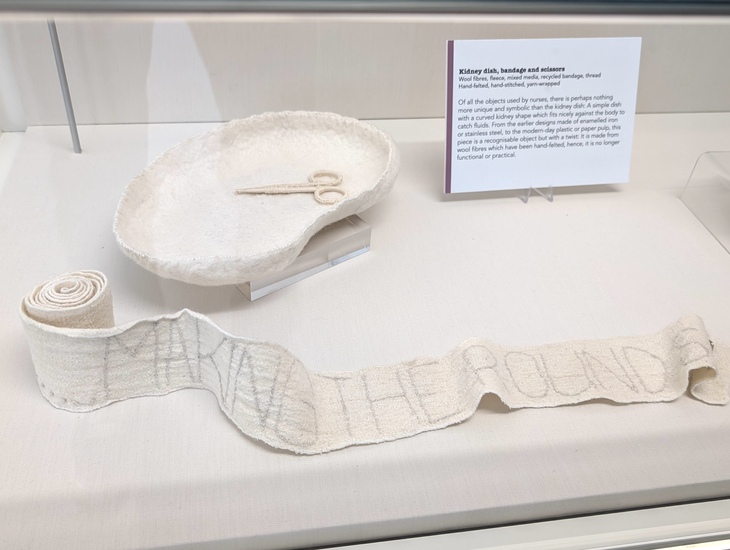
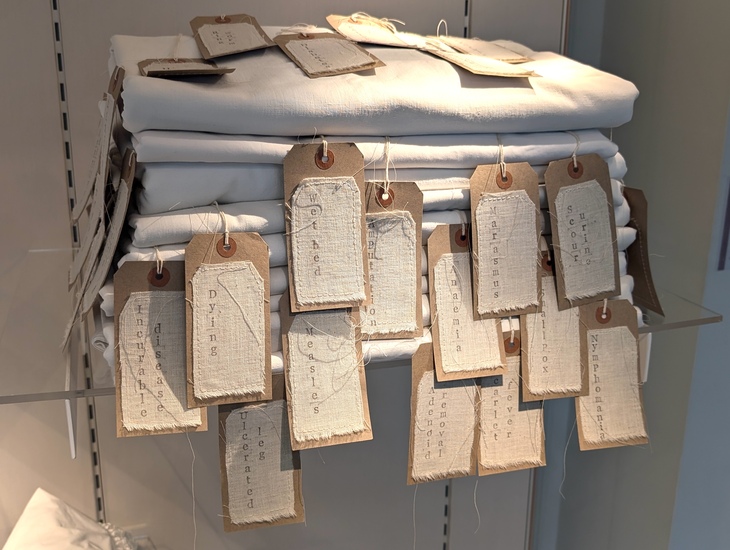
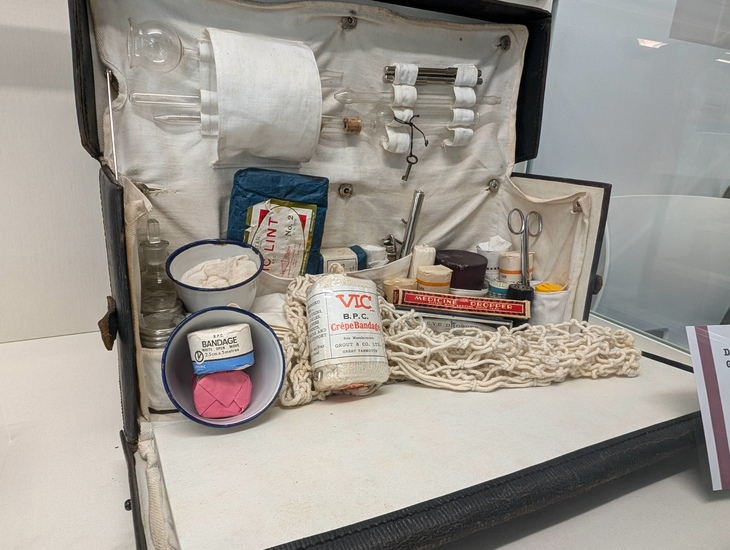
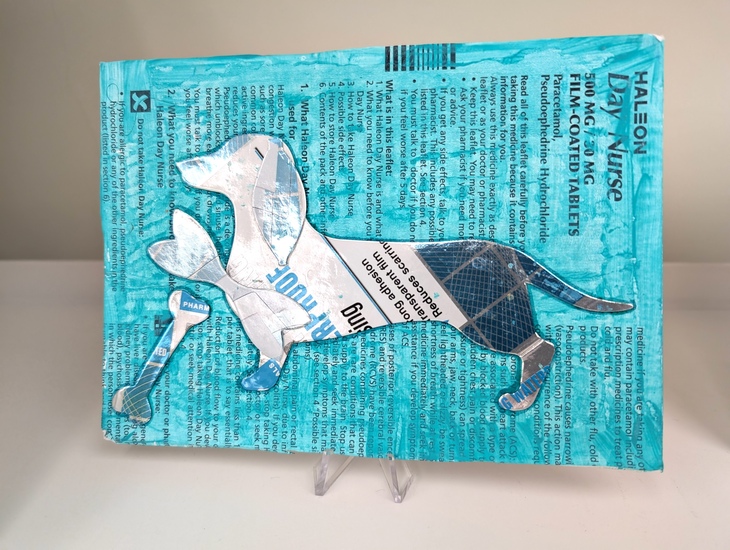
In truth, the RCN's museum is just as much an art gallery: the ground floor's exhibits — which include a 1920s-30s district nurse's bag, and a starched white 'Celia' belt — are freckled with the preoccupying works of Connie Flynn, who has restyled old bandages, sheets and parts of uniform into thought-provoking pieces, such as a pile of sheets labelled with the various reasons that patients once lay beneath them: measles, adenoidal removal, dying.
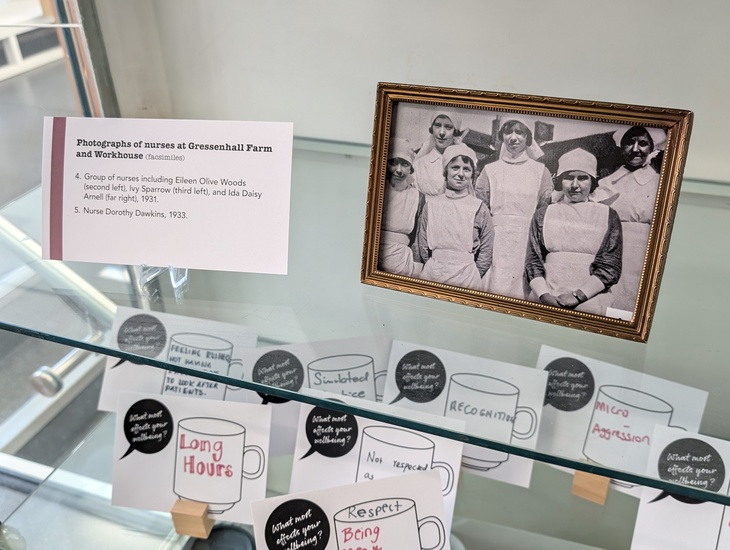
Rather than telling a general story of nursing through the ages, a timeline is shown through the lens of Gressenhall Workhouse in Norfolk, which operated in some form from 1777 to 1948, at which point the NHS had arrived. Despite their pernicious Dickensian connotations, workhouses were the only place where poor people could find nourishment and medical help. In the very early days, the nurses were also inmates with little to no training, which partly explains Nightingale's skepticism.
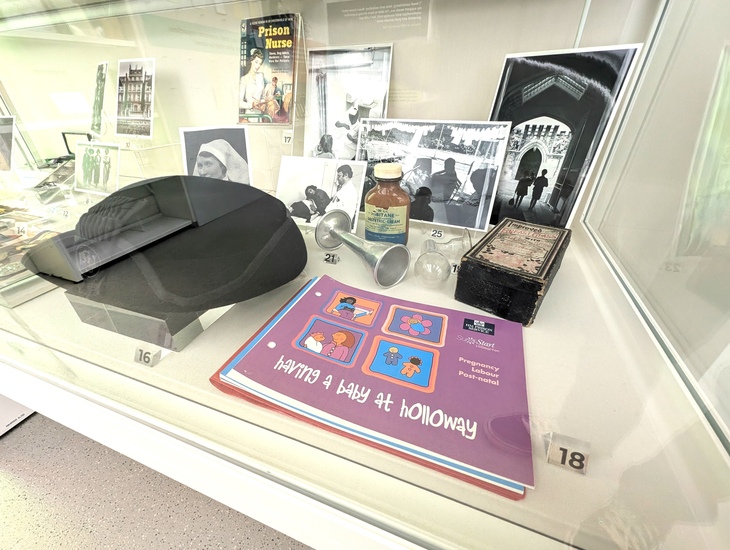
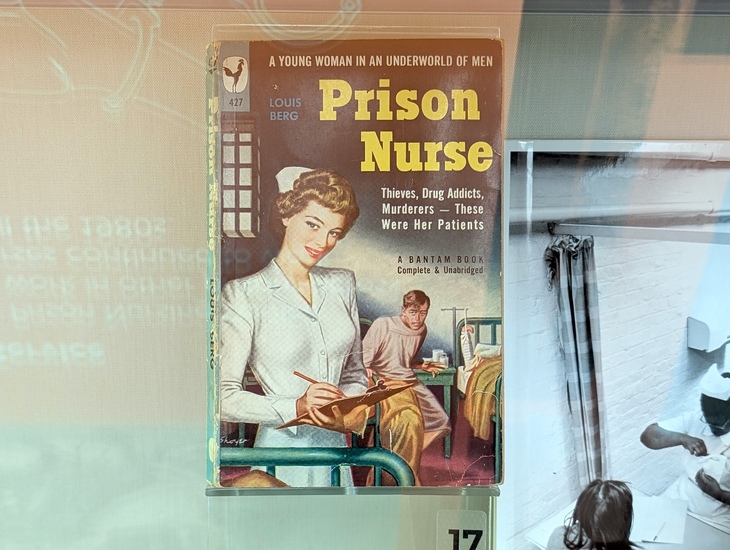
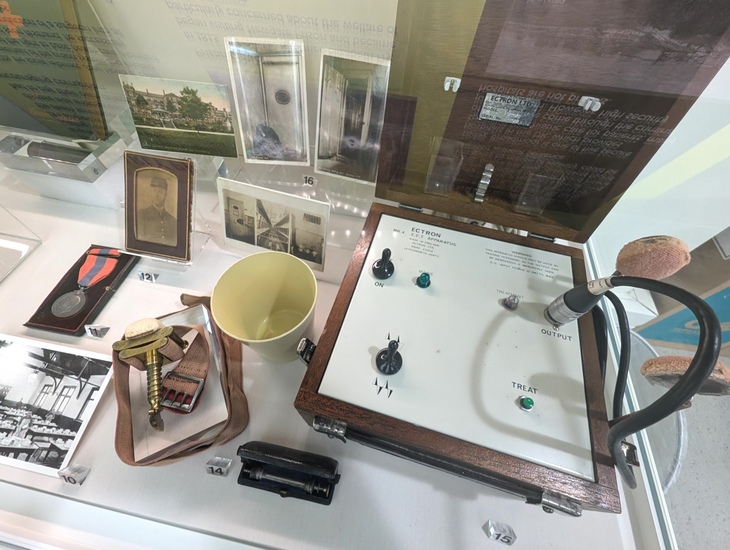
Tiptoeing through the (very much active) library downstairs you come to a second space, which hosts temporary exhibitions. Until 11 October 2025, it's Prison Nursing Unlocked: A history of care and justice. Again, this is a small yet (excuse the pun) arresting compilation of objects and stories — one which includes another great reformer, Elizabeth Fry, whose visits to Newgate Prison shocked her into campaigning for women-only prisons — as well as the right for prisoners to occupy their time with pursuits like sewing, reading and writing.
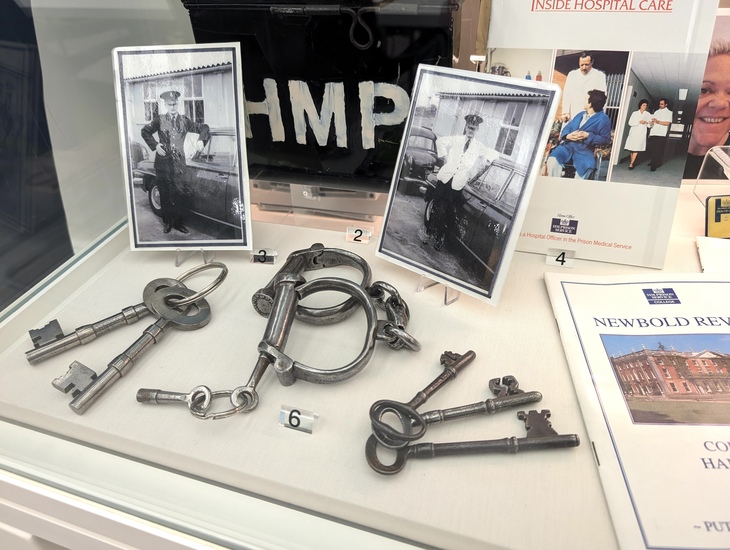
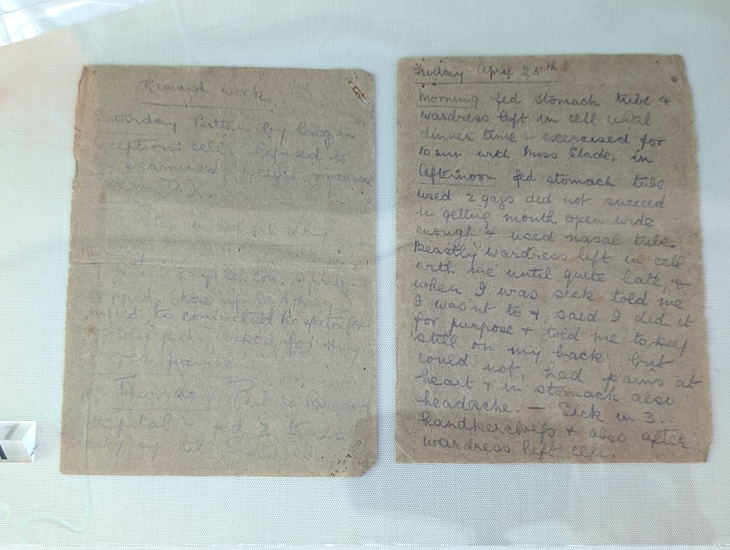
A section on HM Prison Holloway — now defunct, but once the largest women's prison in Europe — contains two sheets of toilet paper onto which Suffragette Elsie Duval wrote a secret diary while being force fed at the north London prison ("Beastly wardress left in cell with me until quite late, and when I was sick told me I wasn't"), through to a brightly-coloured pamphlet, 'Having at Baby at Holloway', indicating the progress that's been made since Duval's time.

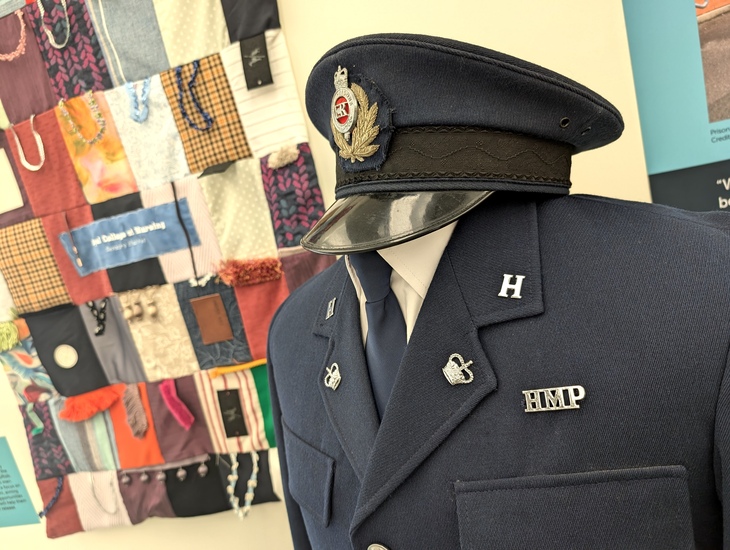
Birthday cards and knitted dolls (the dolls are of nurses) produced by prisoners again highlight that sense of community and therapy through art which is visible in the museum's other room — and though, this time, it is the prisoners who have turned their hands to these creative pursuits, it is nurses who've facilitated it. As Florence Nightingale also said, "Nursing is an art: and if it is to be made an art, it requires an exclusive devotion as hard a preparation, as any painter's or sculptor's work."
Royal College of Nursing Museum, 20 Cavendish Square, free. The RCN also hosts ongoing public events.
All images by Londonist.