On an unassuming industrial estate, not far from the northern tip of the Metropolitan line, hides a magnificent secret — which, once in a while, betrays itself with the most remarkable cacophony.
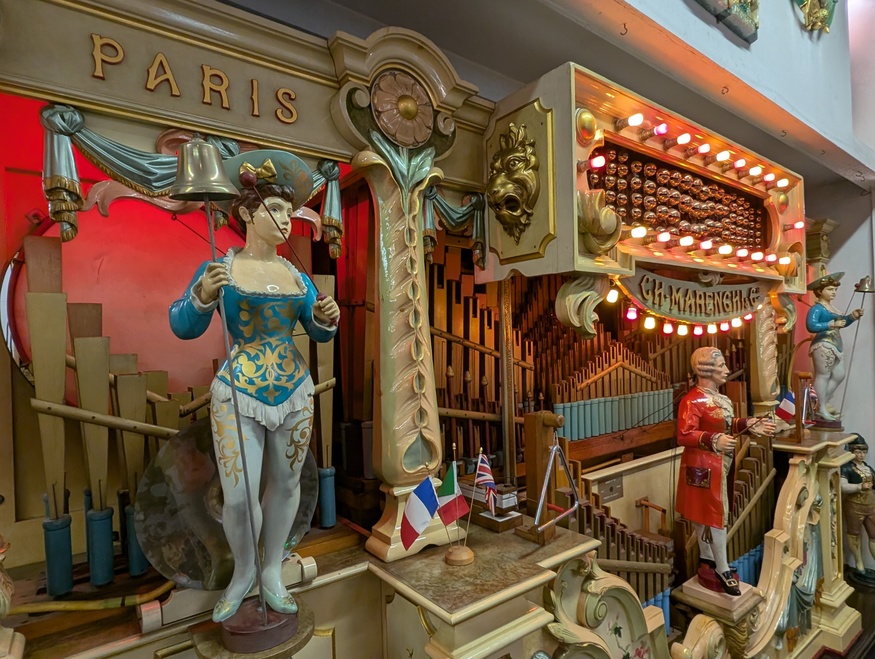
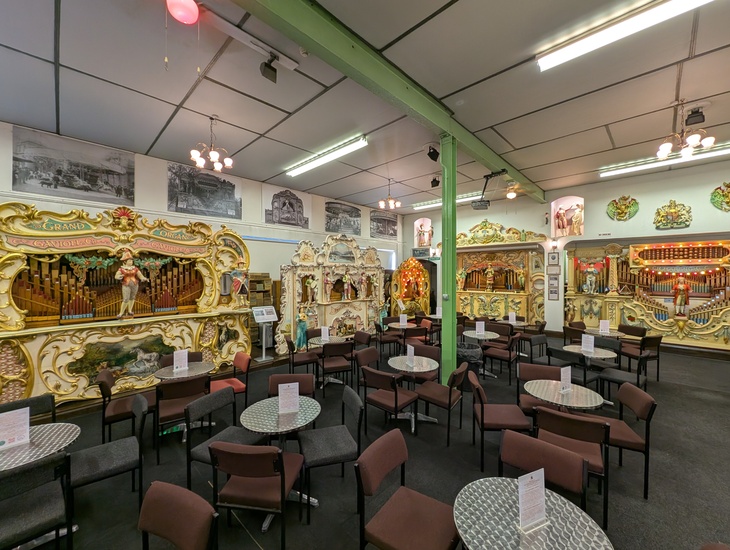
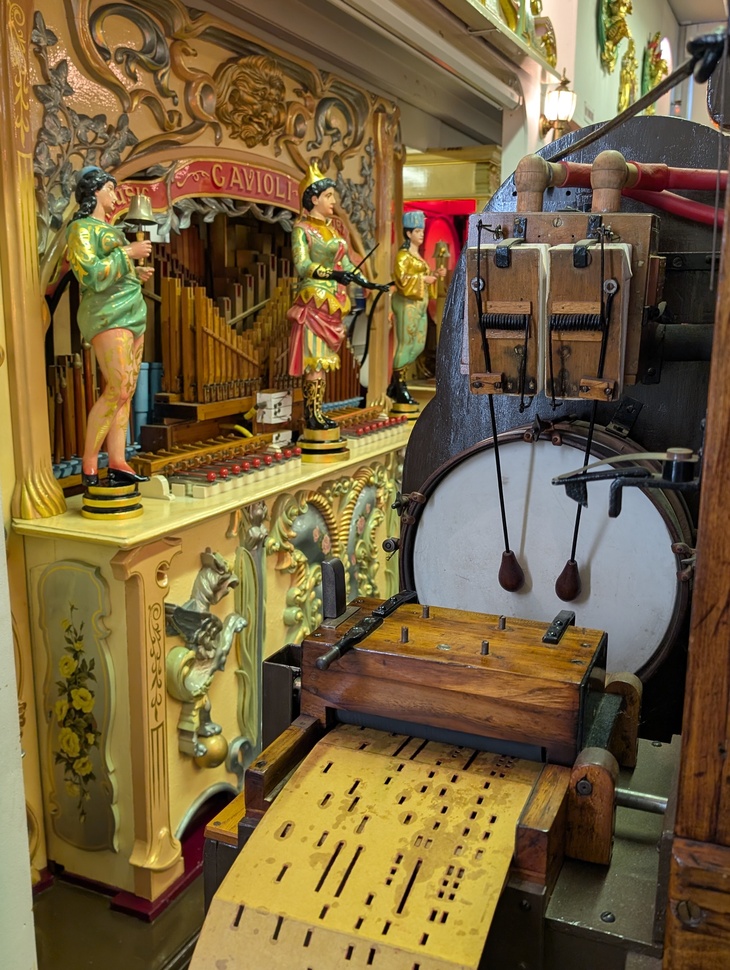
Stashed inside a nondescript warehouse on the outskirts of Amersham is a kaleidoscopic array of vintage fairground organs. Each musical confection drips with ornate gilding; hand-carved and painted showfolk and conductors clutching triangles and batons; phalanxes of pipes which sing out with the sounds of a bygone era.
They bear names like Gavioli, Marenghi and Limonaire Freres; signatures of machines that were handcrafted in Paris, the Black Forest or Ruhr Valley — each embellished with their own (literal) bells and whistles according to the client's taste: a xylophone, a glockenspiel, a set of sleigh bells.
This is the Amersham Fair Organ Museum, a bewitching reliquary of self-playing instruments which once clarion-called above the hubbub of waltzers, gallopers and excited children, and have now come to settle in this retirement home for organs which are anything but puffed out.
A cardboard revolution
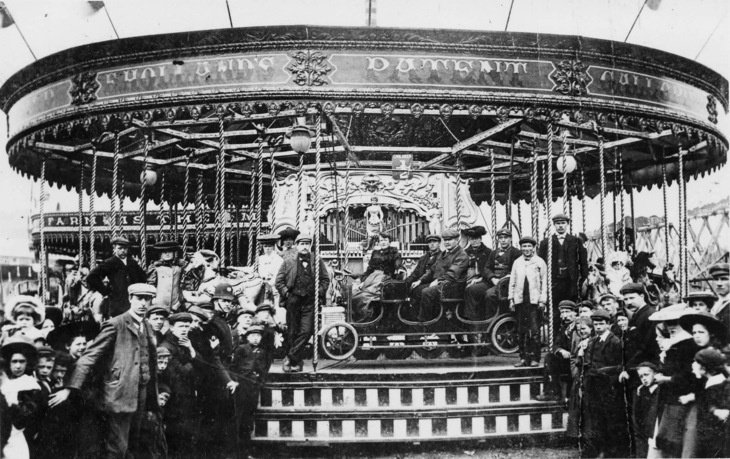
The remarkable assemblage of proto-jukeboxes was begun by Albert "Ted" Reed in 1968, after his parents told him to find an interest. "He found in the Exchange and Mart a small organ for sale, and that started the collection," explains the museum's current chairman Kevin Meayers. "He enjoyed it so much he started buying more. He eventually bought a set of gallopers — a carousel — with a Gavioli organ in it. He sold the gallopers and kept the organ.
"And then the collection just grew and grew really."
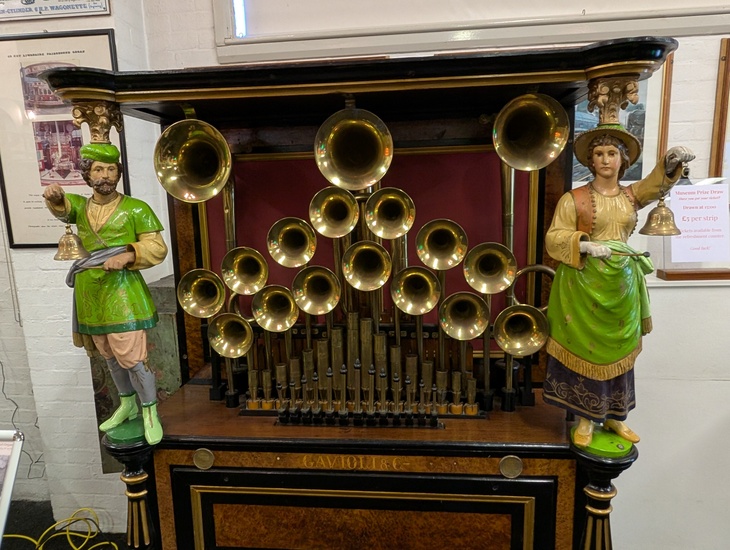
The machines — which work on the same principal as a church pipe organ, simply with the organist switched out for a perforated book of music — played at continental ice rinks, in dancehalls and anywhere else that required live music. Here in England, the organs largely took pride of place in fairgrounds, as showy calling cards, noisy in both sight and sound. A 'keeping up with the Joneses' mentality saw the fairground families who owned and ran these organs fight to flaunt the flashiest instruments. Repairs, updates and embellishments were regularly made. "It almost become a battle of the loudest," laughs Ben Ely, the museum secretary. "That's what draws the people onto your ride."
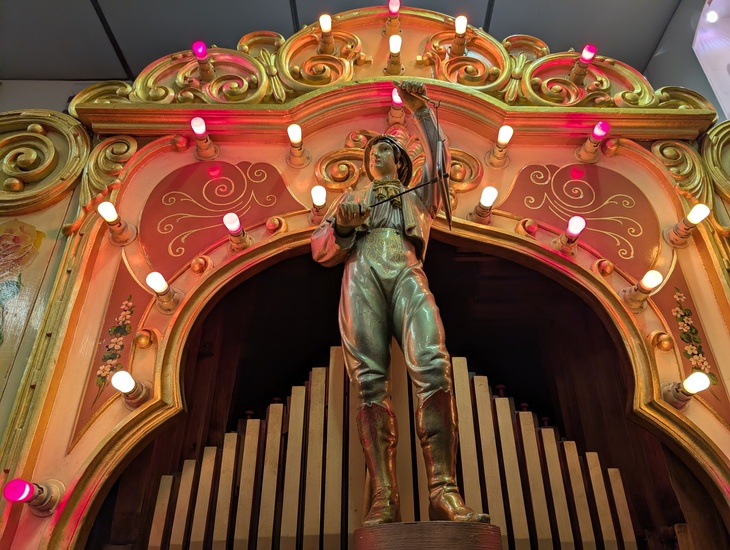
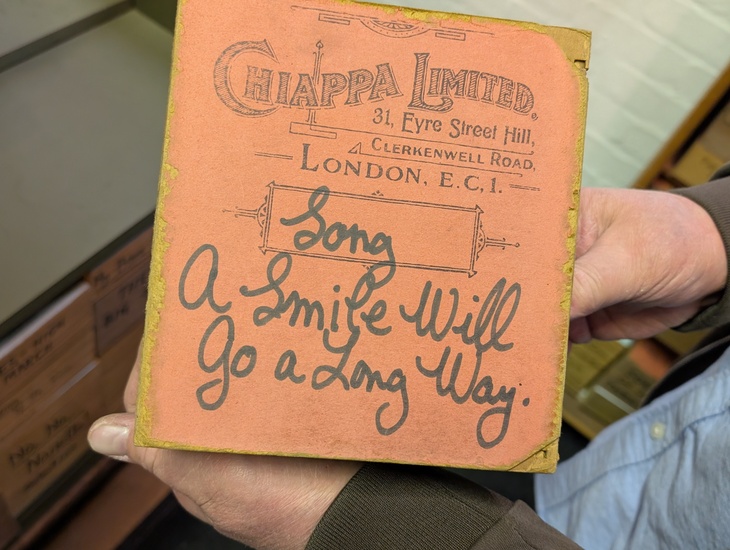
The organs may appear quaint to the modern day eye/ear, but in their day they were at the forefront of technology. In 1892 the organ maker Anselmo Gavioli revolutionised the music industry with his invention of the folded cardboard book. Self-playing instruments like the barrel organ already existed, but the new books — some measuring 100 metres — could play far longer pieces.
This was not welcome news for professional musicians, many of who had a reputation for enjoying a drink on the job. "You just switch the organs on and you don't have to worry about that," laughs Kevin, who explains that some of the organs used in cafes were even operated by coin slots — meaning proprietors not only saved money by not employing musicians, but actually made a clean profit on the machines they'd bought. The arrival of the self-playing organ was not unlike the AI crisis faced by creatives right now.
Not all musicians lost out. The French composer Louis Blache was among those who switched from penning music for traditional orchestras, to writing for the autonomous music machines. "They realised the change was coming, so they adapted to stay ahead," explains Ben. Blache — who ended up working for the Gavioli organ company, and later Limonaire Freres — became one of the great composers and arrangers for the medium, pioneering many of the melodies that prompt images of coconut shies, waltzers and circus tents.
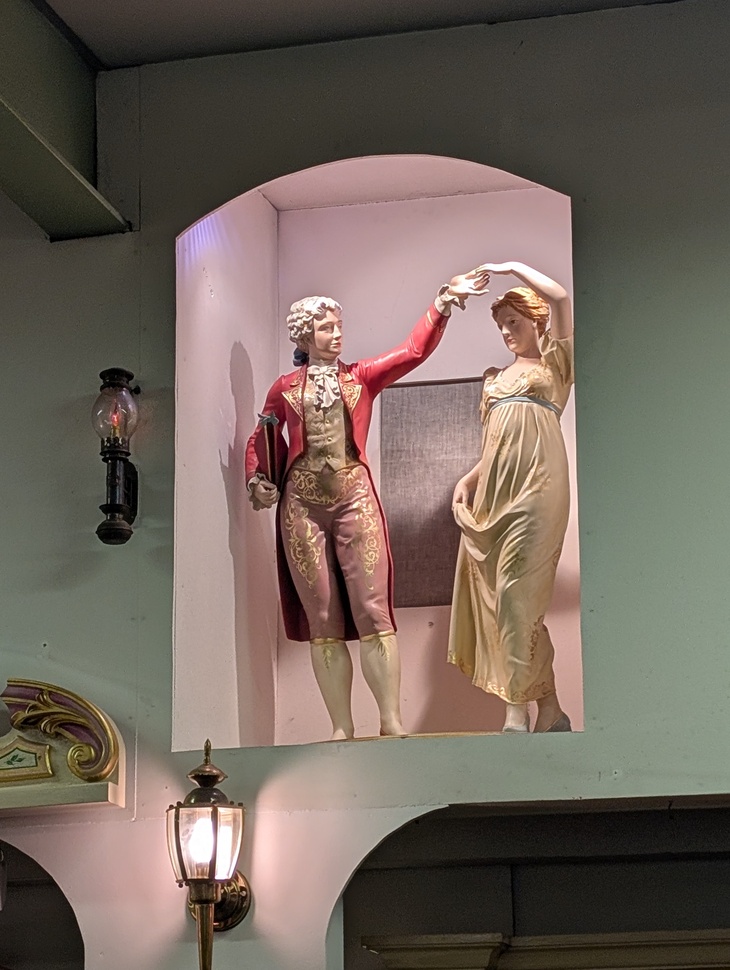
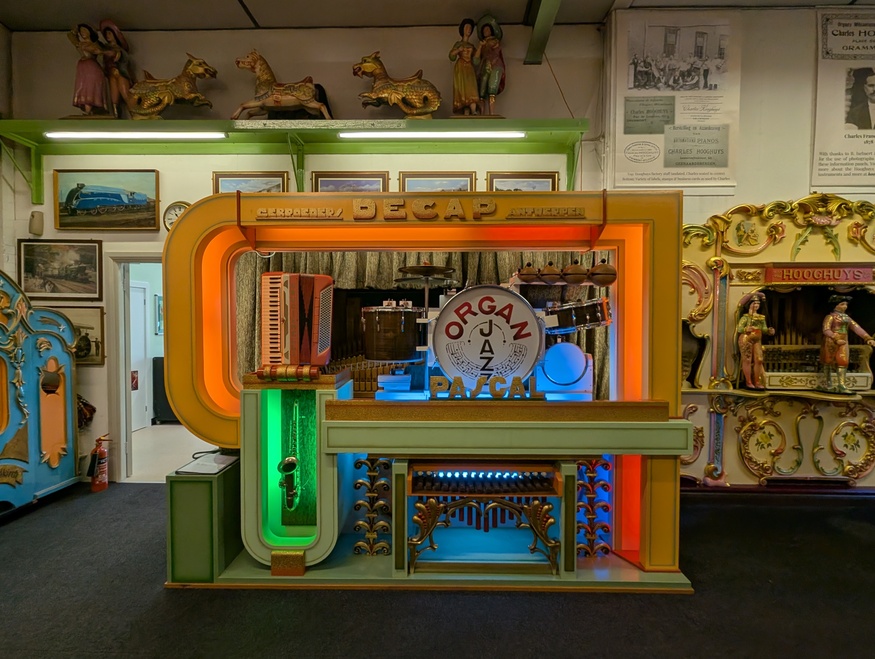
As the gramophone revolutionised music once more, most of these organs were gradually phased out, although it's surprising just how long some stayed in the game. The likes of the 72-Key Decap – 'Pascal' — a gloriously gaudy glow-up thing with a saxophone and miniature drum kit — were still being built in the 1950s, and played for decades longer in European dance halls and cafes. Indeed, these organs never lost their enchanting touch.
A must-visit museum
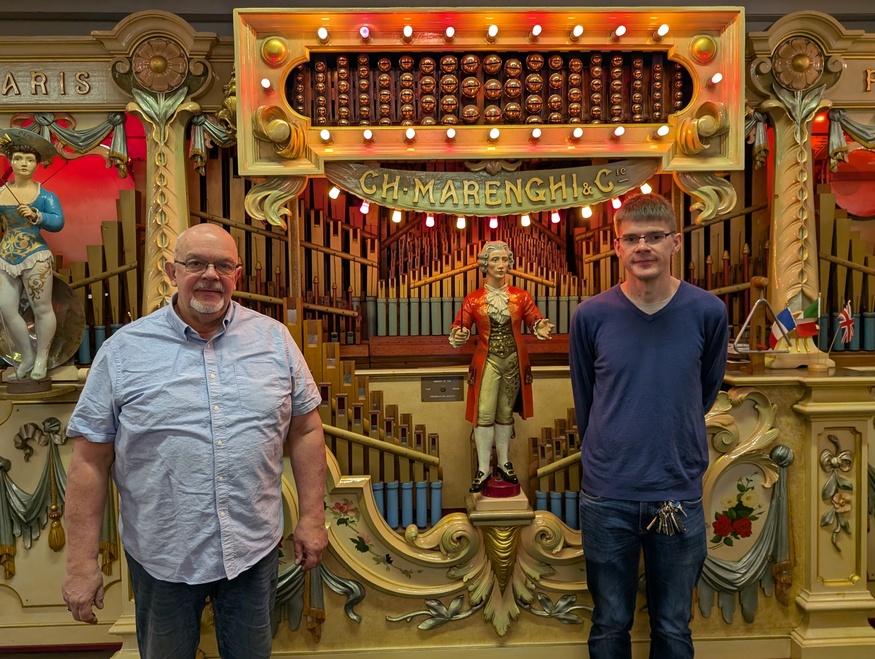
Ted Reed began hosting open days in the 1980s, until disaster struck, when the building next door caught fire, the blaze tearing through the roof, destroying two organs and badly damaging another pair. It took almost a decade to repair the building and organs, at which point the museum was put into a charitable trust.
Ted died in 2022, but the museum continues under volunteers including Kevin and Ben — with semi-regular open days. While steam enthusiasts and organ lovers were once the mainstay of visitors, a wider demographic is now discovering the museum. "At the moment we're in that timeframe where we'll have grandparents bring their grandchildren, because the grandparents are just on the fringes of remembering going to the fair, and seeing these things in a set of gallopers or whatever, riding on them," says Ben. "There is still a connection to these things."
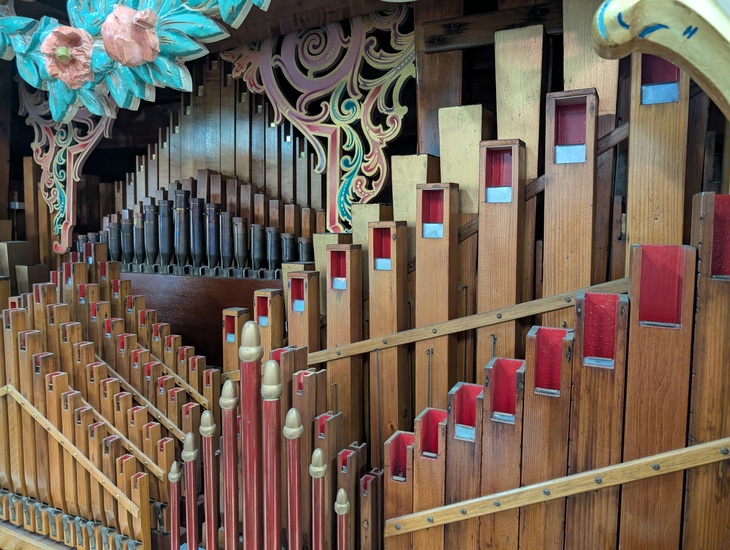
Some visitors will sit and listen to the organs all day, just like those frequenters of continental cafes and music halls back in the day. The organs certainly pack a punch — most were designed to play in an outdoor environment — although even the sizeable Marenghi organ (about the size of a small van, and Kevin's favourite of the collection) doesn't size up to some organs that were once on the circuit, which were tantamount to small buildings.
With their plethora of pipes, the musical capability of each organ is based on a small orchestra or military band, creating a richly melodious sound, accompanied by the thud of drums, crash of cymbals and occasional cheeky tinkle of a triangle. Some of the cardboard books being used date back to the 1800s ("they're a bit tatty but they still play," says Kevin) although Kevin — a classically trained musician — also arranges musical scores himself, a meticulous art, which can take almost 24 hours to complete.
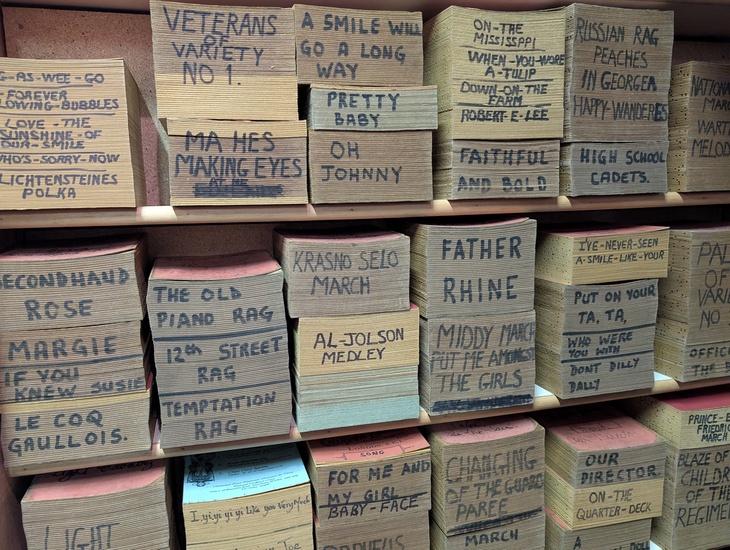
This is something Kevin's been doing since the age of 15. "Then that developed into a business; I first met Mr Reed when he ordered four books from me in 1976/7, and that was it — we were friends from the beginning."
Although he predominantly pens classic and military arrangements, Kevin does get some unusual requests; he recently arranged a book that plays the Mariah Carey hit All I Want for Christmas is You, to belting effect.
Is there anything, in fact, these organs can't play? "Obviously you can't achieve drum and bass," says Ben.
Amersham Fair Organ Museum is free to visit, with eight open days scheduled for 2026. In the meantime, you can read up on the organs, and listen to snippets of them playing, on the museum's website.
All images by Londonist unless otherwise stated.