Adapted from a feature that first appeared in November 2025 on Londonist: Time Machine, our much-praised history newsletter. To be the first to read new history features like this, sign up for free here.
Everybody knows that the old London Bridge got shipped over to Arizona, but did you hear the one about the Thames bridge that moved to Africa?
I’ll admit, the crossing in question is quite obscure. It spanned the Thames for just eight years, and was never used. Few Londoners today would know that it ever existed, despite its prominent location.
Here, I’ve marked it on a Google Earth screengrab:
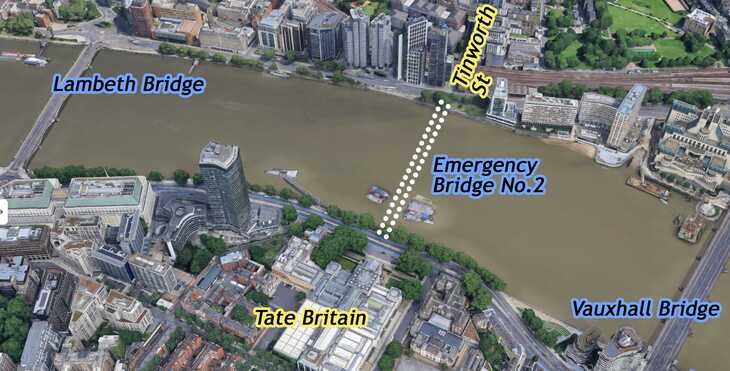
Imagine stepping out of Tate Britain, and there before you is a direct bridge to Vauxhall. That was the reality between 1940 and 1948 when ‘Emergency Bridge No. 2 made its not-so-dainty way across the river, to align with Tinworth Street on the southern shore.
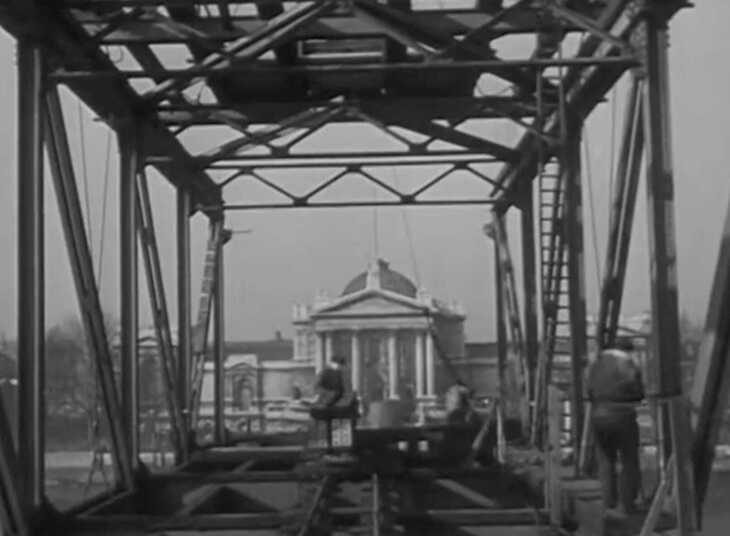
The astute reader will see those dates, clock the name ‘Emergency Bridge’, and put the rest together. Yes, this was an emergency wartime bridge, constructed for redundancy should Lambeth or Vauxhall bridges be smote by the Luftwaffe.
The bridge was designed to be temporary, but built for strength. Sturdy wooden foundations made of Douglas fir were piled into the riverbed. These supported steel girders, and hardwood decking. It was capable of supporting the weight of tanks or heavy guns, which would roll south in the event of a land invasion.
Emergency Bridge No. 2 cost £135,000 to build. The Bank of England’s inflation calculator estimates this to about £6.5 million in modern money. This was reckoned to be around half the cost of a permanent bridge.
In the event, the crossing was never needed. Vauxhall and Lambeth Bridges were not seriously damaged in the Blitz. Indeed, the temporary span at Millbank came to be known as ‘The Bridge They Never Used’. It would also become ‘The Bridge They Couldn’t Get Rid Of’, lingering on for three years after the war thanks to labour shortages.
It was only in 1948 that the unused bridge was finally taken down. The cost to the taxpayer was £78,000, about £2.5 million in today’s money. Pathé news was there to record the operation:
As mentioned in the video, the individual pieces were labelled up and lowered down into waiting barges. The materials were then shipped down the Thames and out of Britain altogether. The flatpacked bridge was destined for Zambia, then known as Northern Rhodesia and a British Protectorate.
There, the structure was reassembled to bridge the River Kafue, a tributary of the Zambezi. This key communication connecting Lusaka and Harare opened in 1949. Whereas in London it had stood before the Tate gallery, it now boasted a hippo pool for its neighbour.
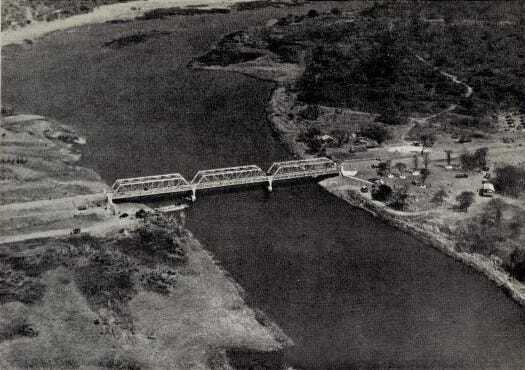
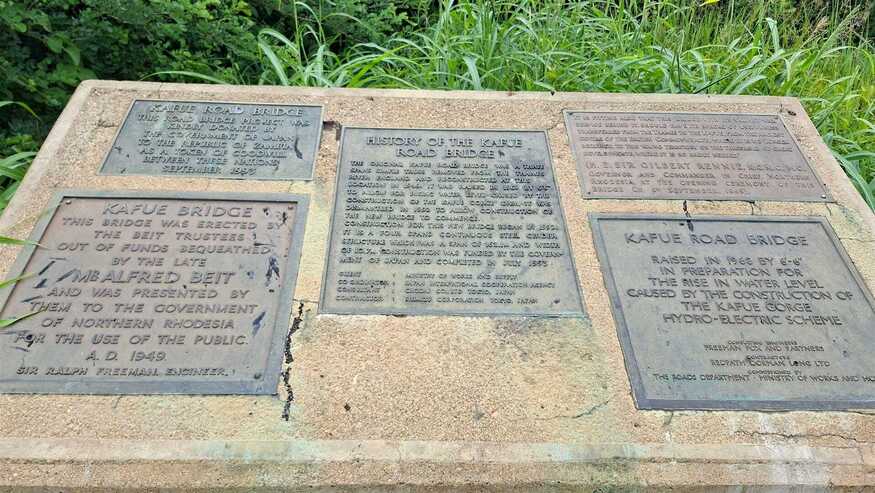
The bridge found far more use in the southern hemisphere than it ever got on the Thames. It didn’t last long, though. Rising water levels and general wear and tear necessitated a more permanent structure. It was demolished in 1992 to make way for a new bridge, funded by Japan. A series of plaques at the site records this unusual history.
The South Bank bridge
Now, you may have noticed that the crossing was labelled ‘Emergency Bridge No. 2’ on the map. This begs a very obvious question: where was Emergency Bridge No. 1?’. The answer is: right here:
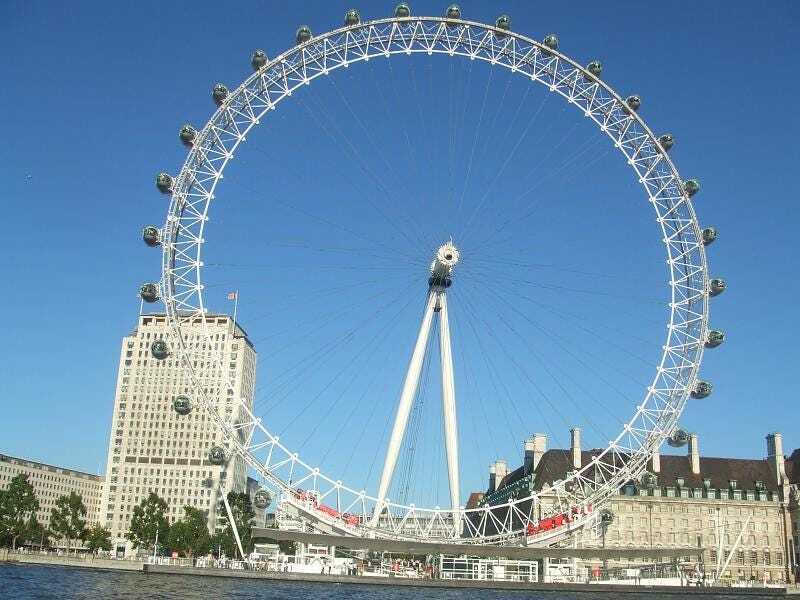
The central struts of the London Eye align almost perfectly with the long-vanished Emergency Bridge No. 1. It straddled the Thames between the future site of the Eye and the Ministry of Defence Building (itself under construction at the time). Here's another Google Earth view…
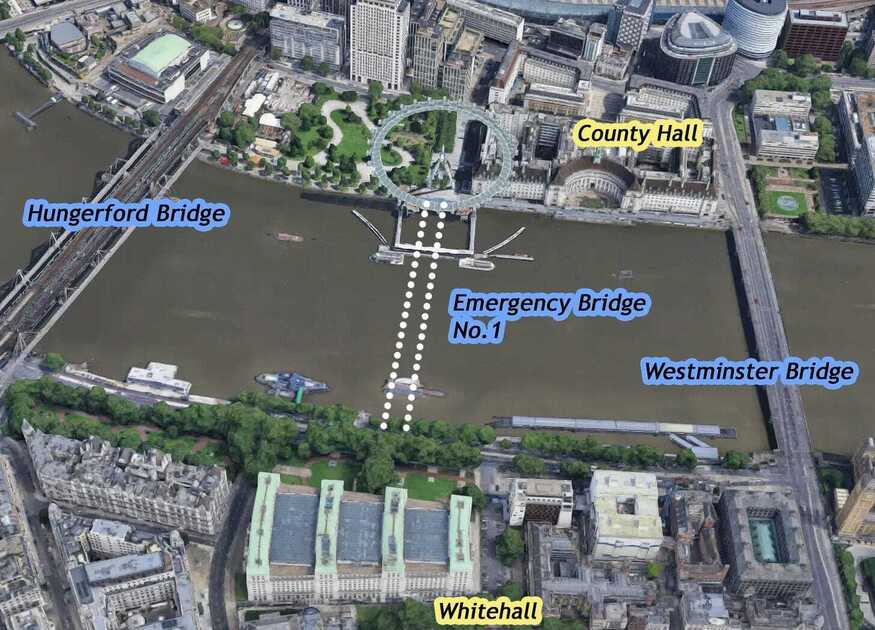
As you might suppose, the purpose of this bridge was to act as backup if either Westminster Bridge or Hungerford Bridge (which had a pedestrian crossing as well as rail links) were to be clobbered. This was a vital corridor of communication, with London’s local government based in County Hall on the South Bank, and the various ministries of national government just across the water in Whitehall.
This Emergency Bridge was painted in watercolour by artist Frances Macdonald in 1945:
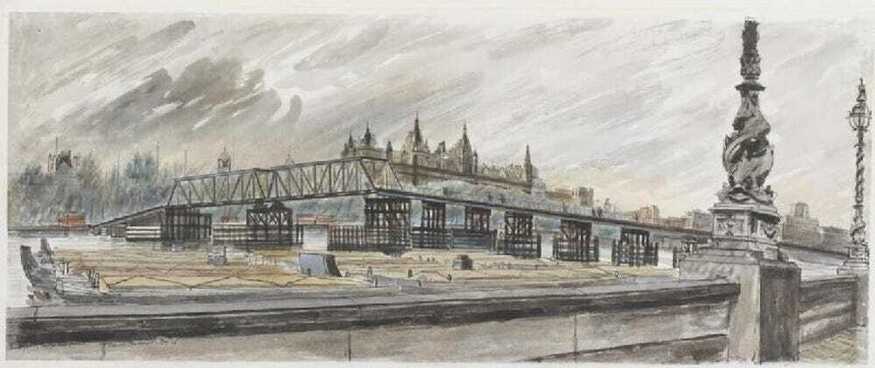
Were she to take up her palette on this spot today, then Macdonald would feel the jostle of punters heading into the Shrek Adventure or the London Dungeon, immediately behind. I wonder what London’s wartime planners would have made of that.
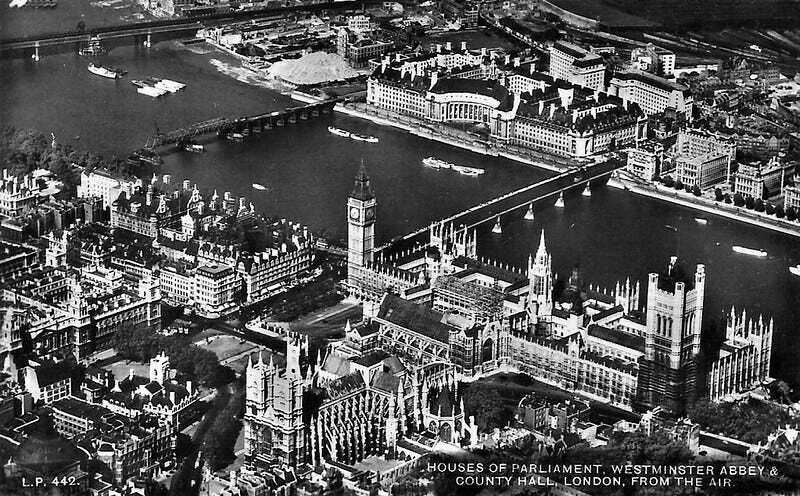
The sketch gives us a good impression of the bulk of the bridge. It had to clear the river by some height, with two large central spans to allow shipping to pass. We can also get a feel for just how much timber went into the supporting columns (as well as the decking and foundations). A couple of good photographs can be seen here, and here’s an aerial view:
Unlike the unused bridge in front of Tate Britain, this one did enjoy a bit of wartime action. We can see why by looking at the official Second World War bomb-damage map compiled in 1945.
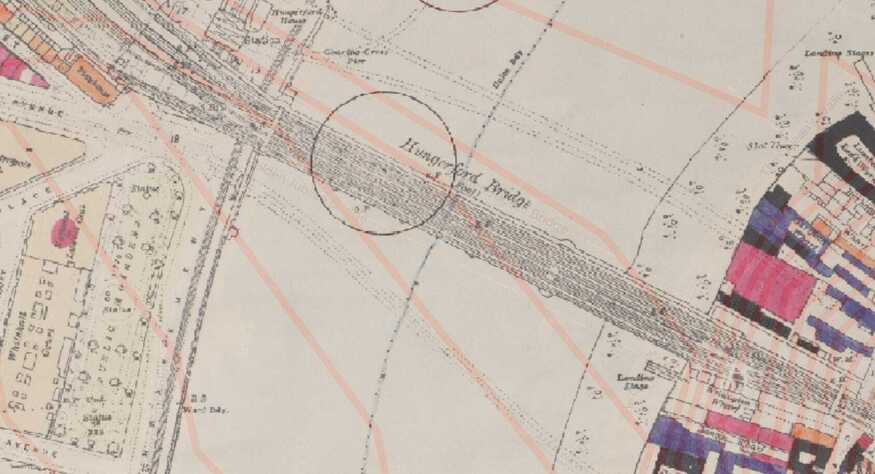
That circle over Hungerford Bridge records a strike by a V-1 flying bomb. It piled into the side of the bridge on 18 June 1944. A whole section of track fell into the Thames, but fortunately nobody seems to have been injured. The adjacent pedestrian walkway was also destroyed.
In response, the authorities opened the Emergency Bridge to foot traffic. By all accounts, it was little used. An Evening Standard reporter — Arthur La Bern, who would go on to write the novel behind Hitchcock’s Frenzy — crossed the bridge in October. He provides one of the few first-hand accounts of these Emergency Bridges. He was not impressed.
“The most dejected, deserted, forlorn-looking bridge I have ever seen,” was the verdict. “I spent an hour on the bridge and did not see more than half a dozen pedestrians cross it”. One reason, he discovered, was that a spurious ‘do not use’ notice was still pinned to the southern end. Britain’s wartime logistical planning was not always a well-oiled machine.
It seems there was little demand for any pedestrian crossing here, at least outside rush hour. Everyone used Westminster Bridge. Few noticed when Hungerford footbridge reopened in November. “After several hours,” reported the Evening News, “only one man, an Army Corporal, had crossed the Thames by the footpath.”
Like the Millbank Bridge, the crossing to County Hall lingered around for three years, but did see some minor use. It served as a fireworks platform during the Victory Celebrations of 1946 and, according to one newspaper aside, it briefly reopened in November 1947 to help with the crowds for the wedding of Princess Elizabeth and Prince Philip. After that it was taken apart for recycling. The strong Douglas fir piles and wooden decking were largely taken on by London County Council, providing material for some 600 new houses.
Another cache of wood — ‘250 standards of timber’ — was retained at the riverside. Towards the end of the 1940s, the embankment between Westminster and Waterloo bridges was expanded further into the Thames as part of preparations for the 1951 Festival of Britain. The old bridge timbers were reused in its construction, and may still be down there.
As it transpired, the bridge should have been left intact. It would have been extremely handy for the 1951 Festival. Instead, a new bailey bridge was constructed by the Army along the upstream side of Hungerford Bridge, and demolished again soon after the Festival. Today, one of the magnificent Golden Jubilee Footbridges stands here.
A third bridge at Chelsea
One other temporary bridge was built in the 40s, when “Emergency Bridge No. 3” was thrown across the Thames between Chelsea and Battersea Park. This one was particularly strategic. Chelsea Bridge led immediately north to Chelsea Barracks, a site expected to come under enemy attack. The Luftwaffe, it was feared, would no doubt also target the nearby bridges.
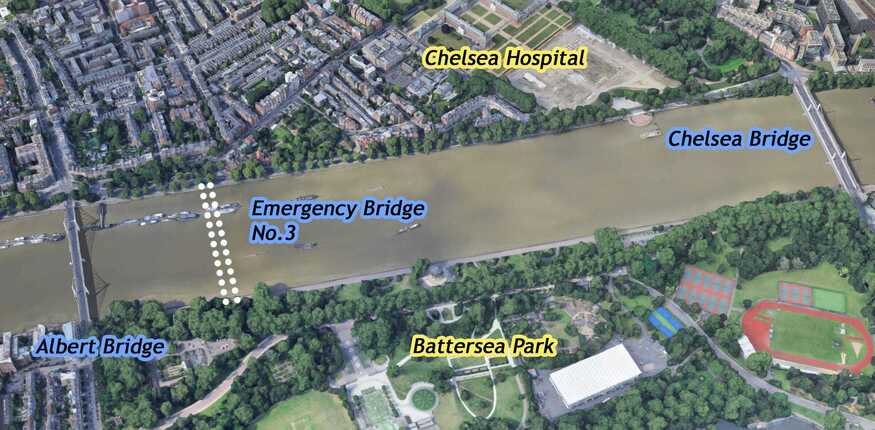
The third span was completed around the same time as its two downriver siblings, all to similar designs. And all three were constructed by Holloway Brothers, who’d recently worked on nearby Wandsworth and Chelsea bridges. The ever-exceptional A London Inheritance has a photograph.
Like the bridge at Millbank, it was never called into action. According to one press report, the Chelsea end was blocked off by a tree, which would, presumably, have been felled if the bridge were ever needed. It wasn’t, so it wasn’t, and the bridge lingered on like its siblings until its demolition in 1948.
It, too, was destined for Africa. The central span was loaded onto barges and shipped over to Uganda, where it became a key crossing over the Kazinga Channel, replacing a ferry. It was initially hoped that the bridge would improve communications in the region, a big obstacle to Britain’s ‘East African Groundnut Scheme’. This inept venture hoped to grow vast quantities of groundnuts in African soil to help with food shortages — particularly margarine — back in Britain. It failed miserably, but at least Uganda got a bridge out of it.
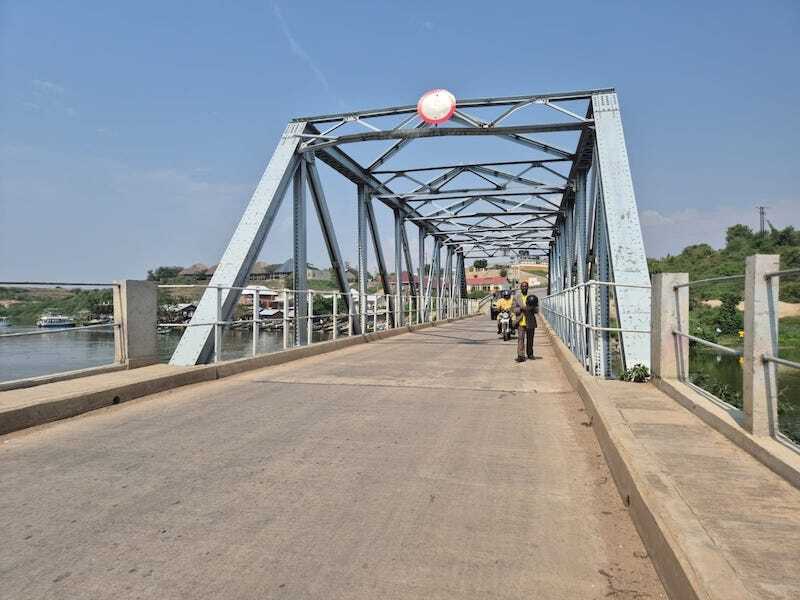
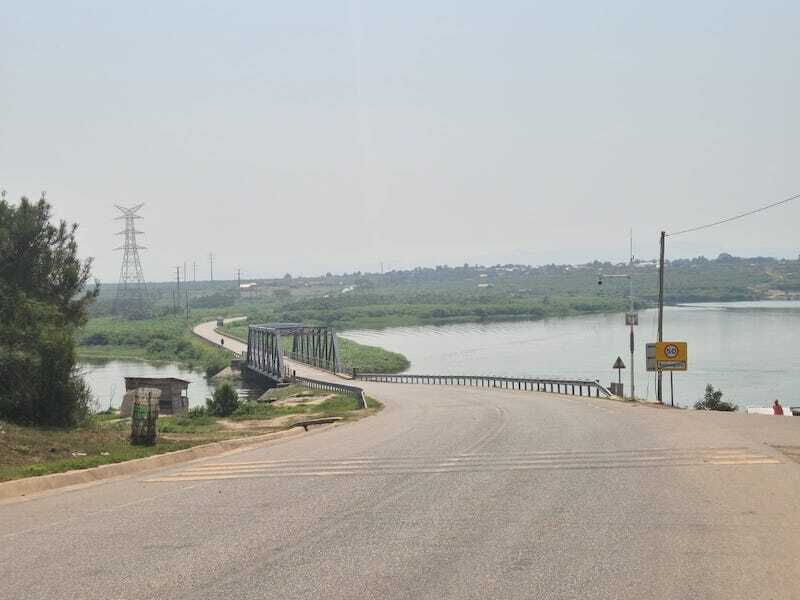
And it still stands. After initial publication of this article, reader Geoff Keys kindly sent me these photographs from 2025 of the bridge still spanning the Kazinga Channel. It also comes with a memorial stone:
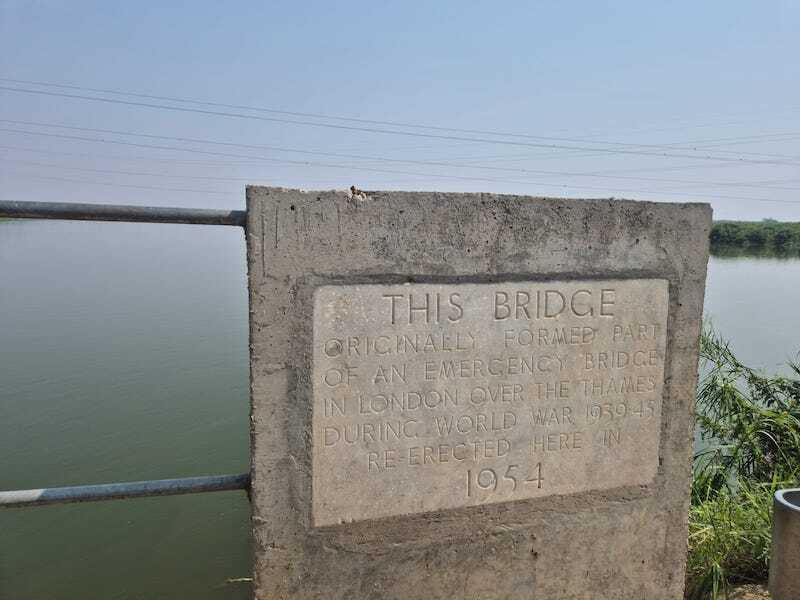
Next time someone asks you: “Did you know that an American once bought London Bridge and had it reconstructed in Arizona?” you can counter with “Yes I did. But did you know that two London bridges were also shipped off to Africa, and one of them still stands?”.