Adapted from a feature that first appeared in October 2025 on Londonist: Time Machine, our much-praised history newsletter. To be the first to read new history features like this, sign up for free here.
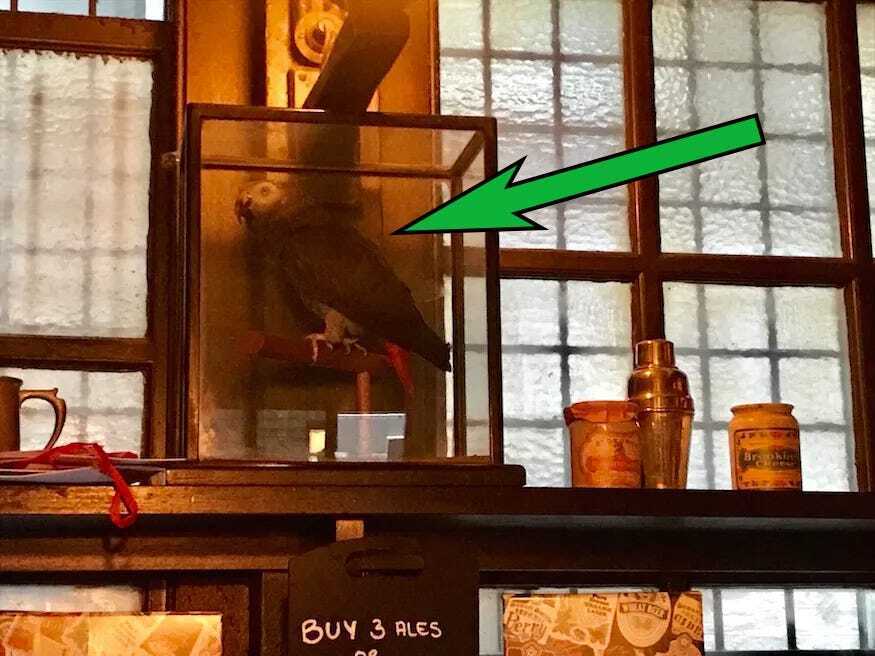
Meet Polly. Bereft of life, she rests in peace. This… is an ex-parrot.
Polly has been resident in Ye Olde Cheshire Cheese pub off Fleet Street since the 19th century; first as a living, swearing parrot and latterly as a stuffed ornament in the front bar.
Few pub-goers notice her today. I must admit to being on something like my 15th visit to this most excellent pub before I ever spied her roost. Yet, in the early 20th century, this was the most famous bird in the world.
Polly was a talking parrot, and her fame rested on her foul tongue. We do not know her choice of cuss. Rude words were seldom printed in those days. But almost every account of her life at the Cheese remarks upon her ‘Army language’ or ‘crude chatter’.
The profane psittacine was particularly popular with transatlantic visitors. Americans would flock to the Cheshire Cheese to dine on its famous puddings, and bask in the presence of this winged rudesby. It was said that the bird even developed an American accent.
Hence, Polly was much missed when she died, aged 40, on 30 October 1926. Her passing was noted not just in the attendant Fleet Street newspapers but in periodicals all over the world. Let’s take a deeper look at this most celebrated beakster.
Grey plumage, blue language
“No editor in this street of ink has anything like the world-reputation of the Cheshire Cheese Parrot,” wrote one newspaper, shortly before her death. [And I’ll use that pronoun, even though Polly may well have been male, because that was the assumption of the time.]
Polly had been, according to the Daily Telegraph, “on intimate speaking terms with Ambassadors of all nations, and regarded contact with American millionaires as a matter of course”.
The grey parrot had travelled to London from the west coast of Africa some time in the 1880s, taking up residence at the Cheese from about 1886. Her early years in the pub are undocumented. It was said, latterly, that she was present during a famous summit of leading statesmen (J. Chamberlain, Asquith and Haldane amongst them) which took place in the pub in 1899.
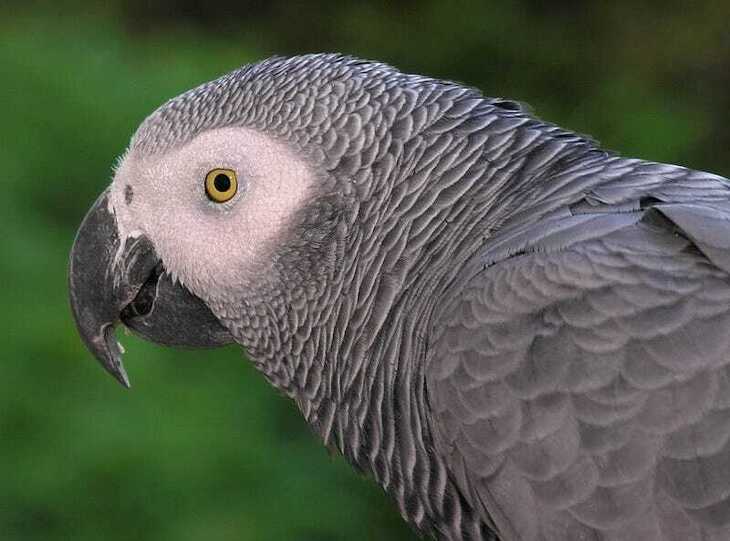
The bird was allowed free reign of the place, hopping along the ancient beams and landing on customers’ chairs. Visitors were encouraged to kiss the bird on the beak — a task that many approached with nervousness. None were ever nibbled, according to the landlord. (What nobody knew at the time was that the kissing of parrots could actually be fatal; beak-to-mouth transmission was one of the commonest ways of catching psittacosis, or parrot fever, which would kill around 800 people worldwide in an outbreak later that decade.)
Polly soon developed a reputation for colourful speech. “She had a vocabulary as lurid as that of Long John Silver’s atrocious bird, and her remarks lent zest to any entertainment at which she graciously consented to assist,” recalled the Daily Mirror in its obituary.
In-between expletives, Polly demonstrated a varied vocabulary. She was in the habit of saying “No, sir…” in the “exact ponderous manner attributed to Dr Johnson”. So haunting was her impression that “many Americans were led to believe she really knew the great lexicographer in her youth”. (In truth, Johnson died in 1784, a whole century before Polly’s arrival at the Cheese.)
Other verbal ejaculations included the word “Rats!”, which she regularly squawked at customers. Long after the First World War she could be heard saying: “To hell with the Kaiser”. And when asked “What will you have?” her reply was always “Scotch”. Indeed, this seemed to be her answer to everything:
Lunching at Ye Cheshire Cheese in Fleet Street, I renewed acquaintance with the small grey parrot there. The bird perched on a chair back close to a party of Americans, and the waiter said — “Tell the ladies what they should take for a cold, Polly.” And Polly answered in a deeply lugubrious tone — “Scotch!” (Sunday Post, 4 March 1923)
Other psittacine utterances included “Puss, puss, puss!”, “Hurry up with the pudding”, “Sausages on brown mash,” and the clichéd “Give us a kiss” (which many people did). Her most famous trick of all, though, was to imitate the sound of a cork popping out of a bottle, and the subsequent glug of claret hitting glass. On armistice night in 1918, Polly supposedly did this impression so many times that she fainted.
An eventful summer
Such insights into Polly’s character pop up frequently in the newspapers over the first quarter of the 20th century. Her most eventful period came during the summer of 1905, however, when she embarked on a series of unlikely adventures.
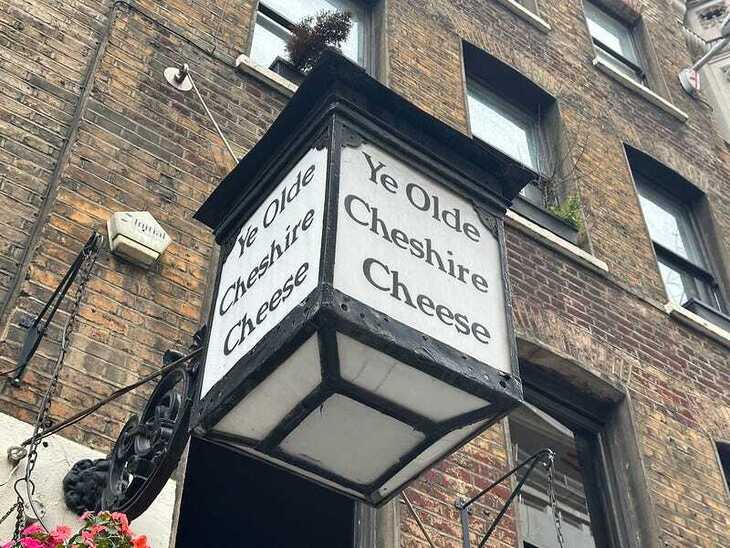
The first, on 3 August 1905, was to involve another famous animal. Jumbo Junior was a much-loved baby elephant touring with the Royal Italian Circus. The pint-sized pachyderm was brought to the Fleet Street pub at the invitation of some admiring American ladies. After squeezing in through the ancient doorway, Jumbo attempted to sit in what was believed to be Samuel Johnson’s favourite chair, and was treated to the pub’s celebrated pudding and some bananas. He was then granted an audience with Polly — a unique meeting between the two most-famous animals in London. What they thought of one another is not recorded.
Perhaps the encounter stirred an awakening in the parrot. She’d had her first glimpse of a world beyond the dim, tobacco-stained rooms of the Cheshire Cheese. In any case, a few days after the trunkster’s visit, Polly fled the pub for the first time in her life. Such was her fame that the Press made up various stories about her escape. One account had her bumping into James, the notorious cat of the London Press Club, which lived in the same alley. The pair rubbed along rather well, considering the ancient enmity between feline and avian.
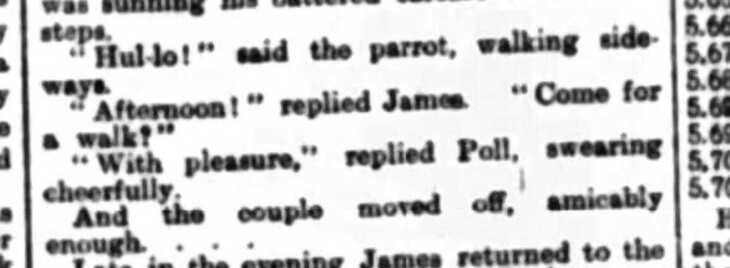
Whatever bestial rendezvous Polly engaged in, she was soon recaptured, supposedly by a compositor near Holborn Viaduct. A few weeks later, though, and the bird had flown once again. This time she stayed away for several weeks. The head waiter, a well-known character called ‘Poor Tom’ was apparently “as inconsolable as Ovid”. A handsome reward was offered, and Polly eventually found her way back home in October. Aside from a two-day sojourn at London Zoo in 1910, and an oblivious spell at the taxidermist, she never left the Cheese again.
Famous visitors
Polly did not need to leave the pub to see the world. The world came to her. She even met royalty. In 1919, Princess Mary — sister of the future Edward VIII and George V — stopped to give the parrot a stroke after opening a new club to the rear of the pub. “To her abiding credit,” related the Hull Daily Mail, “Polly did not indulge in that profane kind of chatter for which she is famous”.
In 1921, Charlie Chaplin paid a hush-hush visit and spent much of it playing with the bird. He then shook hands with the entire staff (with the exception of Polly) before sneaking out, under guidance of the manager, through the network of alleys north of the pub. Chaplin was at the height of his fame and one of the most recognisable faces on the planet, but he was shy of crowd attention.
A couple of years later the Chancellor and soon-to-be-Prime Minister Stanley Baldwin stopped by. He confessed that he’d never heard of the pub before, but was tipped off by an American friend. While in the Cheese, Mr Baldwin enjoyed a slap-up meal and “exchanged badinage with the parrot”. His successor Philip Snowden also visited, in 1924. “Tell Mr Snowden what the last Chancellor drank when he was here,” the staff asked Polly. “Scotch!” was, of course, the answer.
“This is an ex-parrot”
By this time, Polly was starting to show signs of her age. She became noticeably less voluble and prone to ‘off days’. From early 1926, the papers ran regular ‘sick as a parrot’ updates on her condition, especially from July when she picked up pneumonia. After a three month struggle, she finally gave up the ghost, aged 40.
Polly had been on squawking terms with most of the journalists and editors of Fleet Street. Hence, her demise was widely reported in the British Press. But the story had wings. Her popularity among American visitors ensured her obituaries in newspapers throughout the States. Australian papers also covered the story. Her passing was even announced on the 2LO radio station, recently set up in Strand.
Back in the Cheese, her loss was deeply felt. The pub’s manager of the time, Mr H.J. Wortham, described it as a “bitter blow”. He immediately decided to have the bird preserved and displayed in the pub. He also held a charity collection in memory of Polly, which raised enough money to fund a new bed at nearby Bart’s Hospital.
A graceful epitaph to the stuffed bird then appeared in the Morning Chronicle:
The pop of corks, the gurgle of wine,
Kissing and human speech were mine,
Accomplishments that could not save me
from the dry and silent grave.Enough. No maudlin tear be shed:
Not all of Polly shall be dead.
Though silent, here upon the shelf
I stand — in memory of myself.
And there, upon the shelf, she stands silently to this day.
Polly II… Just When you Thought it was Safe to go Back into the Pub
The pub almost immediately acquired another parrot of similar plumage. The sequel was known as Polly II, and she was also a studious mimic, entertaining patrons for the next 20 years. During the Second World War, she developed the unsettling knack of imitating the whistle of an incoming high explosive. She wasn’t short of training material. The area immediately north of the Cheese was heavily bombed in the war, and the pub had a few near misses:
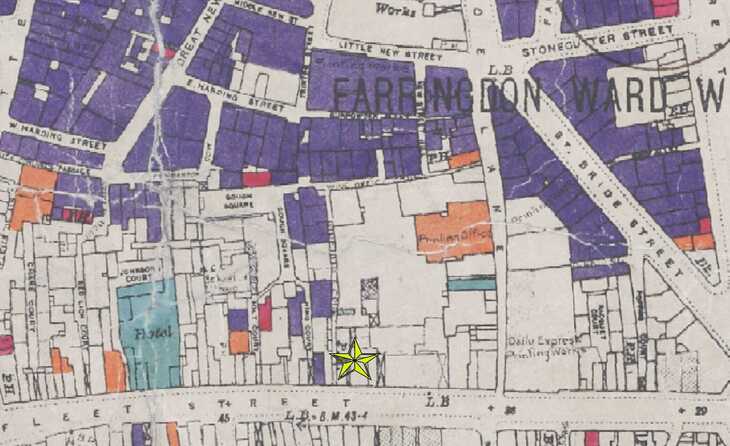
Indeed, the parrot had a narrow escape in 1941 when part of the pub caught fire in an air raid. Polly II was later rescued unharmed from her basement shelter. She would live on until 1949, whistling her way in ghastly alternation between the sound of falling bombs and the melody from Woody Woodpecker.
The pub has been home to at least two further parrots. One bird, acquired in 1971, lasted only a few months and then (according to the Evening Standard) “died of asthma without saying a word”. The following year, an eight-year-old African grey parrot, also called Polly, was gifted to the Cheese by Rhyl Zoo. This talented avian was apparently able to speak in both English and Welsh, and carried a reputation for politeness. I’m not entirely sure what happened to it after 1972, but it seems to have been the last of its kind to inhabit the pub.
More Dead Parrots
Because London is a big, rich city, it would never do for it to harbour only one famous dead parrot. More noted even than Polly is the “Norwegian blue”, nailed to its perch in the celebrated Monty Python sketch:
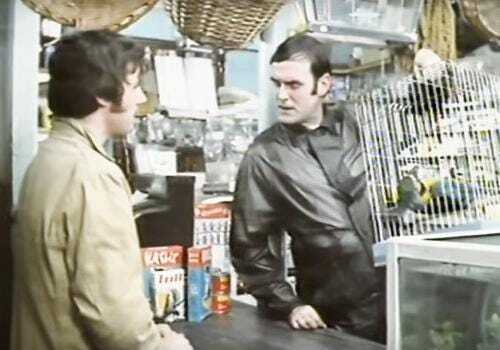
The original version of the sketch was filmed in the studio, but a 1971 reshoot took place in an actual pet shop on Caledonian Road. (Perhaps appropriately, there is some argument as to exactly which shop.)
Visitors to Greenwich can find yet another dead parrot. This time, it’s a painted bronze replica of a sulphur-crested cockatoo.
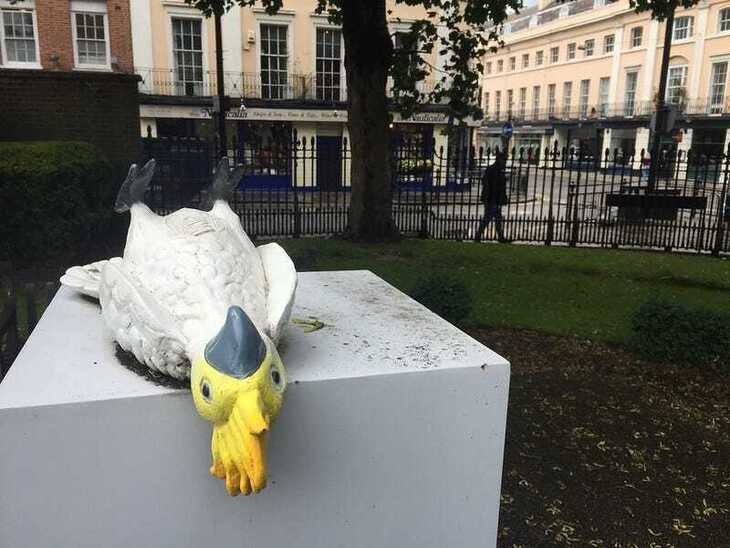
The belated bird is the work of artist John Reardon, and it’s been not-pushing-up-the-daisies since 2009, just around the corner from the National Maritime Museum. It’s unclear why Reardon chose this peculiar subject, though it must in part be an homage to the Python sketch.
Finally, I’ll leave you with an image of some living parrots… specifically the super-tame wild parakeets of Kensington Gardens. A few years ago, I discovered a spot in the park where the birds will flock to anyone who offers a half-eaten apple:
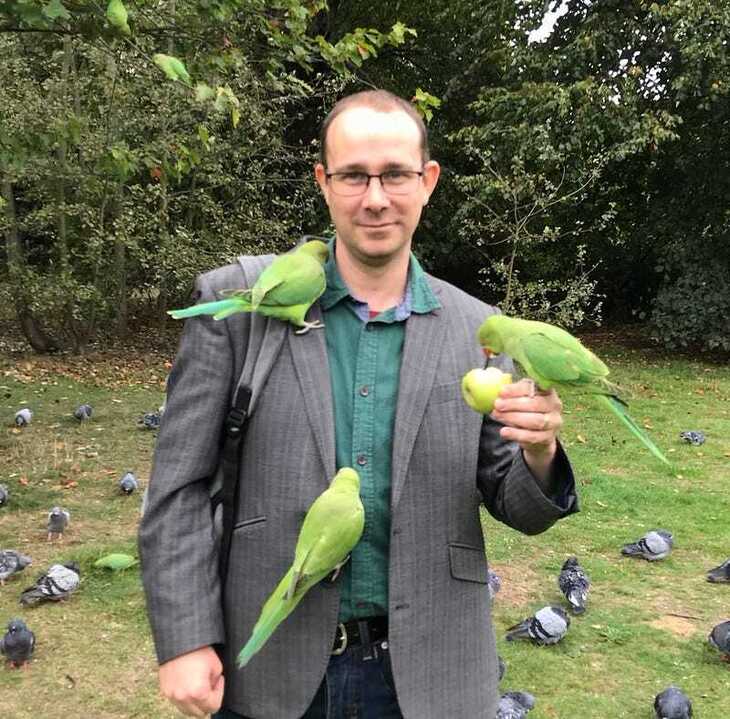
We might not have sweary pub parrots anymore, but the skies of London are now filled with Polly’s more colourful cousins.