2026 marks 75 years since the Royal Festival Hall opened on London's South Bank — or to be more precise, a stretch of industrialised marshland. A new book, Royal Festival Hall: A Living Icon, celebrates the cultural institution — and from it, we've selected some photos of the Hall's construction.
"What this country needs is a tonic.
a clean white box from the future to brighten a blackened city
with foyers where people can really meet people
and stairs that sweep in and out of filtered sun."
So begins Erica Hesketh's 2024 poem Centrepiece. In fact, that very tonic first appeared 75 years ago, as the Royal Festival Hall; as the historian Dan Cruickshank puts it: "a tangible expression of a burning desire to create a better society after the destruction inflicted on London during the Second World War."
OK, so the RFH might not have quite been a 'clean white box'. The conductor-composer Sir Thomas Beecham even ranted to the Liverpool Echo on the building's unveiling in 1951: "In the course of a long life I have seen very many important buildings in this country and I question whether in 350 years there has ever been erected on the soil of this grand old country a more repellant, a more unattractive — unattractive is an understatement — a more ugly and more monstrous structure."
But time is a great healer, and most Londoners would concede now that the RFH is an integral cog in not only the South Bank's landscape, but that of London's rich culture. In the book's foreword, Cruickshank describes the Hall as "a place of myth and imagination as well as of tangible fact... palatial, but open to all — a palace for the people."
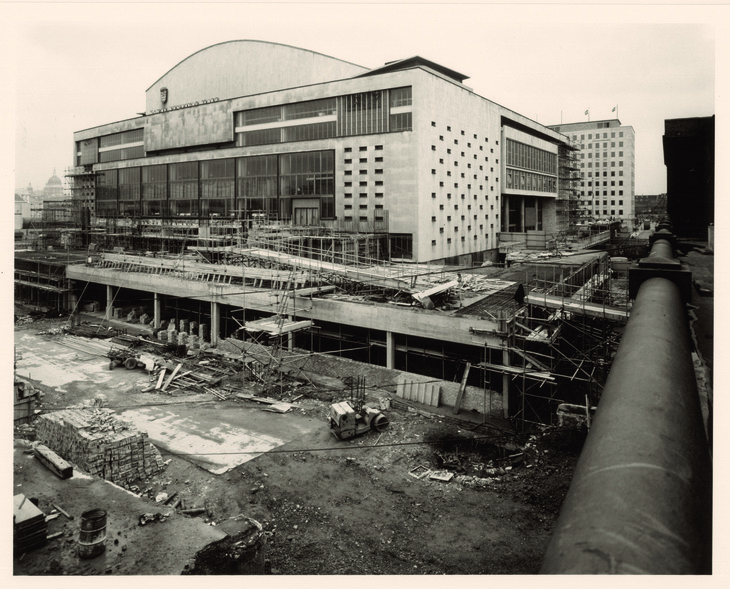
Cruickshank also recalls the impression it had on him in its early years: "I still remember how mighty its presence seemed to me at the time."
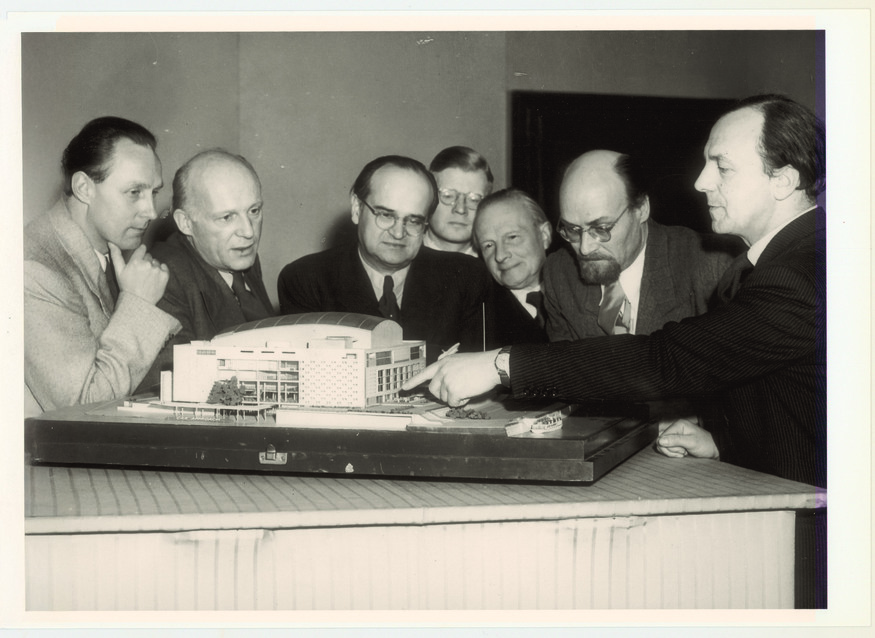
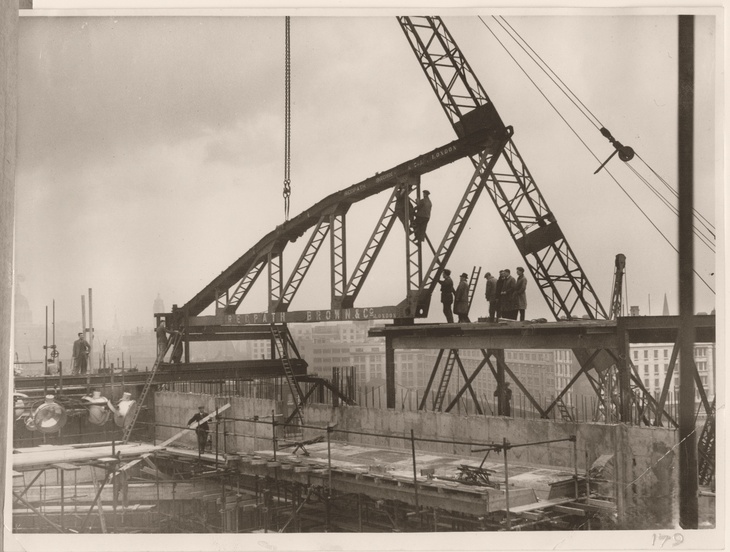
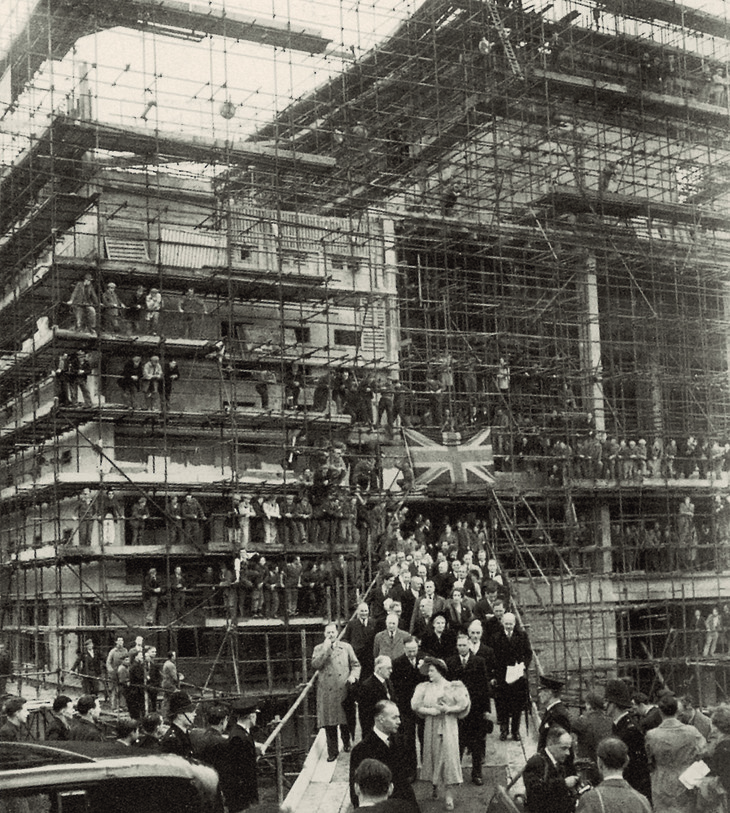
Indeed, as a post-war Londoner, it must've been quite something to see this brutalist 2,700-seat concert hall slowly rise on the riverbank. Certainly it was quite a job to make it a reality. Not only was the proposed site surrounded by busy rail lines, it was on industrialised marshland which had to be drained, before a new river frontage was built in front of it. Few concert halls of its size had been constructed before; what's more, space was extremely tight.
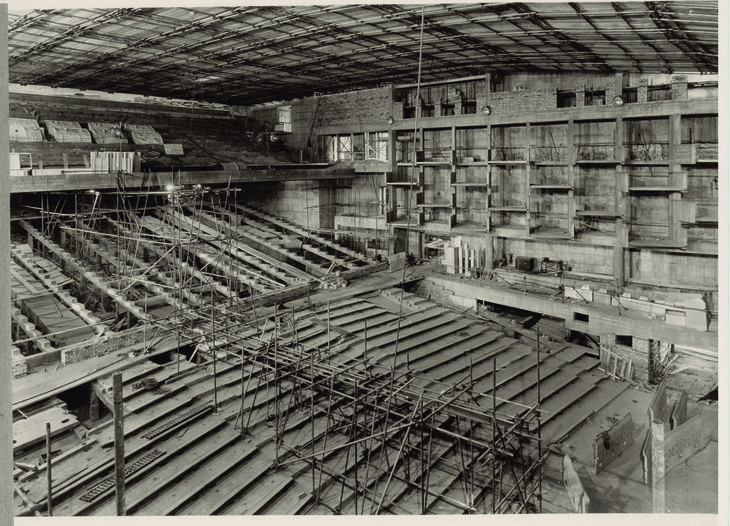
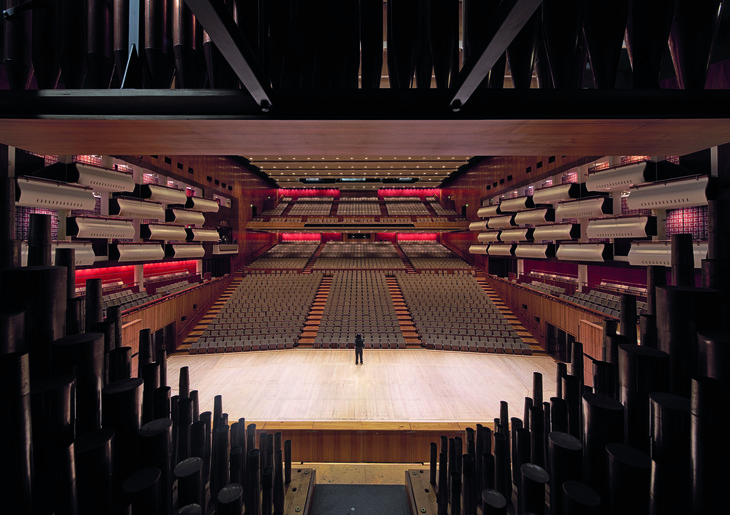
The architects Robert Matthew and Leslie Martin were called on to make it happen. "The solution to these problems," write Eleanor Jolliffe and Sandy Rattray in Royal Festival Hall: A Living Icon, "was to raise the auditorium as an 'egg' within the box of the outer envelope of the building. This provided a degree of sound isolation, further improved by giving the 'egg' two layers of concrete 25 centimetres thick and two sets of doors at each entrance."
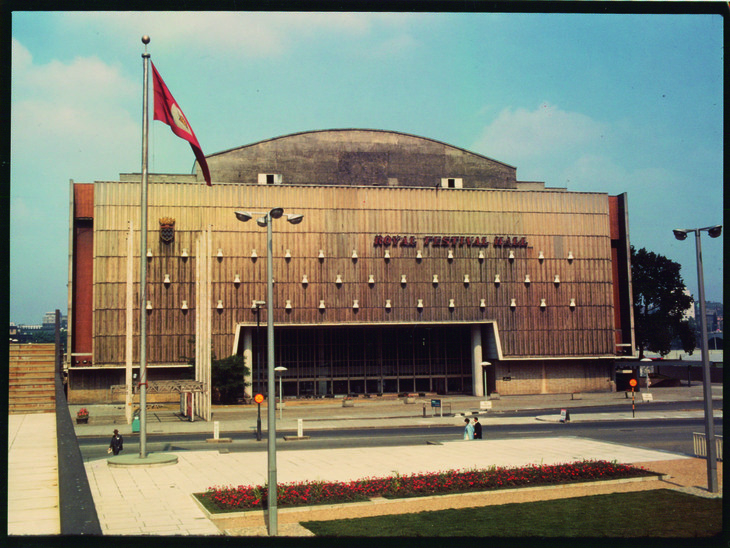
While the architects were inspired by Gothenburg's concert hall, Finsbury Health Centre, which had been built in 1938, was perhaps an even greater influence; the Twentieth Century Society still insist it's "arguably modern architecture's most important single achievement in England in the first half of the 20th century".
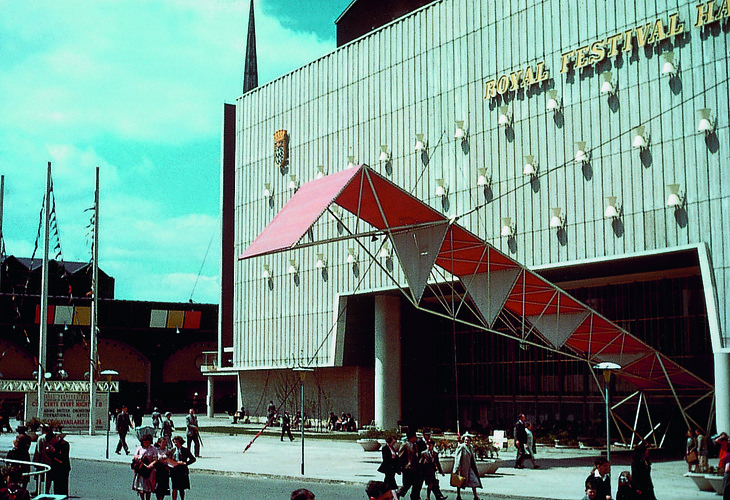
If the Royal Festival Hall's exterior was a statement, then the interior of its concert hall was a statement and a half: "The internal walls, stage canopy and floor were clad in elm, sycamore and birch, with a lower section to the side walls of teak ribs with air gaps, often referred to as 'Copenhagen knuckle'." the book tells us.
As for the 'floating' boxes — something straight out of a sci-fi movie, albeit one with a healthy budget — the great Le Corbusier once called them "a joke, but a good one".
Ian Nairn was similarly pithy: "An extraordinary building," he smirked, "It nonplussed everyone when it was built, and after fifteen years public feeling still seems to be just as equivocal and disturbed... In a hundred years' time, after a concert, people will still leave out of key with its cerebral relentlessness."
Whether your opinion of the Royal Festival Hall veers towards that of Nairn or Cruickshank, three quarters of a century on, it continues to be not only an architectural talking point, but the kind of landmark building that people will happily write (and buy) entire books about.
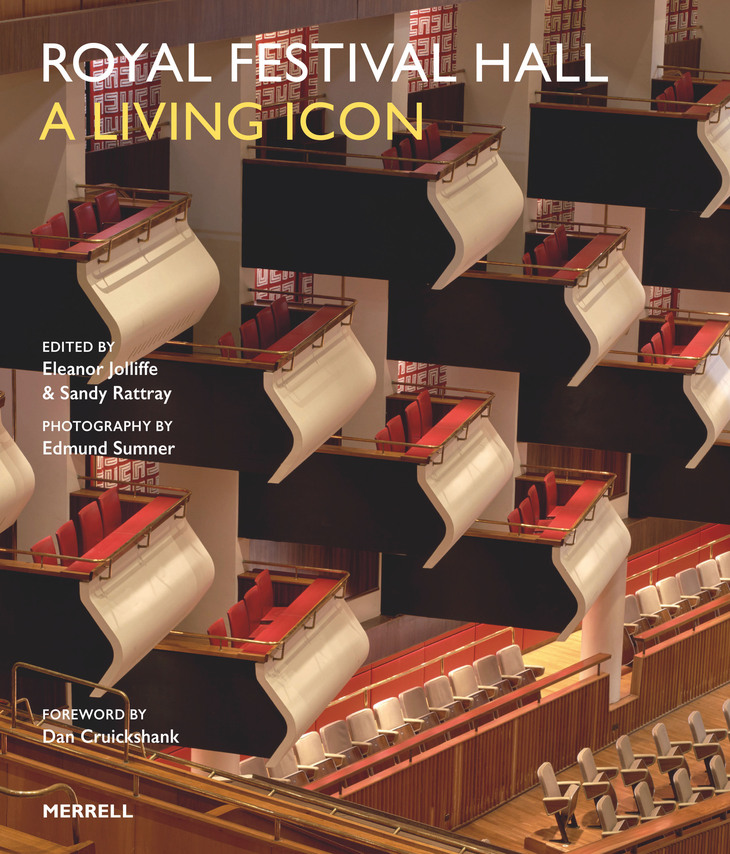
Royal Festival Hall: A Living Icon edited by Eleanor Jolliffe and Sandy Rattray and with a foreword by Dan Cruickshank and photography by Edmund Sumner, published by Merrell Publishers on 16 April 2026.
We featured this book because we know it's the kind of thing our readers will enjoy. By buying it via links in this article, Londonist may earn a commission from Bookshop.org — which also helps support independent bookshops.