Will Noble
20 Jaw-Dropping Images Of A Lost London
Love London history? You'll want to sign up to our Londonist Time Machine newsletter .
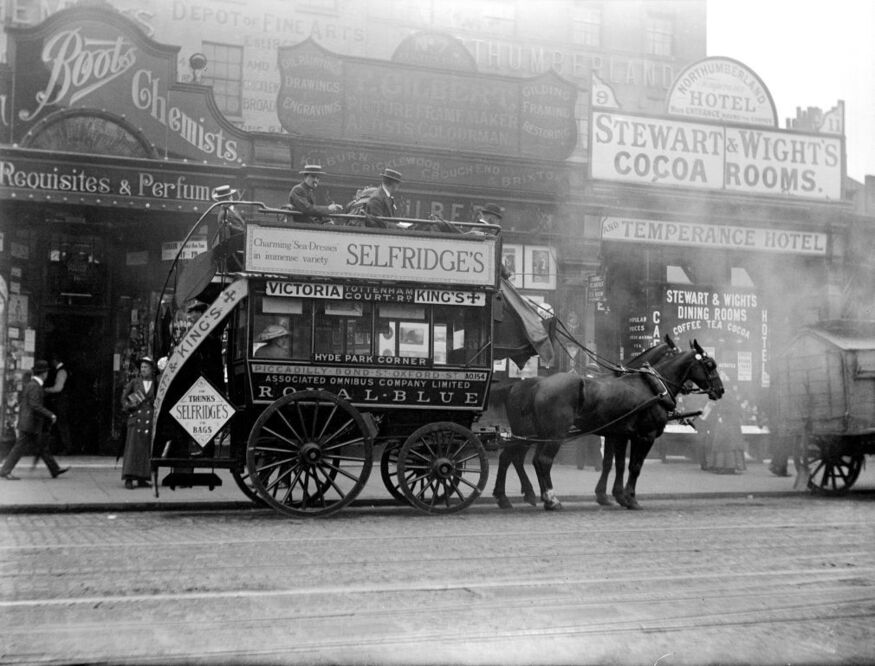
Euston Road, Camden, 1912. View of the 'Royal Blue' horse omnibus in front of numbers 5-7 Euston Road. The omnibus carries route information and advertisements for Selfridge's. The shops behind, including Boots the Chemist and the Northumberland Hotel, are also swathed in advertisements. © Historic England
You can almost hear the clatter of hooves on the cobbles, taste the soot from steam trains and forges on your tongue.
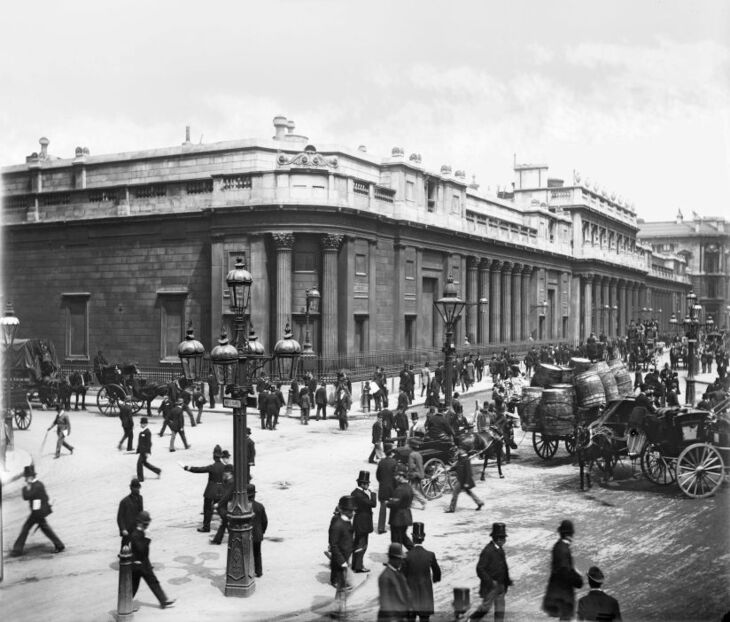
The photographs of a 'lost London' — taken between 1870 and 1945 — are liable to make you go slack-jawed: here are crisp captures of a city that is, in many ways, alien to us now: blackened establishments peddling stewed eels; top-hatted clerks striding around the icy pavements outside the old Bank of England; Tower Bridge in the making.
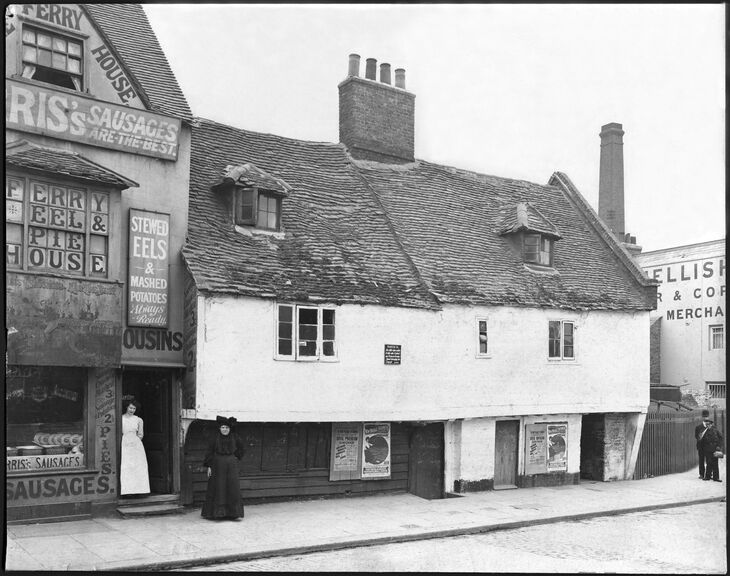
6-7 Nile Street, Woolwich, c1900. These picturesque timber-framed, 16th century cottages, in what was once called Hog Lane, formed part of a wider group of ancient buildings, which were partly demolished for the Free Ferry in 1887-88. To the left is the Ferry Eel and Pie House with an elegantly-attired proprietress in the doorway. To her left, the older woman wears widow's weeds as a mark of mourning. A poster offers New Palace Steamers to Southend, Margate, Ramsgate, Deal and Dover. © Historic England
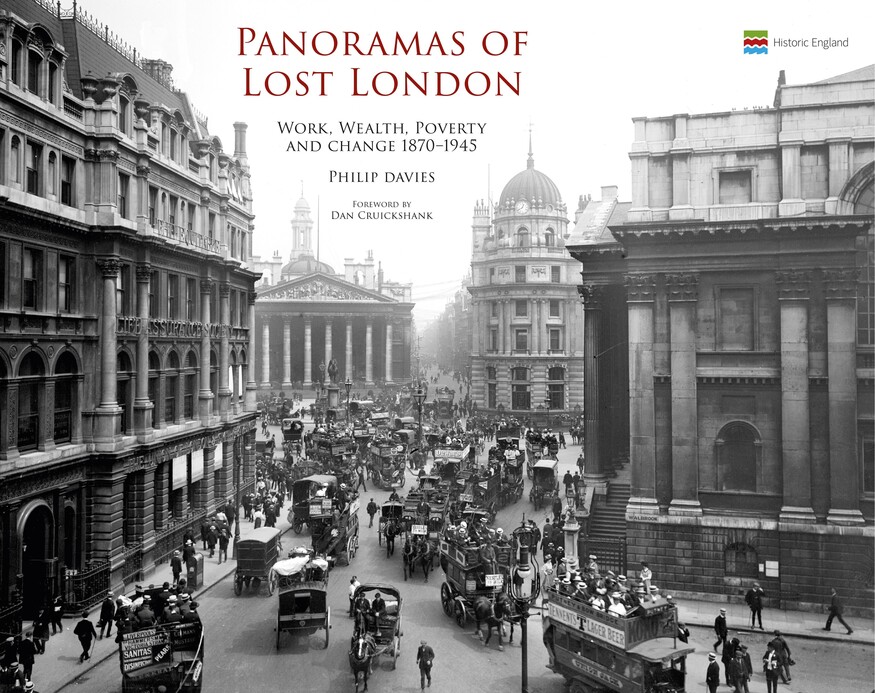
These images (and many more besides; there are some 300 in total) can be gawked at in the re-release of the book Panoramas of a Lost London. "Looking through the pages I feel overwhelmed thrilled, delighted and, of course, despairing..." confides historian Dan Cruikshank in the foreword, "...for this book reminds in a most startling manner of the great changes that have overtaken London during the last one hundred and forty years, the way its special character has been eroded and of those ancient ways of life that have been lost forever."
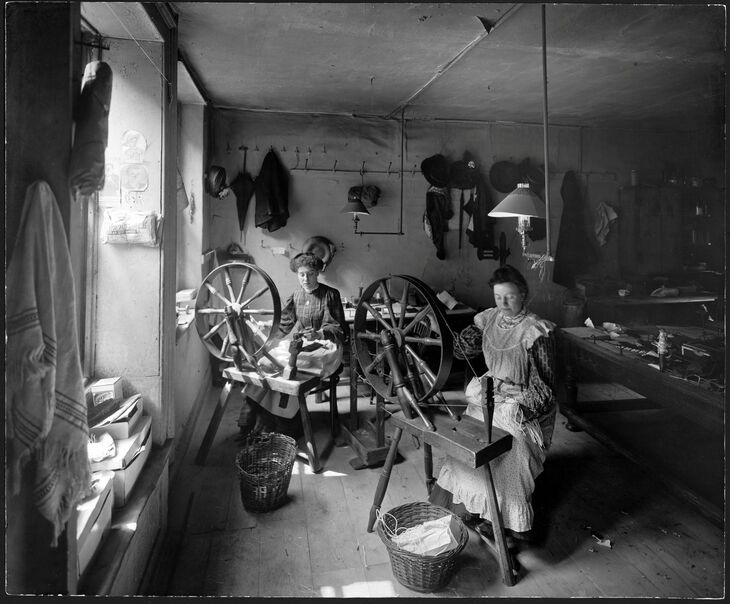
13 & 14 Archer Street, Soho, 20 May 1908. The upper floors of many Soho houses were given over to workshops, often serving the larger West End stores, particularly the rag trade. In this case the two women are engaged in upholstery and trimming for the furniture trade. © Historic England
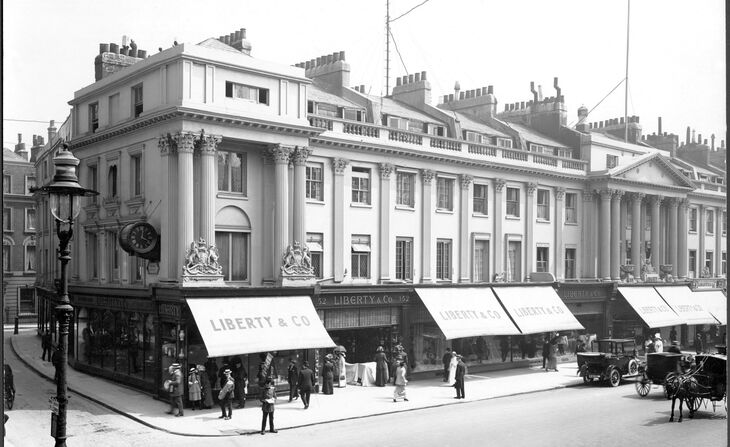
154-142 Regent Street, 1913. Originally Liberty's store stood on the east side of Regent Street south of the junction with Beak Street which can be seen to the left, before it relocated further north in the early 1920s. The paired fluted Corinthian columns are embellished with two grand royal warrants. Around the corner in Beak Street, the Liberty's clock stands frozen in time at 4pm. © Historic England
Bank of England, Threadneedle Street, c.1895. A corner view of the original Bank of England building with pedestrians and horse-drawn vehicles in the foreground. The building was constructed by Sir John Soane in 1788 on a three-and-a-half-acre site, but later extensively rebuilt between 1923-39 by Sir Herbert Baker, retaining Soane's outer perimeter screen. © Historic England
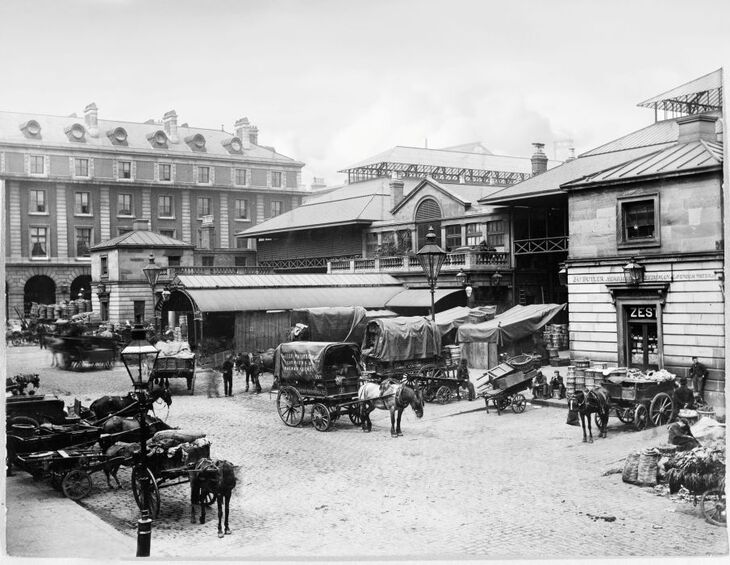
Covent Garden, c1895. Covent Garden in its heyday as a bustling fruit market with Bedford Chambers in the background. The right to hold a market on the Covent Garden site was granted by Charles II in the 1670s. © Historic England
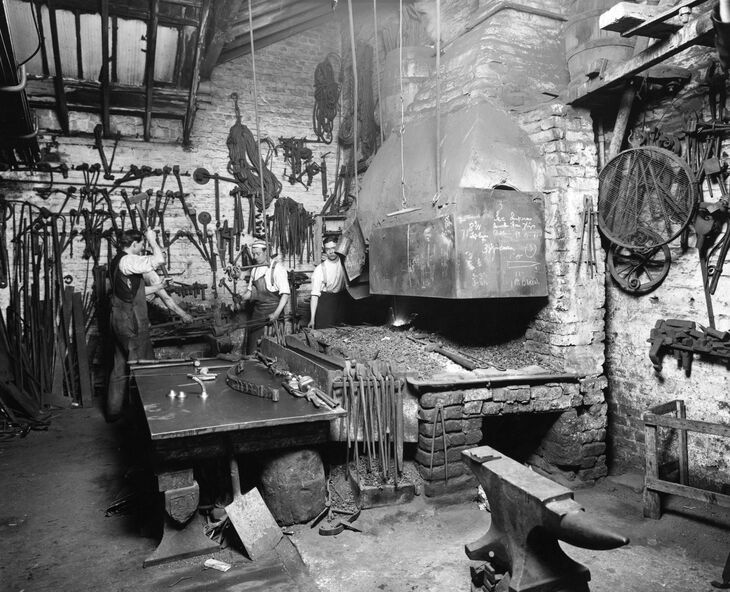
Denmark Place, St Giles's, c1908 Denmark Place is a narrow passage behind the north side of Denmark Street, which housed a range of small workshops. Behind No. 27 was a blacksmith's forge. The back of the forge chimney is not bonded to the wall to minimise the risk of fire. © Historic England
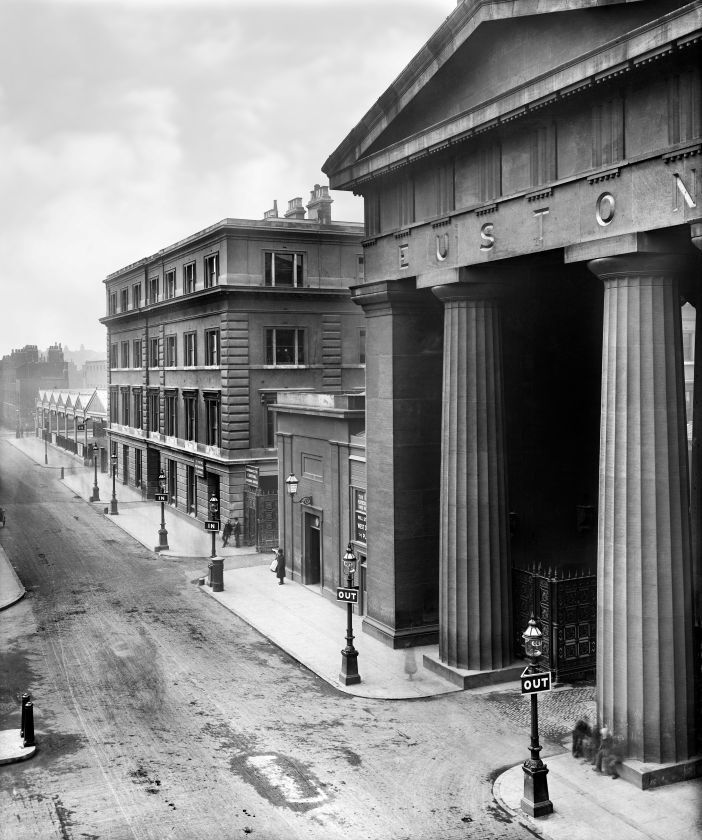
Euston Arch, c1895 The Euston Arch was a heroic monument to Britain's railway age. This huge Greek Doric propylaeum, built in 1838 to the design of Philip Hardwick, rose over 70ft to form a gigantic gateway to Euston, the first mainline terminus in a capital city anywhere in the world. Its demolition in 1962 triggered a public outcry which did much to boost the growth of the conservation movement and popular reaction against the institutional philistinism which characterised the post-war period. © Historic England
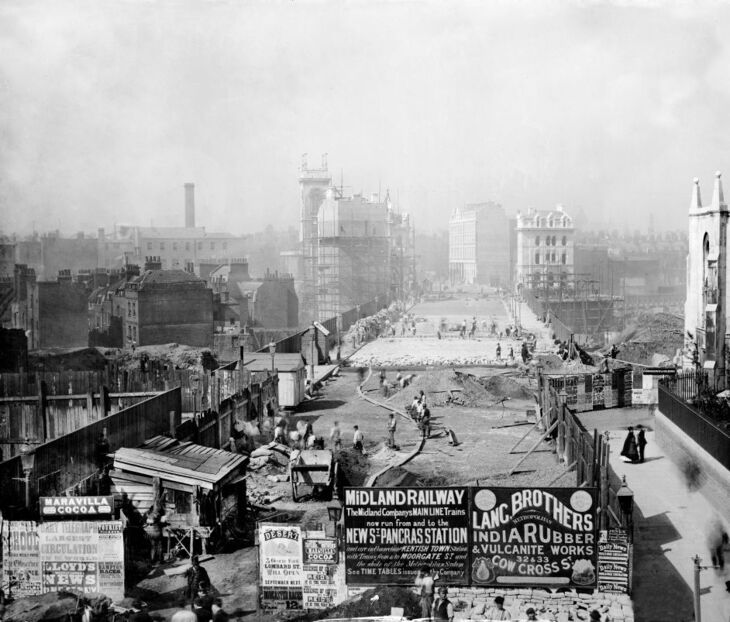
Holborn Viaduct, 1868. Looking west to the construction of Holborn Viaduct. Completed in 1869, it connected Holborn Street with Newgate Street. The hoarding in the foreground advertises St Pancras Station, opened in 1868. To the extreme right a young couple can be seen engaged in intimate conversation. © Historic England
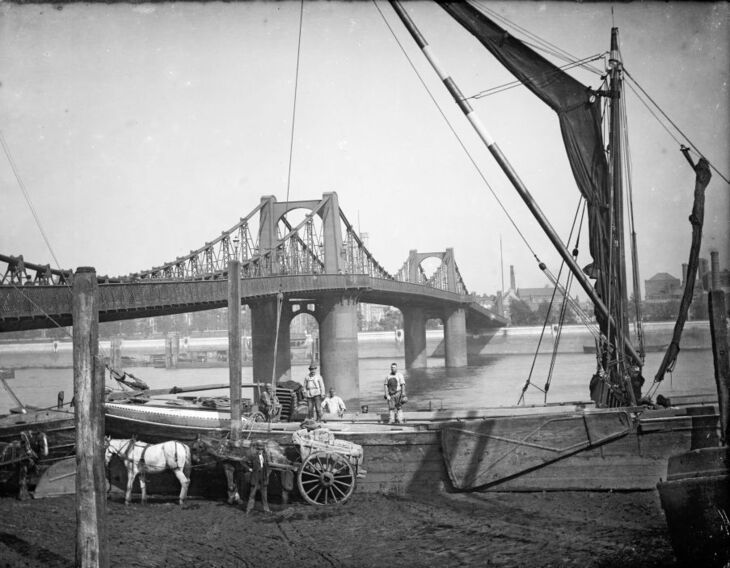
Lambeth Suspension Bridge, c1865. The bridge was constructed across the River Thames between 1861 and 1862. In the foreground a crane unloads bricks from a barge onto a cart. © Historic England
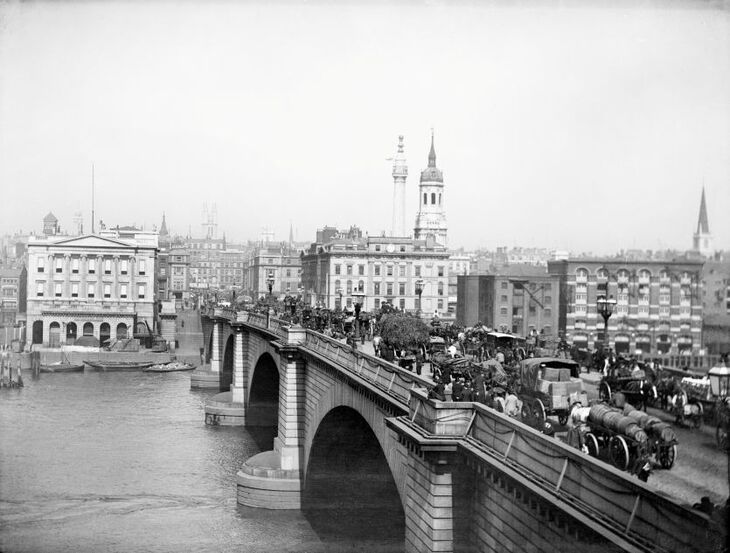
London Bridge, c1880. Heavily laden carts cross the bridge. At the beginning of the 19th century the medieval bridge was becoming so congested that a competition was launched to design a replacement. John Rennie's design was selected and his five-arched stone bridge was opened in 1831. © Historic England
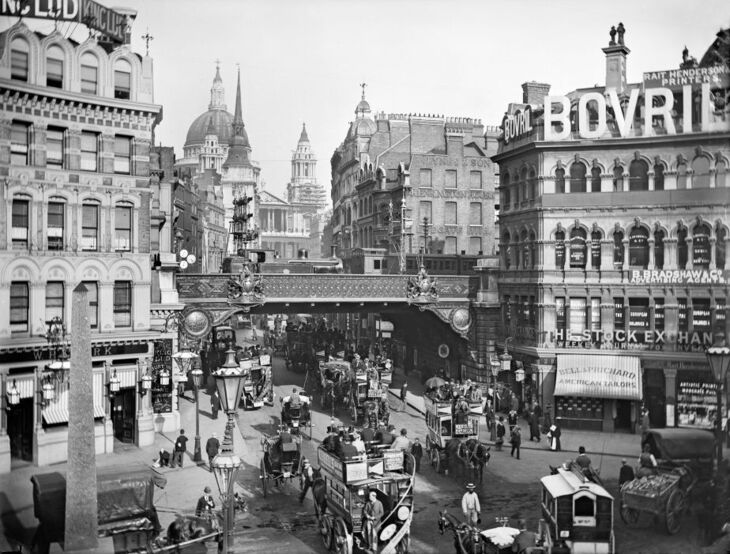
Ludgate Circus, c1895. A busy street view of Ludgate Circus looking towards St Paul's Cathedral with horse-drawn buses in the foreground and a steam train on the bridge. The Circus was formed at the junction of Ludgate Hill and Fleet Street between 1864 and 1875. © Historic England
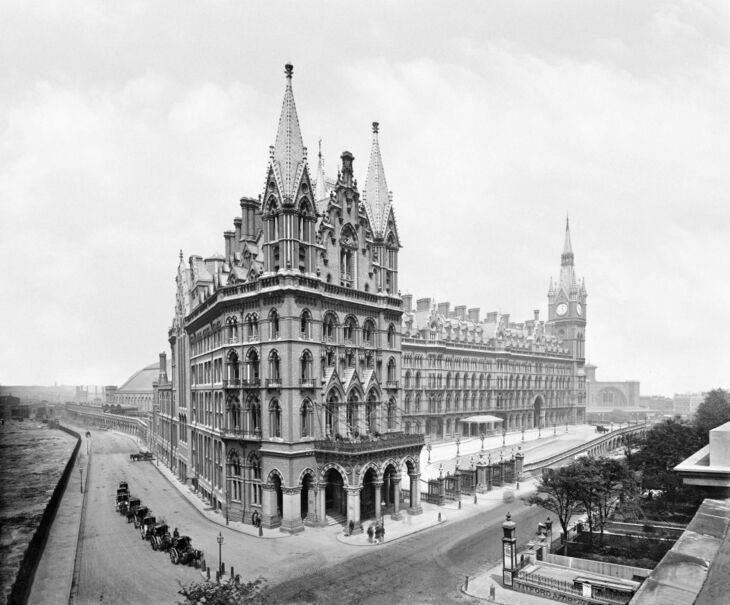
Midland Grand Hotel, Euston Road, Camden, c1890. Designed by Sir George Gilbert Scott, and a masterpiece of Victorian Gothic architecture, the completed hotel opened in 1876, but by 1935 its reputation had declined and it was closed and used as railway offices. In one of the most ambitious and visionary conservation projects of the last 30 years, it was eventually fully restored as a five-star luxury hotel and apartments and re-opened in 2011 as the St Pancras Renaissance Hotel. © Historic England
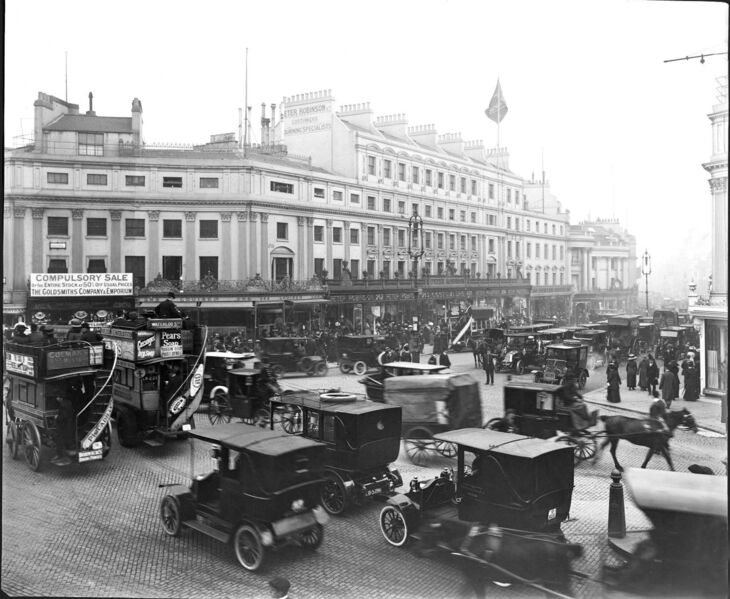
Oxford Circus, 19 October 1910. Oxford Circus was, and remains, a vibrant focus of London's West End, and the central node of one of the world's great shopping streets. This view from the north-west corner shows the juxtaposition of horse-drawn and motorised vehicles on setted street surfaces. The taxis boast swanky white-walled pneumatic tyres. A new electric arc lamp can be seen in the centre of the road. © Historic England
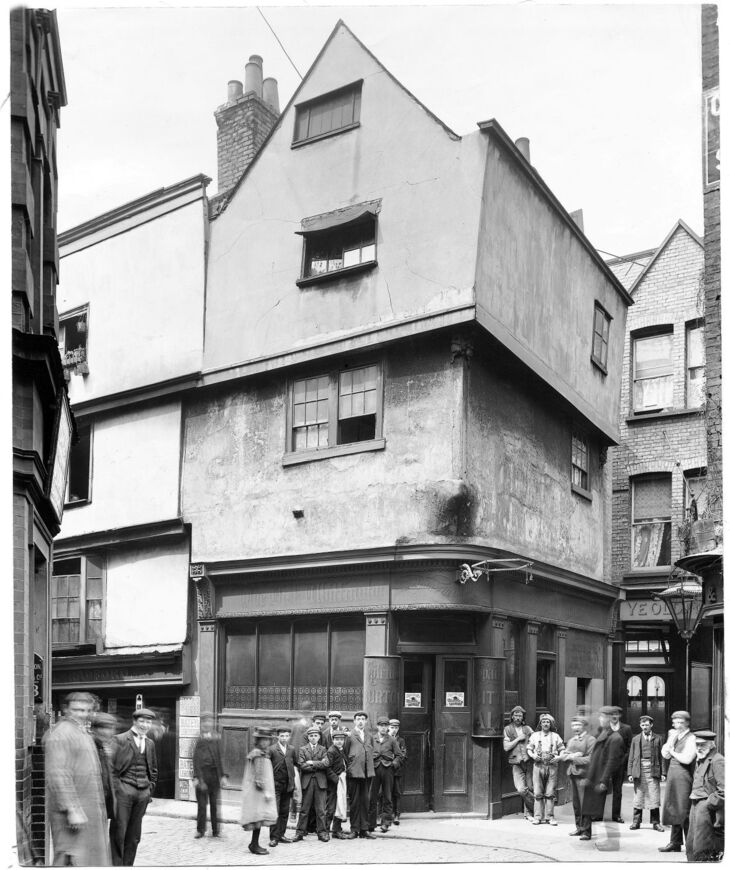
The Old Dick Whittington Inn, Cloth Fair, 16 May 1904. A fascinating vignette of working London frozen in time. The figures wearing aprons are probably porters from nearby Smithfield Market, whilst the two workmen by the entrance doors could be colliers or labourers. Note the enamel signs for 'Batey's Ginger Beer and Lemonade'. Erroneously described as the oldest inn in London, the Old Dick Whittington was demolished in 1916. The brick building beyond still survives. © Historic England
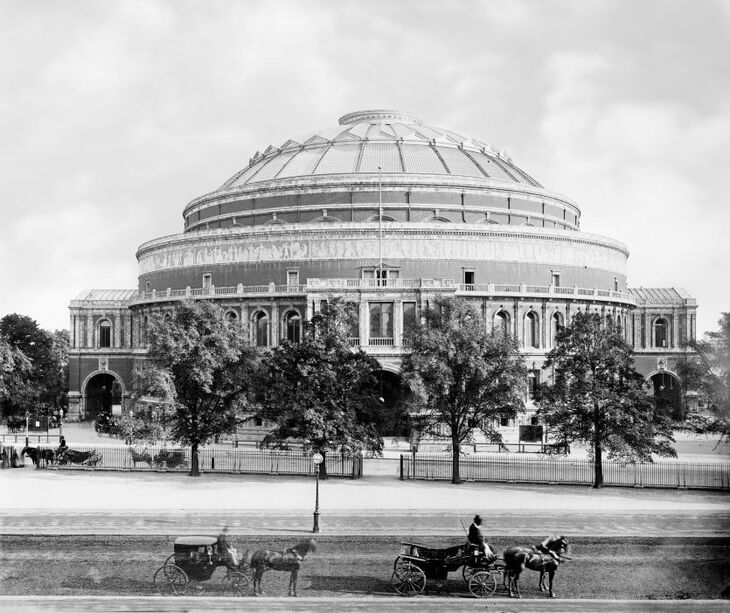
The Royal Albert Hall, Knightsbridge, c1890 Opened in 1871 by Queen Victoria, the Royal Albert Hall was one of the key focal points in the development of Albertopolis, the cultural quarter laid out after the Great Exhibition in 1851. Measuring 20,000 square feet, at the time of its construction the roof was the largest dome without intermediate support in the world. © Historic England
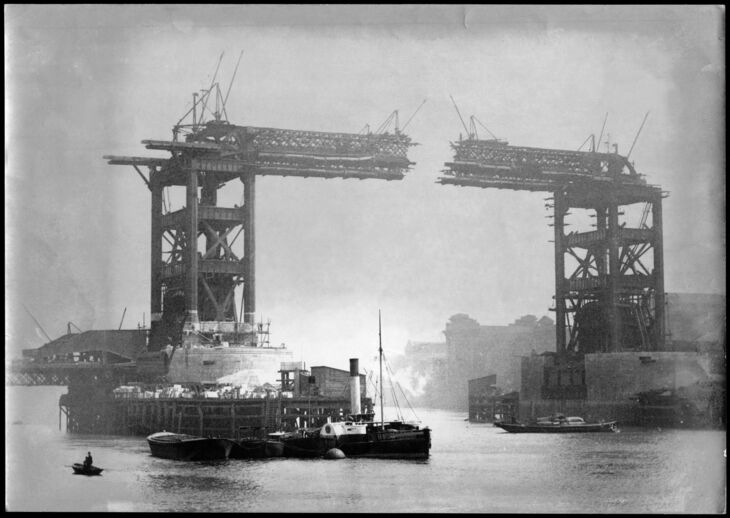
Tower Bridge, c1893. The need for a new river crossing was identified as early as 1879. Authorised by an Act of Parliament in 1885, it was designed by the City Corporation architect, Sir Horace Jones and the engineer, John Wolfe Barry as a bascule bridge to allow the passage of large ships into the Pool of London. The Act stipulated a clear span of 200ft, a height of 135ft and the use of the Gothic style to harmonise with the Tower of London. Tower Bridge opened in 1894 and rapidly became a London icon. The new Tower Bridge Approach Road required extensive demolition on the north bank. © Historic England
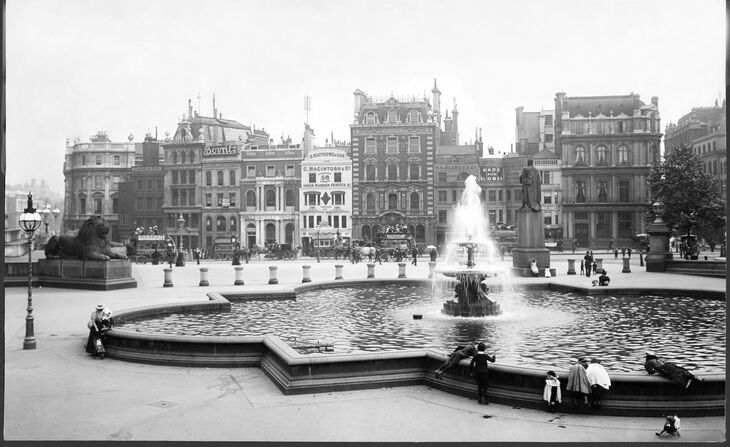
Trafalgar Square, 31 July 1896. Panoramic view from the National Gallery looking south with the statue of General Sir Charles Napier to the right. In the background is a group of horse-drawn omnibuses. © Historic England
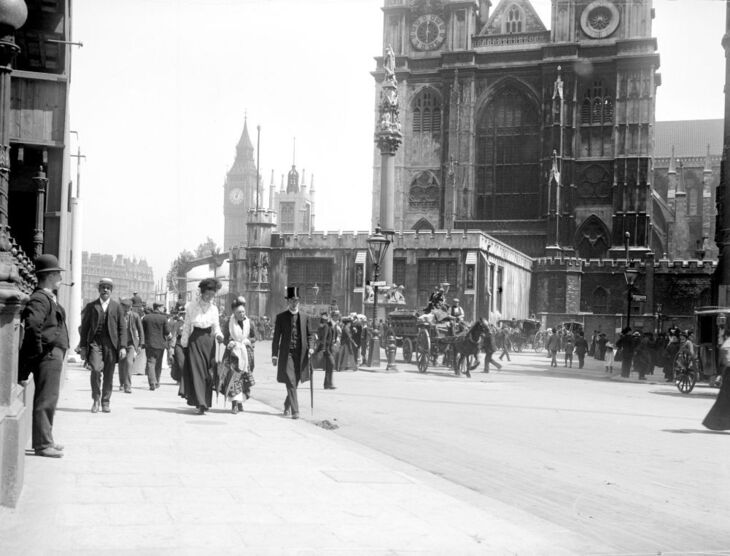
Westminster Abbey, 1902 Westminster Abbey viewed from Broad Sanctuary with the tower of St Margaret's Church and the clock tower in the distance. The large vestibule in front of the West Door has since been demolished. © Historic England
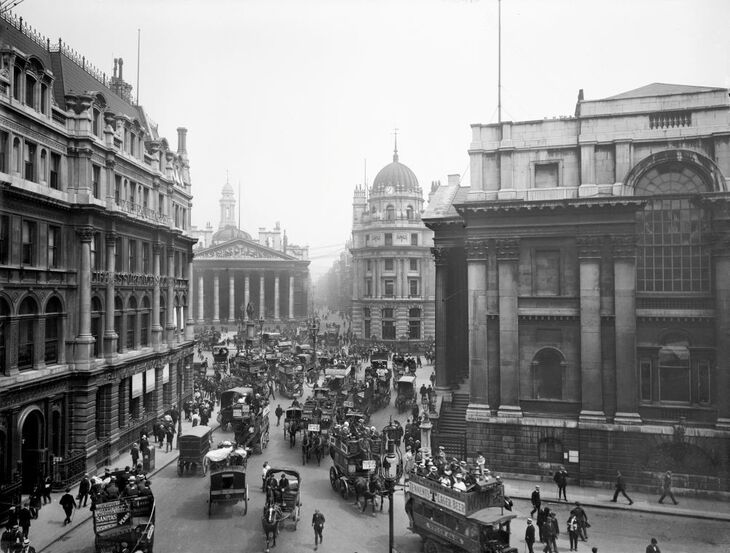
Mansion House Street, 1910. View along Mansion House Street towards the Royal Exchange with the side elevation of the Mansion House to the right. Between is the Royal Insurance Building, built the year this photograph was taken. The offices of the Equitable Life Assurance Society are to the left. © Historic England
Panoramas of London London: Work, Wealth, Poverty and Change by Philip Davies, published by Atlantic Publishing in association with Historic England.
We featured this book because we know it's the kind of thing our readers will enjoy. By buying it via links in this article, Londonist may earn a commission from Bookshop.org — which also helps support independent bookshops.