Adapted from a feature that first appeared in August 2025 on Londonist: Time Machine, our much-praised history newsletter. To be the first to read new history features like this, sign up for free here.
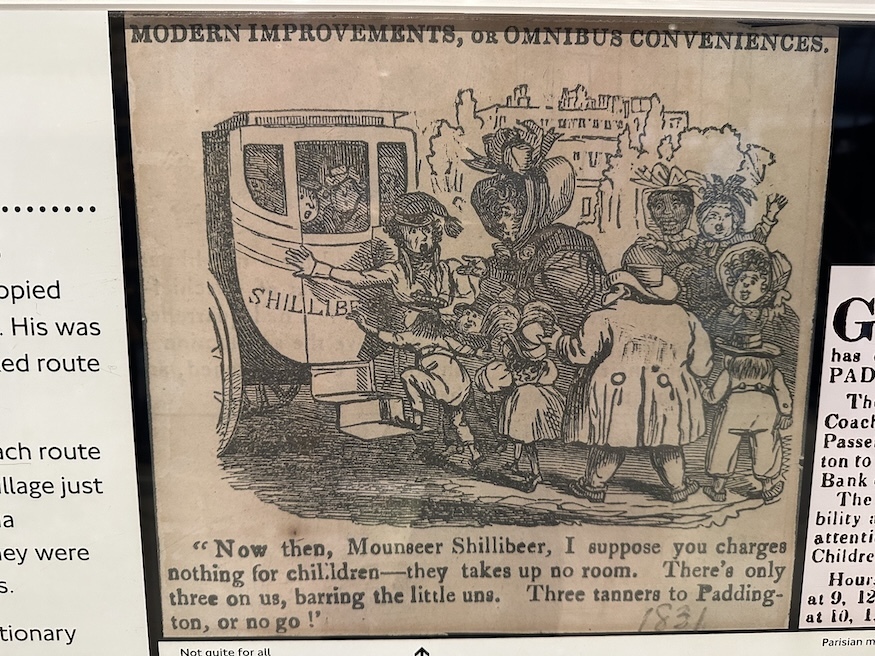
Should you ever find yourself miraculously transported back to pre-Victorian days, then you will assuredly want to ride on one of the new-fangled London omnibuses, recently introduced by Mr George Shillibeer (see the previous article).
These early buses came with their own codes of conduct, just as today we all habitually stand on the right-hand side of escalators and give up our seats for those in greater need (well, some of us do).
In January 1836, The Times codified these rules for their readership. Here they are, with my own comments in square parentheses.
The Laws of the Omnibus
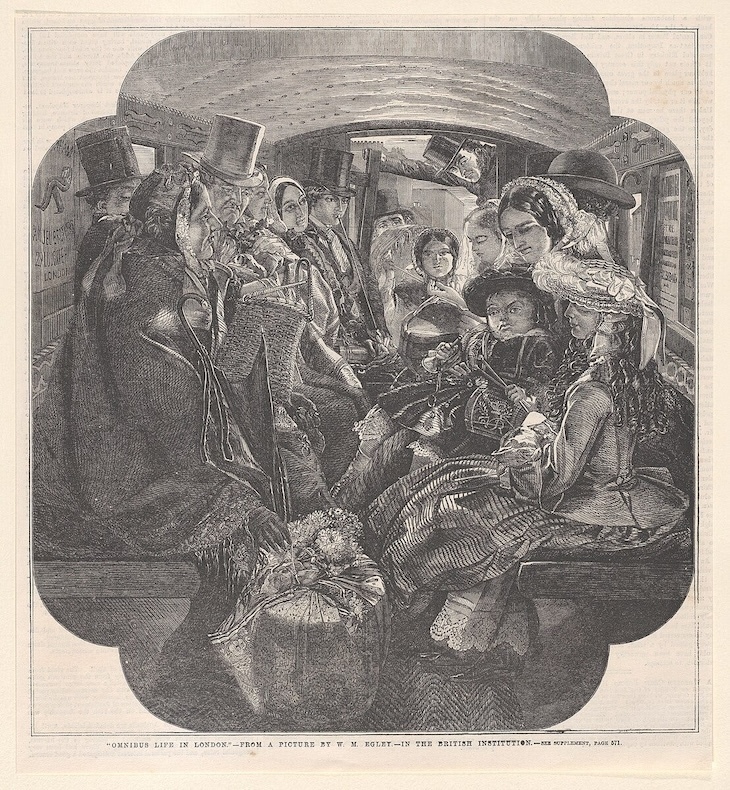
1. Keep your feet off the seats.
[Still a good one to observe. In the 1830s, feet would have been all the dirtier, thanks to a preponderance of horse dung.]
2. Do not get into a snug corner yourself, and then open the windows to admit a northwester upon the neck of your neighbour.
[To this day, I occasionally hear cries of ‘can you shut the window please’ on the top deck in wintertime.]
3. Have your money ready when you desire to alight. If your time is not valuable, that of others may be.
[A forerunner of the message played in Tube elevators that reminds us to have ‘Oyster Cards, tickets and PAYG cards ready for the barriers’. Omnibuses, it seems, charged passengers at the point at which they got off.]
4. Do not impose on the conductor the necessity of finding you change; he is not a banker.
[Typical fares were a shilling or 6d. Most passengers would have coins to these values in their purse. Bank notes were not normally used for day-to-day transactions at this point.]
5. Sit with your limbs straight, and do not let your legs describe an angle of forty-five, thereby occupying the room of two persons.
[Is this the first description in recorded history of manspreading?]
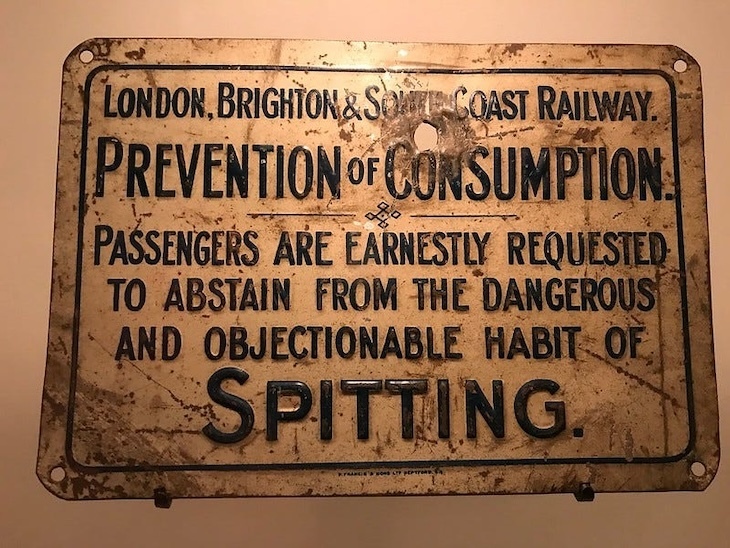
6. Do not spit upon the straw. You are not in a hog-sty, but in an omnibus, travelling in a country which boasts of its refinement.
[If this vehicle is so refined, you might ask, then why is there straw on the floor in the first place? It functioned as a renewable floor covering, which could be swept out and replaced once it had got too claggy with mud and horse dung. Spitting was not uncommon in Regency and Victorian times thanks to high rates of smoking and snuff use. I suspect that the sooty fogs of the age would also have irritated the airways, encouraging a surfeit of phlegm.]
7. Behave respectfully to females, and put not an unprotected lass to the blush because she cannot escape from your brutality.
[Shudders.]
8. If you bring a dog, let him be small and confined by a string.
[Lapdogs only. Early omnibuses could be cramped spaces, so not an acceptable domain for a mastiff. Modern London buses allow dogs of all shapes and sizes, but they must be kept on a lead and off the seats.]
9. Do not introduce large parcels; an omnibus is not a van.
[Worth remembering if you were going to try and sneak your friend on in a crate.]
10. Reserve bickerings and disputes for the open field. The sound of your own voice may be music to your own ears—not so, perhaps, to those of your companions.
[A rule still observed to this day on the Tube, where even the most nugatory comment is frowned upon. Silence is golden. Not so on the buses, where you’re now almost guaranteed an intense auditory experience on the top deck.]
11. If you will broach politics or religion, speak with moderation; all have an equal right to their opinions, and all have an equal right not to have them wantonly shocked.
[Can we have that one over on social media today, please?]
12. Refrain from affectation and conceited airs. Remember you are riding a distance for sixpence which, if made in a hackney-coach, would cost you as many shillings; and that should your pride elevate you above plebeian accommodations, your purse should enable you to command aristocratic indulgences.
[The 19th century equivalent of moaning that the Piccadilly line is not as swish as the Heathrow Express.]
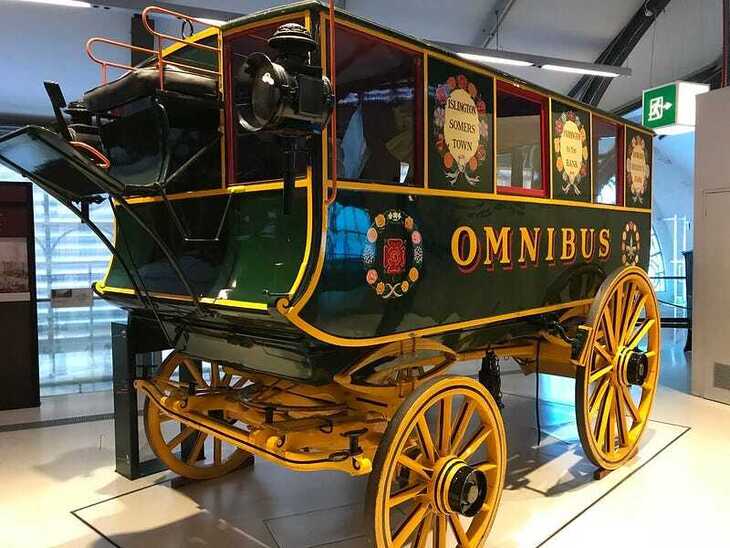
Modern Omnibus Law
Given that these instructions are now approaching their 200th birthday, it’s high time that someone updated them. Here, then, are my rules for catching a bus in 21st century London:
1. Do NOT form an orderly queue at the bus stop. That is for provincials. Instead, stand where you will, and examine your phone until the bus arrives.
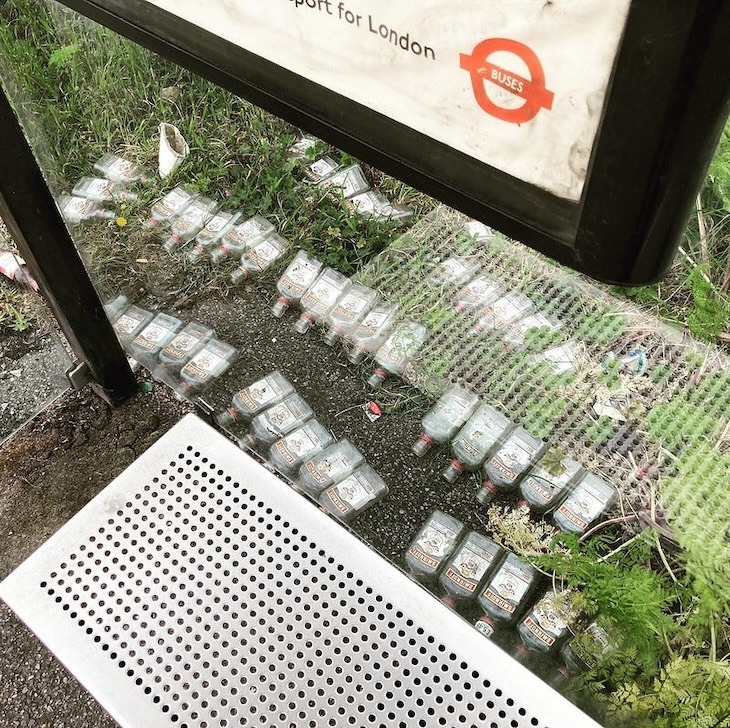
2. If your bus is taking a long time, do not consume 50 bottles of Smirnoff and arrange them mysteriously in groups of five behind the bus shelter… unless you’re in the village of Bedfont near Heathrow, where this seems to be a thing:
3. DO say hello to the driver. It gives them an enormous sense of wellbeing to ignore you completely, but at least you made the effort.
4. Do not try to pay with cash. It is an unheard-of commodity on the London bus. Travel cards will work, but you’ll immediately mark yourself out as a tourist. Even Oyster cards and debit cards are passé these days. Smartphone or smartwatch payments are the overwhelming norm.
5. Do not offer to show your ticket to the conductor. No London bus has employed a conductor for decades. If you do see a conductor, then either you’ve just consumed 50 bottles of Smirnoff, or it’s a ghost.
6. Select a seat somewhere towards the middle-back. The options nearest the driver are for those who most need a seat. The benches nearest the middle doors are for those looking after buggies or wheelchairs. The back seat is reserved for troublemakers. This leaves just a handful of seats, and so you may want to head upstairs.
7. If heading upstairs, stay as far from the back as you can. The rear five rows are typically taken by passengers who like sharing their music with the whole bus.
8. The front-top seats are reserved for younger passengers who might “pretend to drive the bus”.
9. The bus will inevitably pause five minutes from your destination “to regulate the service”. It is expected that you will emit a mild groan at this juncture.
10. Always ring the bell if you’d like the bus to make a stop. Without a bell, drivers will studiously not stop, and will even accelerate if they can see that people are agitating to get off.
11. Shout “Thank you driver!” as you effect your egress. This once neglected custom has seen a resurgence in London in recent years. And, despite my joshing, bus drivers are among the great unsung heroes of London, and deserve our thanks.
The ill-conducted Conductor
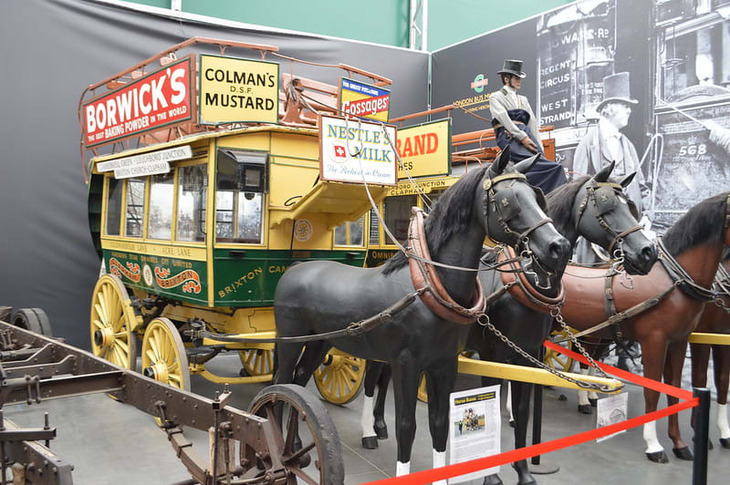
In 1841, The Times followed up their Omnibus Laws with two new lists. One set out the behaviours of a ‘well-conducted conductor’ and the other essayed the habits of an ‘ill-conducted conductor’. The first list is essentially a ‘good’ version of the second, so here I reproduce only the six hallmarks of the bad busman:
An ill-conducted conductor…
1. Always bawls out “Bank—Bank—City—Bank—Bank—Bank—City—City—Bank—Bank—Bank!” by which disgusting noise his own lungs are injured, the public peace is disturbed, and not any advantage gained.
[Modern buses are pretty good at giving out just the right amount of information. “The next stop is…” and “This is the 107 service to New Barnet”. The Tube, however, still favours an exhausting onslaught of safety messages. See it. Say it. Sorted.]
2. Always bangs the door so violently that if you are sitting next the door you are likely to be deafened for life.
[No such thing as automatic hydraulic doors in the early Victorian period. Manual slam-doors only. I am old enough to remember slam doors on trains, however.]
3. Never provides any check-string, but compels the passengers who want to be set down to use their sticks, canes, and umbrellas, and loud shouts into the bargain, thereby creating a most intolerable nuisance.
[The check-string was a simple mechanism whereby the pull of a cord would ring a bell, alerting the driver to stop… much like the buzzer-bells on modern buses.]
4. Always takes up and sets down his passengers in the middle of the street; by which rudeness they are sometimes bespattered with mud and always exposed to danger.
[Some omnibuses had check-strings on either side of carriage; passengers would pull the appropriate string to indicate which side of the road they would like to set down on. This was possible because doors were typically at the back of the bus, rather than on one side.]
5. Always stands at the door of the omnibus staring in upon the passengers, particularly after he has been eating his dinner of beefsteak, strong onions, and stale beer; and generally has some cad or other crony standing and talking with him. The air that would otherwise circulate through the omnibus, in the way of ventilation, is obstructed and poisoned.
[London’s buses have their problems today, but I think we can all be grateful that the menace of the beefy-breathed conductor haunting the rear window is a thing of the past. The engraving near the top of this article shows one such man.]
6. Always bawls out “All right!” before the passengers have taken their seats, by which gross carelessness, great inconvenience and even danger are often occasioned.
[This still happens today. We’ve all been on buses that have moved off before new passengers have sat down, only for a tumble to ensue. I’ve seen it happen to a parent carrying a baby.]