On 28 November 1798, three gentlemen might have been observed alighting from a richly accoutred coach standing before an intimidating stone gateway in the distinctly unfashionable neighbourhood of Clerkenwell, north London.
Gentleman of rank, leading lights in Georgian society, two possessed of immense wealth, and two of them sitting MPs, Sir Francis Burdett, Colonel Billy Bosville and John Courtenay had journeyed thither on a mission of mercy, appalled by the tales circulating of the barbarities being practised inside Coldbath Fields House of Correction. What they found within the prison's walls over the course of the following weeks — neglect, starvation, vicious beatings and sexual exploitation — horrified them, and their attempts to publicise and remedy these injustices and crimes would become the cause célèbre of the last years of the 18th century.
However, unlike England's other infamous prisons, such as the Marshalsea and Newgate, the House of Correction was not an ancient structure, its origins lost in the mists of time and its flaws the product of long years of neglect and decay. In fact, at the time of its greatest notoriety, the prison had been standing for less than a decade. And its design was not the brainchild of a latter-day Torquemada but came into being as a direct result of the work of one of the most enlightened and dedicated reformers in English history, John Howard, who had long campaigned for better conditions in Britain's prisons.
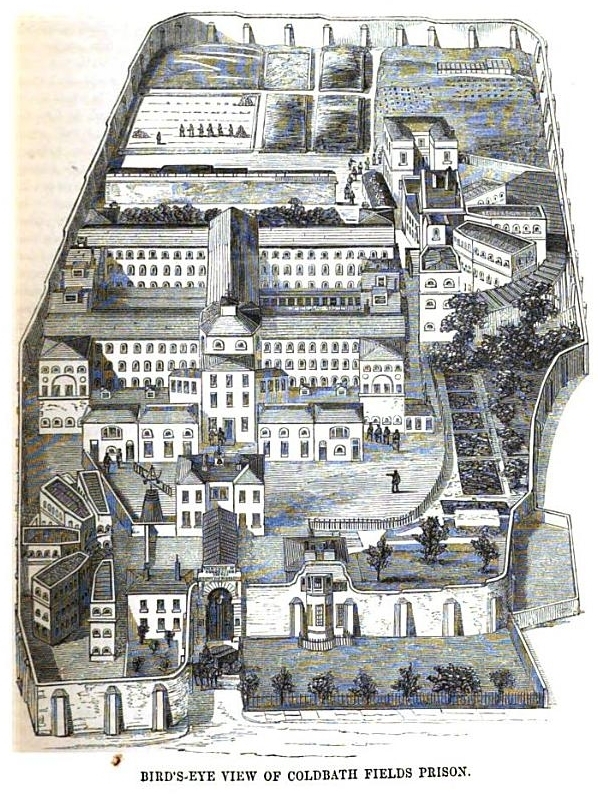
Vast sums and over 10 years had been consumed in the erection of the jail, and its design incorporated many of the key recommendations made by Howard and other reformers. And yet a strange, indeed unprecedented, concatenation of events would lead to its becoming the most reviled political prison of the 19th century.
Foremost among these events was the rise in radicalism in Britain following the eruption of the French Revolution in 1789. Growing social unrest and the fear of an attempted insurrection caused alarm in William Pitt's government and resulted not only in a decision to suspend habeas corpus, but also to introduce the Seditions Meetings Act, which forbade the gathering of groups of more than 50 people without the government's consent, and the Treasonable and Seditious Practices Act, which extended the definition of treason to include speaking and writing. Under these laws magistrates could arrest and hold any suspect without charge or trial for indefinite periods and break up any meeting. Moreover, anyone speaking disparagingly of the King or his government, or even resisting the dispersal of a meeting, could be found guilty of treason, a crime which carried a mandatory death penalty.
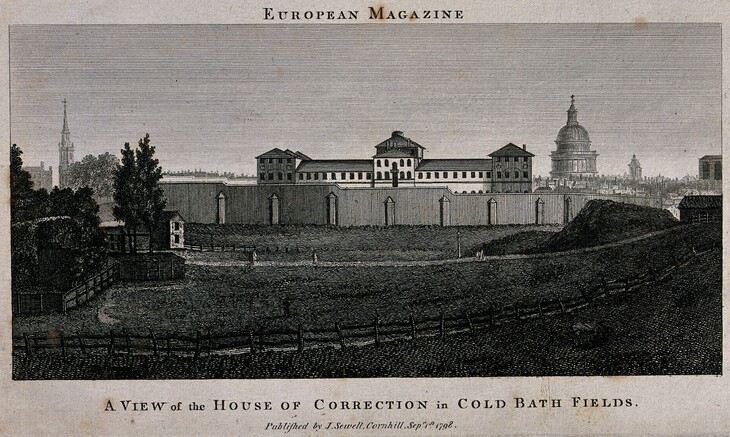
On paper, the Coldbath Fields House of Correction must have seemed an ideal place to confine the large numbers of political prisoners arrested as a result of these draconian measures. After all, it was both new and, because of the incorporation of John Howard's recommendations, state-of-the-art. These factors should have made it immune to the inevitable criticisms of Pitt's Whig and Radical opponents, at least so far as the conditions of detainment were concerned. But there was one last event which sealed the prison's fate: the managing magistrates' decision to employ as its first governor a man named Thomas Aris.
The 51-year-old Aris' only experience of prison management was the handful of years he had spent as a baker contracted to provide bread to the old Clerkenwell bridewell, but through a combination of cunning and brutality he swiftly made himself absolute master of the prison, its staff and its inmates.
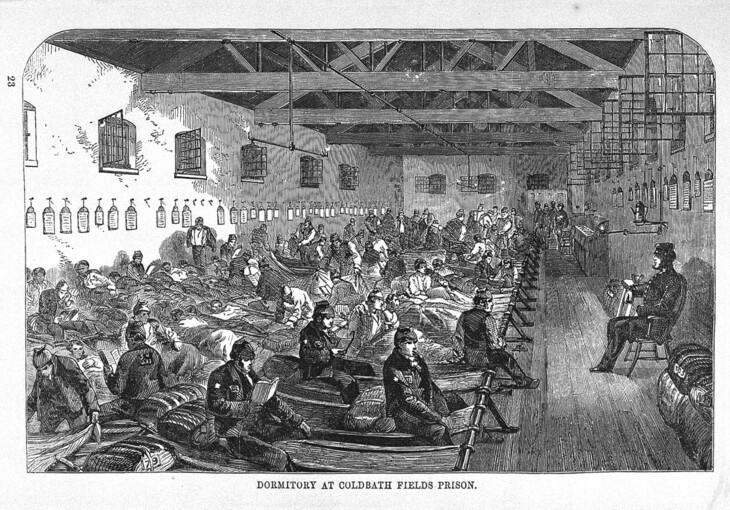
It was against Aris' reign of terror that, over the coming months and years, Burdett and Courtenay would launch a series of withering attacks in Parliament, citing repeated, and well-attested, instances of beatings, peculation, starvation and even murder. But Aris' defenders included some of the highest in the land: not merely the Middlesex magistrates, but the Home Secretary and even the Prime Minister himself. Why would these men put their reputations on the line for a mere nobody? Because, in their eyes, an admission of prisoner ill-treatment would be tantamount to acknowledging the injustice of the laws so recently enacted. The result: a counter-offensive of denial, delay and obfuscation.
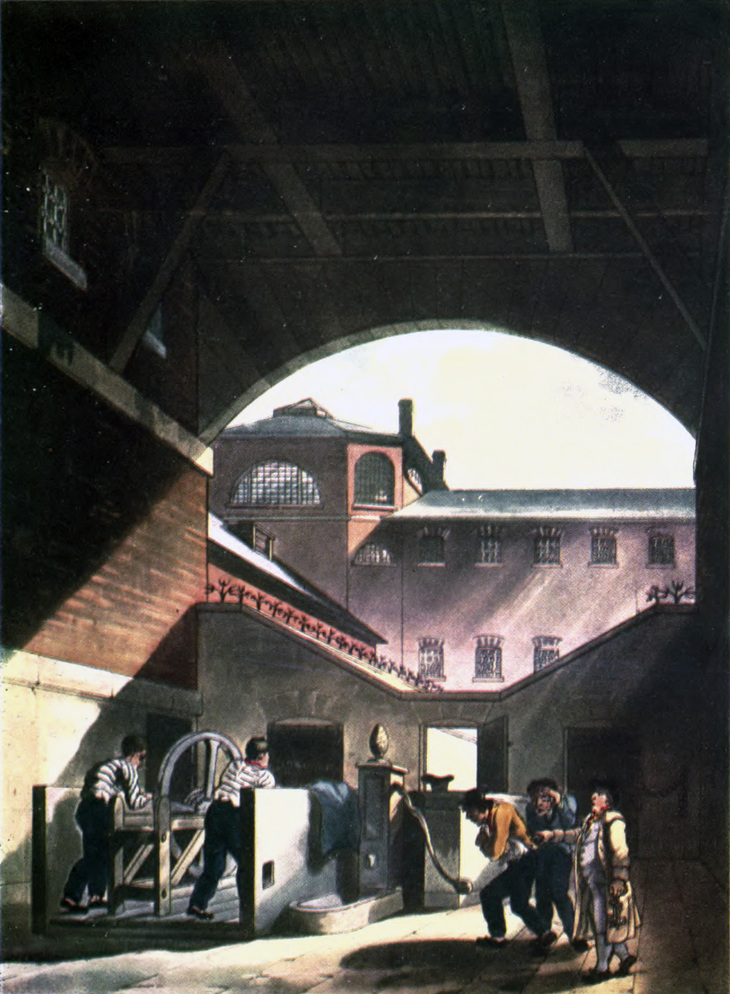
The story of Coldbath Fields House of Correction is, then, not merely one of prison conditions and reform at the end of the 18th century, it is one of high politics and public reputations. Though almost entirely forgotten today, it was once as notorious as the Maze Prison's H-Blocks in the last decades of the 20th century, and the Guantanamo Bay detention camp in our own.
Why did I choose to write the history of the prison? Because, while researching an earlier book, Poor Bickerton: A Journey to the Dark Heart of Georgian England, I discovered that one of my own relatives had once been consigned to the tender mercies of Thomas Aris — not a political radical, but a delusional gentleman who had the temerity to gatecrash a royal levee at St James's Palace in 1803. Perhaps in less tumultuous times Bickerton would have been dismissed by the sitting magistrate as a harmless lunatic; but the times were far from normal and his attempt to see the King was deemed not merely an outrage to royal security, but possibly even an assassination attempt. Bickerton had, after all, decided to visit the palace while carrying 'an old rusty sword'.
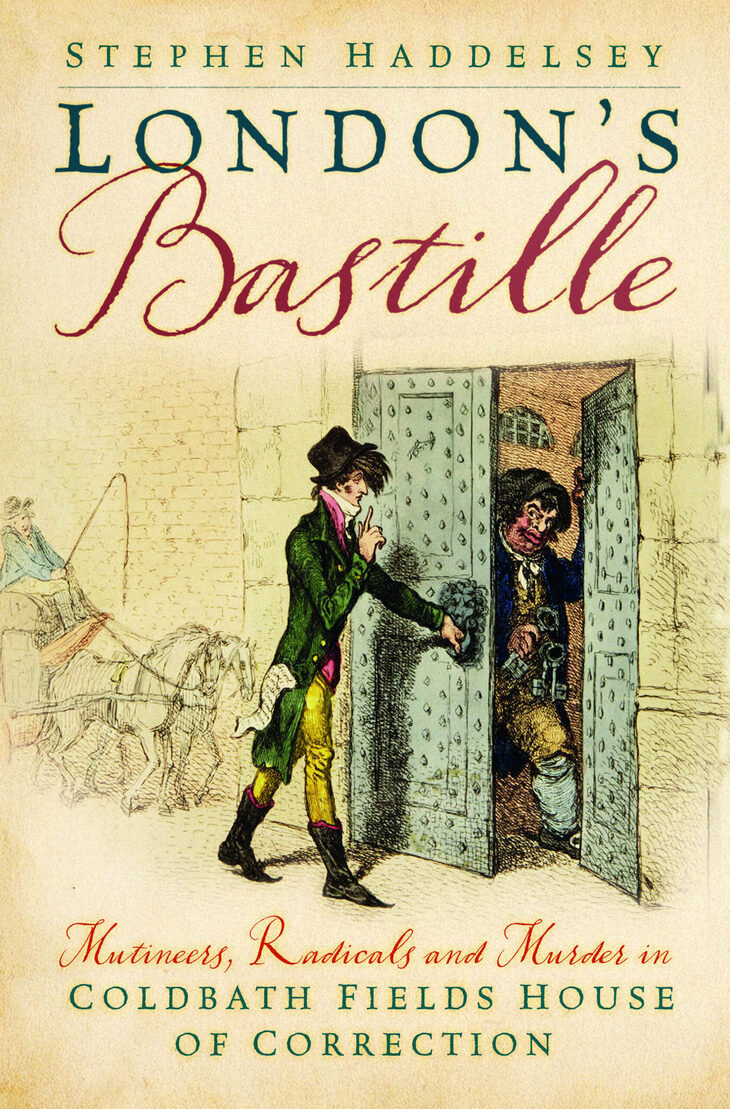
London's Bastille: Mutineers, Radicals and Murder in Coldbath Fields House of Correction, by Stephen Haddelsey, published by the History Press.
We featured this book because we know it's the kind of thing our readers will enjoy. By buying it via links in this article, Londonist may earn a commission from Bookshop.org — which also helps support independent bookshops.