On the first day he arrived in London from the Caribbean island of Dominica in 1958, Asquith Xavier started working.
The 38-year-old Windrusher started out as a porter for British Railways at Marylebone Station, but his work ethic, and popularity among customers, ensured he was soon promoted to train guard — the first Black person to serve as one in Britain.
But something stood in the way of Xavier's next career move. In 1966 when he applied for a transfer to Euston Station, he was rejected, the staff representatives refusing to accept "coloured staff" in public-facing roles. Such unofficial 'colour bars' were both common, and grossly ironic, given that Windrushers had been coaxed to British shores in order to help rebuild the 'mother country'.
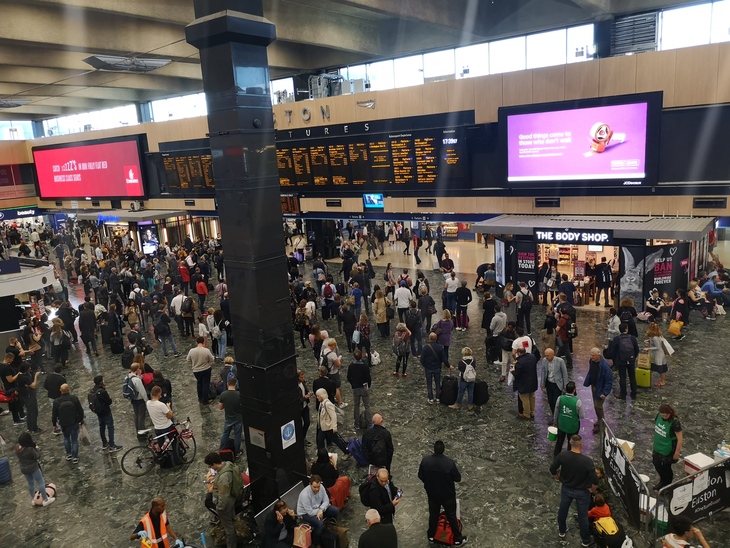
Xavier — who died in 1980 — refused to accept the decision, and worked with a union representative to bring the story to national attention. Eventually British Railways was forced to overturn its decision. Perhaps the divisional manager of the London Midland region of British Railways who spoke at the subsequent press conference should have thought twice before suggesting that "staff representatives as Euston were not really anti-colour so much as pro-white...". We'll leave that one there.
Not only was Xavier awarded the job — becoming the first Black railway guard to work out of Euston Station, on 15 August 1966 — he was given two months backdated pay. "This is my happiest day since I arrived in England eight years ago," Xavier told the press, as he arrived for his first day on the new job 50 minutes early.
Meanwhile, British Railways announced that future job opportunities in London would no longer be closed on racial grounds. This was not, of course, the end of racial discrimination in London's workplaces (indeed, Xavier was the recipient of a number of anonymous abusive letters). But a powerful stand had been made; a big step forward taken.
"Whatever he did, he did it for compassion," remembered Xavier's daughter, Sandra St John in 2023. "Because he cared about people." This was at an event in which the late Xavier had an Avanti West Coast Pendolino train named in his honour.
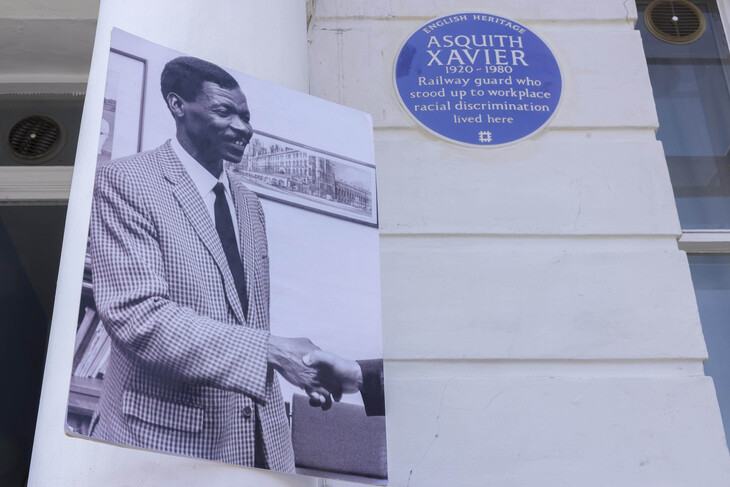
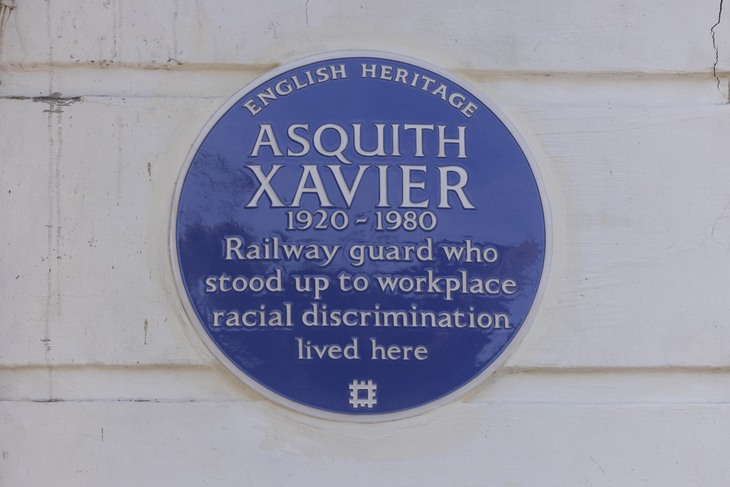
In August 2026, he received another honour — an English Heritage Blue Plaque unveiled at his former Notting Hill home on Ledbury Road. Said English Heritage senior historian, Howard Spencer: "Asquith Xavier's story is a powerful reminder that ordinary people can have an extraordinary impact. He was not seeking to become a campaigner or public figure.
"His fight began with a simple desire for a fair opportunity to support his family, but it became a landmark moment in Britain's struggle against workplace discrimination."