A new AI video that's dropped on YouTube transports viewers to the London of the 1700s.
When Can We Have A "Street View" for History? our Time Machine newsletter recently asked. Perhaps Majestic Studios was reading; the relatively new YT account has fed a selection of 18th century paintings and engravings into its AI algorithm, bringing to life moving snapshots of the city all those centuries ago. And it's rather good.
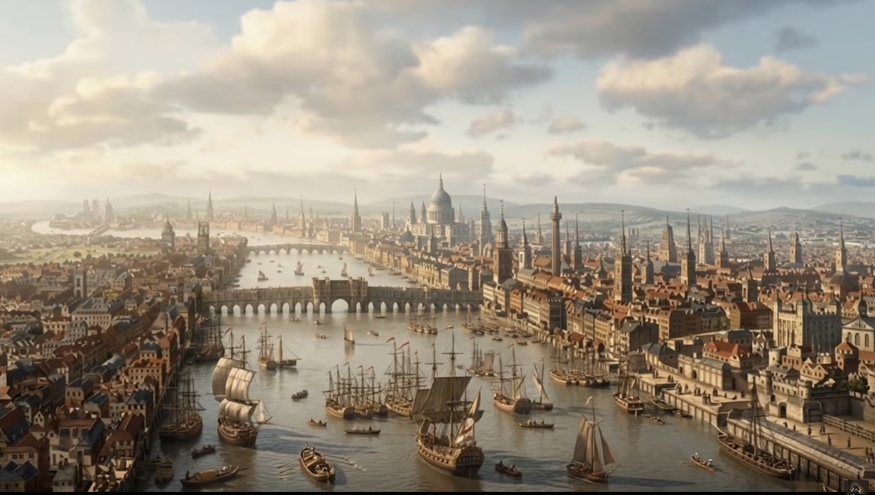
A mid-18th century prospect of a boat-choked Thames emphasises how ludicrously bunged-up the river once was (it was the world's largest port, after all), not to mention how many church spires were visible, jabbing up into the cityscape — thanks in no small measure to a certain Christopher Wren.
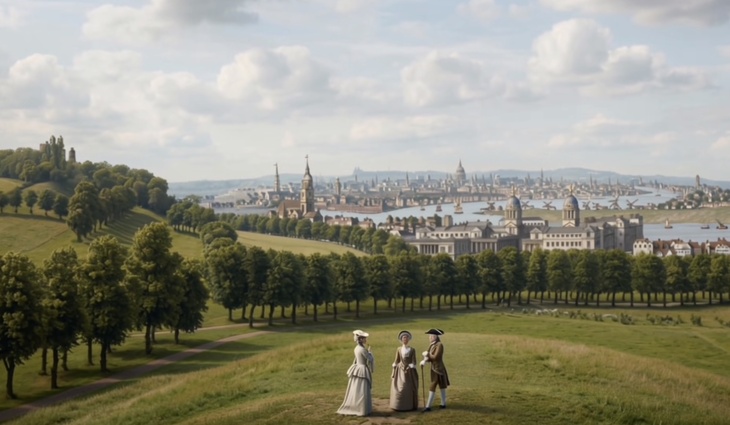
Things appear far calmer from the prospect of Greenwich's One Tree Hill, although the video's claim that the view "remains virtually unchanged today" overlooks such minor post-Georgian additions, as the O2, and the blocky bundle of Canary Wharf.
No amount of steak bakes can make up for the gaudy changes that've come about to Leicester Square since Georgian times; not then home to McDonald's or the Mega Greggs, but rather the handsome households of Joshua Reynolds and William Hogarth.
Perhaps the most eye-opening render of the lot is of the Royal Exchange, a venue we're used to seeing in its roofed, Victorian form, frequented by bougie shops and eateries. Back in the 18th century, though, it was an open-top crucible of trading, ringing out with languages from across the continent. Have you ever pictured it like this before? We haven't.
The visuals in this nine-minute video aren't hyper realistic (it's more like a video game preview, and perhaps this works in its favour, swerving those creepy vibes AI content often emit) and the narration isn't without cliches ("London in the 1700s was a city of extremes..."). But this is a fair few notches above 'slop', and a glimpse into the digital time travel that AI will now afford us on a regular basis.