
Imagine a London club so glitzy, it not only had its own swimming pool and polo field, but a dedicated aerodrome too.
That place briefly existed in the interwar years, as the Ace of Spades Club roadhouse in Kingston — and what a ball its patrons must've had.
Designed by Ernest Brander Musman, opened in 1927, the Ace of Spades is described by the Art Deco Society as a curious hybrid of Tudorbethan/country club/art deco/pub. It capitalised on the rapid ascendency of the motor cars; you could swing off the Upper Richmond Road in your Austin 7, park up and enjoy a spot of dinner and dancing.
While daytime pursuits included miniature golf, a riding school and a polo club, the evening entertainment — live music, comedy and cabaret — ploughed on till the small hours; posters show that Percy Chandler and his band played till 4am on Saturdays, revellers fuelled by BYOB bottles of champagne and brandy (there was no licence to sell booze on the premises).
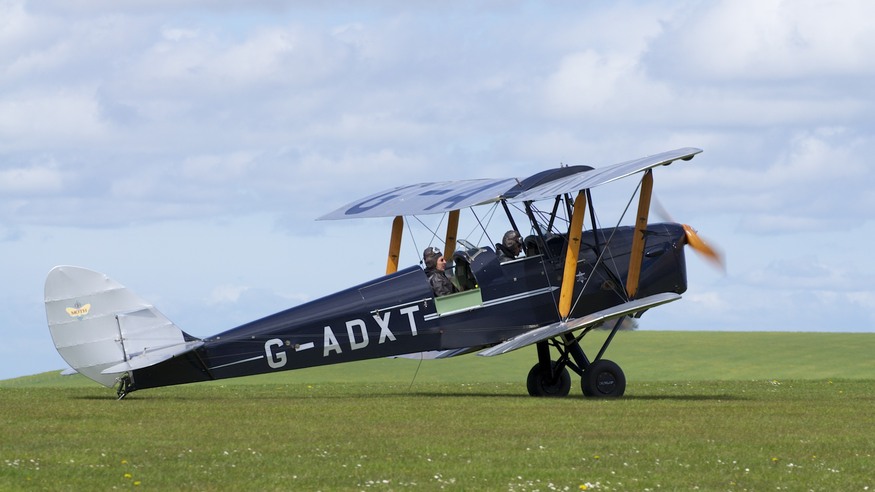
While most punters were arriving by car, an altogether more sprauncy way of getting to the Ace of Spades became an option in June 1933, with the addition of an airstrip, 400 yards to the west of the club. This set the scene for 'aerial garden parties', air races, flying circuses, and 'joyrides' for guests. Pilots were often given a free lunch if they landed here, because the very sight of their plane would cause curious drivers to pull over at the club.
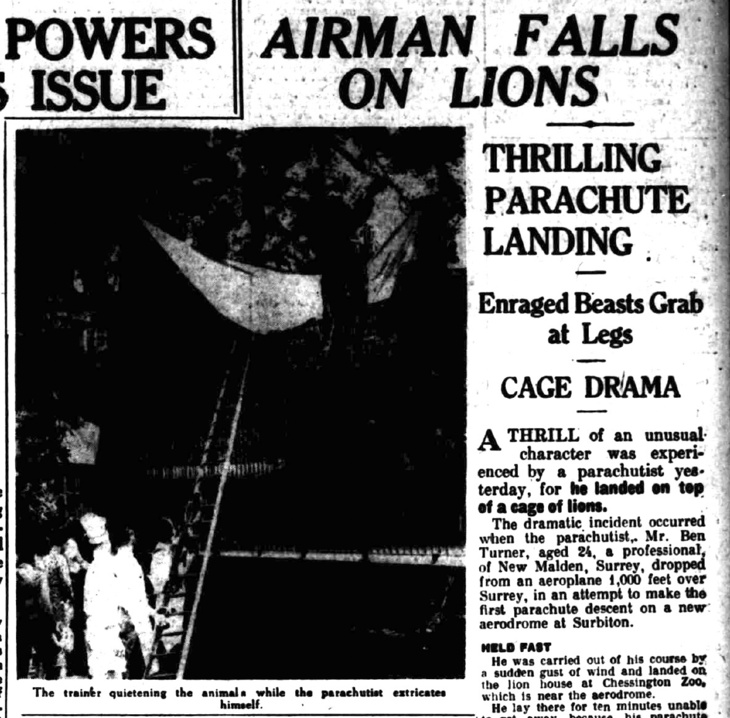
One airman — Ben Turner — almost became lunch himself, after attempting to parachute into the aerodrome, and instead getting carried by a sudden gust of wind onto the top of the lion's cage at Chessington Zoo. "Two African lions in the cage, hungry and enraged," reported the Birmingham Daily Gazette, "made repeated attempts to reach his legs by leaping to the roof..." Turner was eventually saved by the Zoo fire brigade and a lion tamer armed with a whip and a gun.
At the same time the aerodrome opened, so too did an outdoor pool, the master of ceremonies at the opening party diving into the water still wearing most of his clothes. Happily, this British Pathe features footage of that dive, alongside a shot of the Ace of Spades from the air:
The Bystander magazine visited the Ace of Spades that year:
I went down to the Ace of Spades on the Kingston by-pass the other evening and found the place crowded. It was a cool evening, but the water was so warm that you could see the steam rising and several people stayed in the water for at least half an hour. This roadhouse must be coining money.
The aerodrome had already run its course by 1937 (by then, the area was already filling up with housing), but the pool lived on a lot longer (it's said the actress Diana Dors taught her husband to swim here in the 1950s.) The Ace of Spades was badly damaged by a fire in 1955, but soldiered on, eventually giving up the ghost as a nightspot in the 1970s.
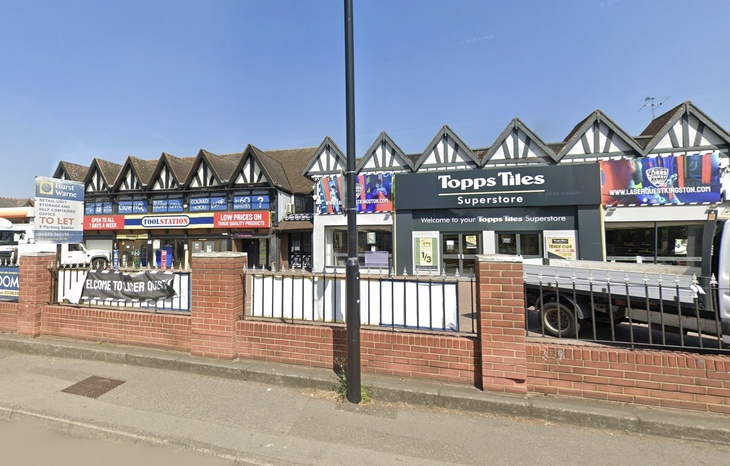
Happily, the mock Tudor facade still exists today — converted into a prosaic triumvirate of Tool Station, Topps Tiles and Laser Quest. If you happen to find yourself stuck in traffic at the Hook Junction, just imagine how once upon a time, you'd have been able to pull up here in your car — or indeed, land here in your plane — for a slap-up meal and a night of frolicking.
Still, one thing we have over those Bright Young Things is that they never knew the unbridled joy of a Laser Quest.
We first discovered the Ace of Spades in the brilliant book Public House: A Cultural and Social History of the London Pub.

.jpg)