Adapted from a feature that first appeared in September 2025 on Londonist: Time Machine, our much-praised history newsletter. To be the first to read new history features like this, sign up for free here.
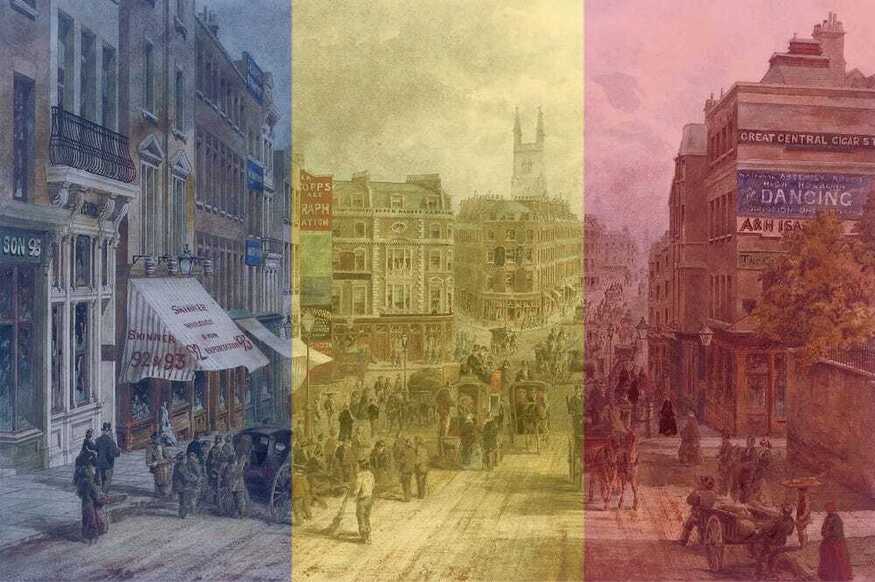
Today, I’m delighted to publish what might be the first account of London from a Romanian traveller. And I’ll give you a spoiler up front: you’re in for a treat.
A Continental Amazed by London gives us the impressions of Ion Codru Drăgușanu (1818-1884), who visited our city in 1840 while still a young man. It’s a sparkling account of the city (mostly the West End) in the early Victorian period, from a rare east-European perspective.
The text was translated and sent to me by Mihai Risnoveanu, formerly of the Romanian Cultural Centre in London, and includes a short introduction by Ramona Mitrica. It was first published in the Cultural Centre’s newsletter in 2008, but is not available online. I have reproduced it exactly as sent, and included my own comments beneath each section, to offer further context.
By coincidence, this article goes out on 10 September 2026, the 186th anniversary of Ion Codru-Drăgușanu’s journey from Paris to London.
A Continental Amazed by London
Introduction by Mihai Risnoveanu
Ion Codru-Drăgușanu (1818-1884) was a Romanian writer from Transylvania, and was also a journalist and politician. His book, ‘The Transylvanian Pilgrim’, published in 1865, relates his travels throughout Europe, and in addition, his visit to London, which marks him out as one of the truly rare Romanians to have visited Britain up until the very end of the 19th century.
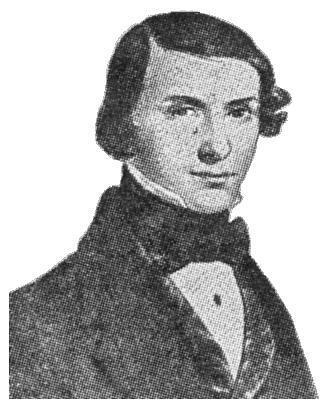
Ion Codru Drăgușanu travelled to London in 1840. A continental amazed (to the full extent of the word) by this land appearing from the fogs of Victorian times, he has left us his impressions of the English, England, and the English way of life. From the following one can see that some things do not change much with the passing of time and some other things are still as inexplicable to the continental mind as then.
Fate ordained that one of his great-grandsons, Ion Ratiu, would build his life in London and would become a prominent British-Romanian, inspiring others in the quest to penetrate the mysteries of life in the land of the Albion. What Ion Codru would have made of this we cannot possibly know, but here are his opinions about how life was for him on the banks of the Thames.
London, September 1840
Throughout Europe there are only two great peoples: the French and the English. Writers compare the former with the ancient Greeks, and the latter with the Romans, but this is true only in view of the main characteristics of the nation, because I deem that the reverse would not be false either.
The French have a frivolous insolence and a convulsive tendency to rebel, but they have a tasteful and attractive luxury, and their writings are full of spirit – thus they resemble the Grecians, while their great deeds and their influence on the general culture of other peoples make them the true Romans of modern times. On the other hand, the English are thoroughly endowed with constancy, the chief virtue of Rome, but they have the speculative spirit and egotistical habits that focus on their own interest, which are nothing more that Grecian attributes.
In alliance with each other, these two nations are destined to rule the world and decide the fate of nations.
This was my own theory about the country and its inhabitants. Let us proceed to show what we know from our own experience and to prove these in accordance with my speculations.
We are told that England, being surrounded by the Atlantic Ocean, is heavily subject to powerful drizzles, and that London, being close to the sea, towards the mouth of the Thames, suffers greatly because of these all year around. The exception being September, when the weather is bearable. So we took advantage of this propitious time of the year to see this city, the most gigantic in Europe, in its whole splendour.
On the 10th of September, we departed from Paris with the post coach and, travelling throughout the night, reached the French port of Havre de Grace, at the mouth of the Seine. [...] With the evening tide of [the next] day we boarded the steamship “Great Britain” which sailed the Channel – the wet road to London.
[...] [Due to sea sickness] The next morning I woke up a bit more worn than usual, and I went on the deck of the steamship to see the place. One could only see the clear blue skies and the green waters, mirroring each other. The skipper spoke French, so I approached him and asked him several questions. Very affably, which I did not expect from an Englishman, he explained to me the virtues of the maritime compass and the use of the chart of the 39 winds, known well only by the professional seaman; later on he showed me the white chalk coast of England, which gave the country its old name of Albion, to which the French have added the epithet ‘perfidious’.
Completely different from the French, the English are serious and taciturn. They speak gladly only when they have the occasion to praise the institutions of their own country. The same with this Englishman: he told me England is the land of political freedom and, in order to preserve it, she has more warships than France has commercial ships, and then he gave me various other kinds of stories. All hyperbole even according to my humble reason.
Towards evening we approached the mouth of the Thames and began to feel the proximity of London, where ships of all species come and go in numbers so great that one hardly finds one’s place to pass among them. We entered the Thames itself with great care, as if entering a forest of masts and smoking chimneys.
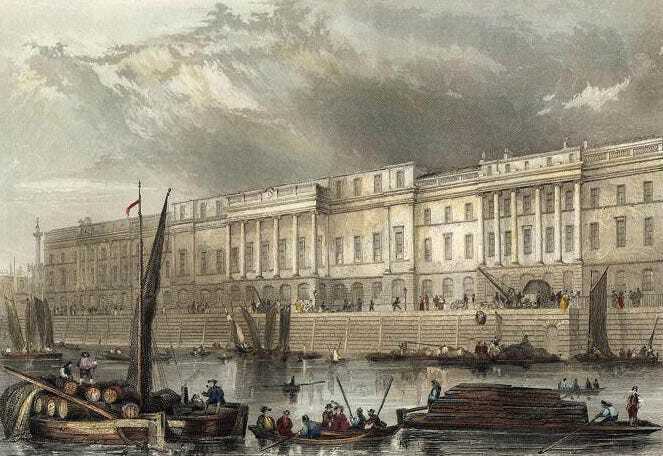
Finally we got to the Custom house. The possessions of all passengers flew like balls from the ship to boats and from here to the halls of the Custom house, and I was close to believing we should never see them again. But here people are so much into order and consequent practice that if you trust them with a needle, it will never get lost or taken by others.
The Custom House, a little east of London Bridge on the north bank, was designed in the 1820s by Robert “also did the British Museum” Smirke. This was a place for the collection of customs duties, with a history going back to medieval times. Smirke’s version still stands today, and is set to become a hotel.
The luggage was open and inspected in a blink of the eyes and we found ourselves put in a ‘cab’ (a sort of one-horse chariot), and after a quite long distance we reached Saint Martin’s Lane and the ‘Fricour’ Inn, where we were brought in by an Italian guide who was prowling for customers in the valley of the river. He got four Crowns as a reward from us.
I was most surprised we are not asked for passports. Our guide told us that such an enterprise is unknown in England and is a continental luxury.
Drăgușanu, it seems, had no accommodation reserved, and took a room on the partisan advice of a hotel tout. I’ve traced the Fricour Inn to 82-83 St Martin’s Lane. It was owned by one Augustine Fricour, possibly a Frenchman, who was declared bankrupt a couple of years later. It was located where, today, you’ll find Brown’s restaurant.
[...] First of all, London surprises you by the great number of people and the great quiet all around. Then there is the exemplary cleanness of the streets, the simplicity of the buildings and the uniform clothing of men, which is generally grey or a stern ashen grey.
All streets are large and straight, especially the main ones, which are also paved with wood or covered in macadam. The houses do not have such exquisite architecture as in Paris, nor are they as solid, because this city is a whole world of almost two million inhabitants. London has stretched each year passing by, and has engulfed private properties that would sum up a surface as big as the county of river Olt (Tara Oltului) in our country. Many neighbourhoods have the name of Such-and-such Garden. These lands are freehold or leasehold for 20-30 years, and the builders calculate the expenses according to the lease and they build lightly.
I’m surprised that Drăgușanu found our roads “wide and straight”. This was before the Victorians knocked through Charing Cross Road, Northumbland Avenue, Shaftesbury Avenue and Kingsway. Strand has always been wide and straight, and so, too, Whitehall, so perhaps he was hanging out in these areas more than, say, Drury Lane and St Giles. It’s interesting to note that men dressed in ‘stern grey’. Today, men almost universally wear black coats, at least during winter.
On Gardens, I can think of Short’s Gardens, Hatton Garden, Endsleigh Gardens and, of course, Covent Garden in the central area. But these are spread out, and it’s a curious detail to pick up on.
In spite of the lack of a French lustre in London, there is a luxury of commodity which is not to be found anywhere else; all stairs are carpeted to the level of the street and not to speak of the rooms in the house. Of course, the great humidity requires such luxury. Also in front of the houses with a street front there are small flower beds. Yet again, in order to fight humidity and mildew, kitchens are to be found at the base of the houses, akin to cellars.
Some interesting domestic details, which might not have occurred to an English writer.
No other city has so many piazzas as London and almost all of them are quadrangular, therefore the name of ‘squares’. They all have some monument, of course not all grand, and generally they have flower gardens, lawns and trees in the middle. These gardens are generally circular and they are closed with iron railings and serve as places of enjoyment for the neighbouring houses.
Here, the writer seems to be noting the private square gardens, most apparent in Bloomsbury, rather than the fully public piazzas like Covent Garden.
There are in London public gardens – or should I say whole plains, so wide they are – where there are only green lawns, tall trees, bushes, and rivulets or crystal-clear lakes. One will find, but only seldom, beds of flowers. Such public places for the enjoyment of everybody are Regents Green, Hyde and St James’s Park, their name being ‘parks’. On Sundays and holidays you have the entire urban crowd there, otherwise just foreigners and aristocrats.
Green Park is famous among trivia fans for having no flower beds at all, hence the name. According to legend, this was by diktat of Queen Catherine of Braganza, in revenge at her husband Charles II who had supposedly plucked some flowers from the park for one of his many mistresses.
The divine service in the church lasts until eleven antemeridian. During this whole time, no-one is allowed to open windows or doors of the stores, not even to private houses, and the whole city seems to be deep in devout reflection. If one enters the temple, until the end of the service one will not get out of there because the church warden stands at the door and does not allow it. This contrasts greatly with our customs, and especially with those of the Catholics who have made a theatre out of churches and the impious enter and go as their hearts desire, often accompanied by dogs.
In general, the Protestants and the English in particular are more rigid in those matters around religion than the Orthodox. They believe less, but do more for the dignity of religion, which is devoid of all kind of hocus-pocus. In London, nobody works on Sundays, as I saw them do in Paris, not even for the enterprises owned by the State.
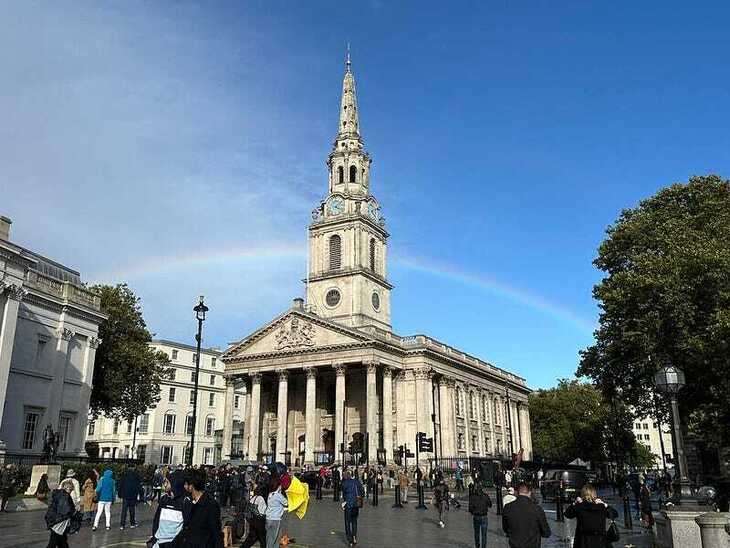
The other day I attended the nearby St Martin’s [in the Fields] in order to see the ceremony of the Anglican rite. They are very simple, as those of our Lutherans are. I have noticed something; they read long prayers, as we do in the Eastern Church, then hymns accompanied by organ, followed by a badly declaimed and sleep inducing sermon – well, it is true I did not grasp much besides the occasional ‘Lord God’.
Central London contains fewer active churches today; there are nowhere near as many potential parishioners to fill them. However, Sunday services do still take place at many. I am in no position to comment on the quality of the modern sermon.
So it seems to me that the English language does not have pleasant sounds, with which we are accustomed in the continental languages, or maybe it’s just the novelty of English that makes it seem like this to us. With these, Lord have mercy! I occupied two and a half hours counting the number of bald heads and I found only in the hall – me being at the gallery – some 455 of them. Naturally, in the hall one finds the men that have reached a certain age, and at the gallery you have the younger ones, but there were enough bald ones even here.
English men are tall and handsome, but only a few of them will keep a full head of hair due to the dampness of their climate. I really wonder how it is that the ladies have such beautiful manes of hair. [...]
The ‘hall’ and ‘gallery’ here still relate to St Martin-in-the-Fields, that magnificent church that overlooks Trafalgar Square. Drăgușanu would not have witnessed Nelson’s Column, however. It was erected three years after his visit in 1843.
The congregation must have been of extraordinary size if the main hall contained 455 bald heads, when we consider that women and children would have also been present. Perhaps they also tended to use the gallery. The sermon must have been really dull if Drăgușanu was distracted enough to enumerate pates.
[...] We went to see the British Museum. Here you find a treasure of bodies of statues from Egypt, Greece, Italia and both Indies, many rarities, all ordered nicely by their country of origin and their times. If they are not taken by force, so I was told, they are bought with the gold of their wealthy lords and with the intention of offering them to the national museum.
I found extraordinary the petrified skeletons of the antediluvian animals: mastodons, mammoths, and ichthyosaurus, then in the court the skeleton of a real whale, as long as a huge ship, whose bones look like aged fir tree beams. I also went to see the cathedral of St Paul’s, an architectonic monument, similar to St Peter’s in Vatican, albeit much smaller, and besides some secular monuments inside, it is scarcely decorated.
Until 1881, the British Museum in Bloomsbury was home to a large collection of animal specimens. These moved to the newly built Natural History Museum in South Kensington that year. The NHM retained official connections to the British Museum until 1963.
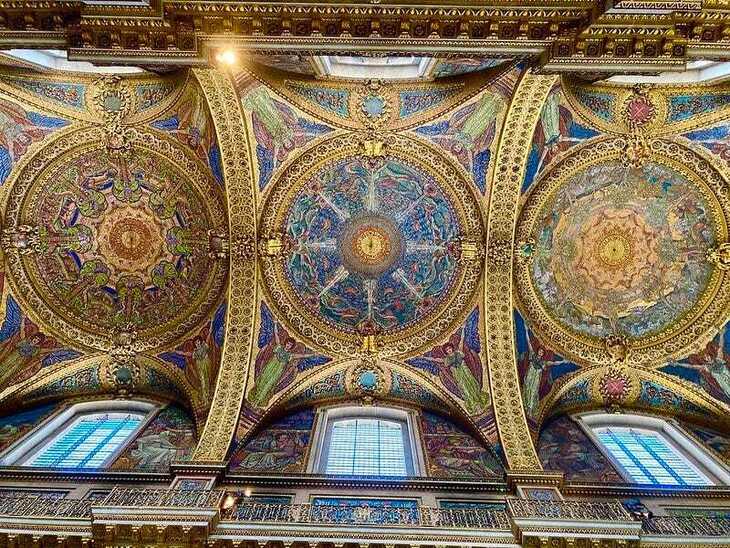
St Paul’s is indeed much smaller than St Peter’s, though it has gained in opulence since Drăgușanu’s visit. The Victorians agreed with his assessment that it was too plain, and set about gilding and mosaic-laying with determination. My favourite adornment is the Quire roof, which was smothered in colourful mosaics by William Blake Richmond, in the final years of the century. (He was named after the more famous William Blake.)
From here we rode to the Zoological Garden, where is situated the enclosure for beasts of all creation; the richest in Europe. They have here four elephants and six giraffes, very beautiful. It was very funny though when I was shown a buffalo as a curious beast, and funnier still it was when I told the guide there that my father back home has a grange full of such beasts, and I was raised with buffalo’s milk.
This, of course, is London Zoo at the top of Regent’s Park. The zoo was still a new organisation at the time of the Romanian’s visit. It had opened in 1828 and got its first elephant, ‘Jack’, in 1831. Before 1847, access to the zoo was restricted to Fellows of the Zoological Society, or to those who could acquire a ‘written order’ from a Fellow. Presumably, Drăgușanu was connected enough to acquire one.
Leaving that place, we went to the Royal Polytechnic Institution, a place where they conduct physics-chemical experimentation in front of an audience, in which real lightning was produced. A young man, elegantly dressed, stepped into an insulated fabric contraption with a long breathing tube, and he threw himself into a basin 10ft deep, full of water from where he collected in ten minutes the coins thrown in by the audience. He then came out with the money in a receptacle, applauded by the crowd, stepped out of the fabric contraption and he was as brand new.
The Royal Polytechnic Institution was another new landmark for London, having opened just two years before Drăgușanu’s visit. Its buildings could be found between Regent’s Street and Cavendish Square. This was a place where Londoners (and visitors) could enjoy demonstrations of a technical or scientific bent — both via formal study or in public shows. Spectacles of the time including underwater stunts like the one described, and some of the earliest demonstrations of photography.
The following day we went to see another place, called ‘Box hall’, where a species of English gladiators fight with their fists face-to-face, raining blows on each other’s nose and stomach. I saw one oozing blood from his nose and mouth like a slaughtered animal, and some other two who had passed out, lying on the ground. This filled me with nausea so I left that place. The English like this kind of barbarous fight and clap their hands and even place bets on their preferred fighters.
Bare-knuckle boxing was a common diversion in 1840s London. It’s not clear from the name ‘Box hall’ what the venue was in this case. One contender would be the still extant Lamb and Flag pub in Covent Garden. This was nicknamed the ‘Bucket of Blood’ for the gory pugilism staged on its upper floor and courtyard. Or perhaps Box Hall is simply a Romanian mis-hearing of Vauxhall?
[...] Finally, I went to see the tunnel under the Thames, one of the wonders of the world, which surpasses those of the most praised of the ancient world. After the city of London expanded greatly towards the mouth of the Thames, there was a lack of stable communication between the two sides of the river, and they could not build a bridge because it would have disturbed the entry of the ships in the port of London – the London Docks. Thus they have made a society to build a road under the water, and this was made by a Frenchman called Brunel. It has an entry with two arches.
Well, we know all about this one, don’t we, regular readers? Marc Brunel’s Thames Tunnel between Wapping and Rotherhithe today carries the Windrush line beneath the Thames, but it started out as a pedestrian tunnel. Work began on it around 200 years ago in 1825. It was still three years from opening in 1840 when Drăgușanu was in town, but for a small fee the public could descend into one of the tunnel shafts to see the work in progress.
Very strange was an English habit, which I found later on is something natural. We were hot after all our excursions, so [our guide] took us to a cafe, in order to cool down. On the spot, we were served with hot tea, while I was waiting, as is our custom, for lemonades, orangeade, or cold sorbet. The English are very practical homeopaths, fighting fire with fire; we’re not so experts in this field yet.
I’m sorry. What is odd about this? Surely everyone enjoys a hot cup of tea after every activity?
By 1840, better shipping and supply chains had brought down the cost of tea (and sugar) considerably, to the point where it had become a household staple, even among the working classes. The sugary beverage aided nutrition and, because it required near-boiling water, was safer to drink than the untreated cackmixture that came out of the public water pump. Tea was not just a quaint English custom, but a life-saver.
Last night I have been at Covent Garden theatre, a hall as resplendent as possible, and I attended an opera in the English language, but the song was not at all to my liking, screeching in my ears with such a great number of monosyllabic words. They say the shortness of English words is adapted to nautical command, and the English wonder how come other nations can evolve without the concision granted only to their language. Yet I believe that the English shan’t ever accommodate their tongue to singing, because harmony requires sonorous, clear vowels, not swallowed and sneezed sounds such as theirs.
I think Elton John, Adele, David Bowie, Kate Bush, Shirley Bassey, Ed Sheeran, Amy Winehouse, three-quarters of the Beatles and a thousand other international chart toppers might like a word about that last sentence. (What do you mean Shirley Bassey is Welsh?)
Undoubtedly, Great Britain is the most civilised state in the world. I have observed this closely in London – you will not find soldiers here. Either there is not much of an army, or regular soldiers are allowed to don civil clothing when not on duty. But you can find on the streets the so-called ‘constables’, a sort of policemen armed only with short truncheons, filled with lead, and with the arms of the realm at one end. Everybody tries to respect them, even if one is arrogant, otherwise people will have the occasion to experiment on their own skin the specific weight of the lead helped by the constable.
The first part, happily, is still true. It is rare to see soldiers on the streets of London, unless in a ceremonial role. Long may that continue. The ‘constables’ were the early Metropolitan Police. Drăgușanu’s visit was well timed in this respect. Although various forms of policing had been around since the mid-18th century (the “Bow-Street Runners”, for example), it was only in 1839 — a year before Drăgușanu arrived — that the force was consolidated into one London-wide metropolitan constabulary. Their truncheons (usually of hardwood but often incorporating lead) always carried the royal crest, as a reminder of police authority.
The core of London, called The City, is formed especially by small shops, as small as shells, whose owners are all millionaires. They only keep here samples of merchandise, and they all own factories so big so they could equip twenty ships in any port of the world, for a whole week. These merchants with their money keep the whole rule of England and they put the pressure on the political barometer of the world, according to their own interests.
I find this insight particularly intriguing. It’s easy to imagine our 19th century ‘nation of shopkeepers’ as humble tradespeople, each with their own small outlet and limited stock. But as Drăgușanu attests (with exaggeration), the reality could be more corporate. This was especially true in the Square Mile, where land values, then as now, were prejudiced against smaller operations. Coincidentally, Dickens’s The Old Curiosity Shop, which begins in a shop of very meagre wealth, was published in the same year as Drăgușanu’s visit.
Besides the fact that the English have plenty of money, they are also men of their word, and solid as metal, and are unnervingly exact. The English are not speculative by need, as other nations, but by nature, so everything is possible for them. The English do not change their nature, and remain faithful to it until the day they die.
Again, I’m not sure Little Nell, or Oliver Twist (published the year before), or any of the real-world denizens of Whitechapel or St Giles, would agree that the English have plenty of money. I suspect that Drăgușanu, quite understandably, did not stray into these more impoverished quarters.
The originality of English clothing, way of life, and products, all show simplicity pared with solidity. This is how they say that all which is simple and elegant is ‘à l’anglaise’, meaning according to English tastes.
I reckon this is still a facet of the national identity and/or stereotype — simplicity and solidity rather than flamboyance.
In the English urban society you cannot show your face without scandalising the others unless you wear a black suit with white tie. At the royal court and high lords, even nowadays one must wear tight trousers, silken socks and shoes. Otherwise, shoes are not important at all, because the English, far from excelling in this domain, will even wear riding boots.
I’m sure plenty of women were able to show their faces without the need for a black suit and white tie, but what do I know? I’m also surprised this gendered sartorial summary does not include hats. These were the glory days of the top hat, which had begun its hilarious evolution into the Brunellian stovepipe. The silk toppers would have been the crowning glory of any gent-about-town, but they don’t seem to have made an impression on Drăgușanu.
There is plenty to be seen in this huge city, and I have described plenty. I only have to tell you something about English food.
It is simple, as everything English, but very rich – I mean, all their food is made of steaks, really not done at all, maybe only licked once by charcoal fire. The meat is wonderful, most tender, because they do not work their land with their horned beasts, and game is kept in parks, where it gets fat. But, as I say, from the steak heated-up blood is dripping, and they could eat it if they feel like it, otherwise they say it is ruined by continental tastes. Along with the roast beef comes, generally, the plum-pudding, a sort of Romanian ‘mamaliga’ made out of fine flour, which is very thick and has plums in it, hence the name. For the high houses, it is made with sweet sultanas. Then come potatoes, boiled, and served whole, with their skin on, then bread, fresh butter, and this is all. Soups, sauces, salads, and other thousands of delicacies are kept in contempt, not to mention sauerkraut and pork scratchings.
This is such a glorious description of English eating habits of the time. Something of this simplicity existed (exists?) into our own era. I remember endless ‘meat and two-veg’ dinners while growing up. Soups and sauces were indeed regarded with suspicion; I don’t think I’d tried anything more exotic than ketchup or gravy until I went to university, and my childhood salads were entirely ignorant of the existence of dressing.
The national drink here is beer, which comes in two varieties: porter and ale, both excellent, although porter is inimitable, but a bit too strong; so normally people have ale. The wines are brought from foreign countries, and only fine wines, because of the import duty, so cheap wines would not bring profit; also, the English do not fake their drinks. The wines drunk here are generally Spanish or Portuguese, as Porto, Madera, Sherry, and Malaga.
Wait, I thought the national drink here was tea? But I’m not arguing. Porter and ale and other persuasions of beer are still drunk in huge quantities throughout London. Less so the Iberian tipples that end the paragraph.
Although simple, English cuisine is richer than anywhere else in Europe.
The English are the greediest people in the world when it comes to food. In the morning, as they wake up, they have tea or coffee, at ten in the morning they have a beefsteak and beer, the lunch is meagre, at two o’clock; they have tea again at five o’clock, and will have a hefty dinner at nine in the evening, often followed by some punch.
This way of eating was introduced on the continent, in the places where the English flock around, because they do travel a lot, having business everywhere in the world. When they are abroad, the English live better, having living costs reduced by half comparing to their own land, where everything costs.
Oh dear, it seems the ‘English abroad’ phenomenon was alive and well 185 years ago. To this day, we have a reputation for wanting English food and English-speaking hotel and restaurant staff wherever we may roam.
The last words: the French call themselves Monsieur (wherefrom the Germans call some soldiers ‘mouser’, from the French-speaking Belgians); the English call themselves John Bull [...].
And with that, this John Bull is signing off to cook the family dinner. A not-very-bloody vegetarian roast, since you ask.
My warmest Mulțumesc to Mihai Risnoveanu for sharing this translation. And thanks to you for reading!
Londoners interested in discovering more about Romanian culture might like to browse the upcoming events of the Romanian Cultural Institute in Belgrave Square. This is distinct from the independent Romanian Cultural Centre, which seems to be less active than it once was.