"London's queer scene is under threat". This is the stark message from a consortium of the city's LGBTQ+ groups.
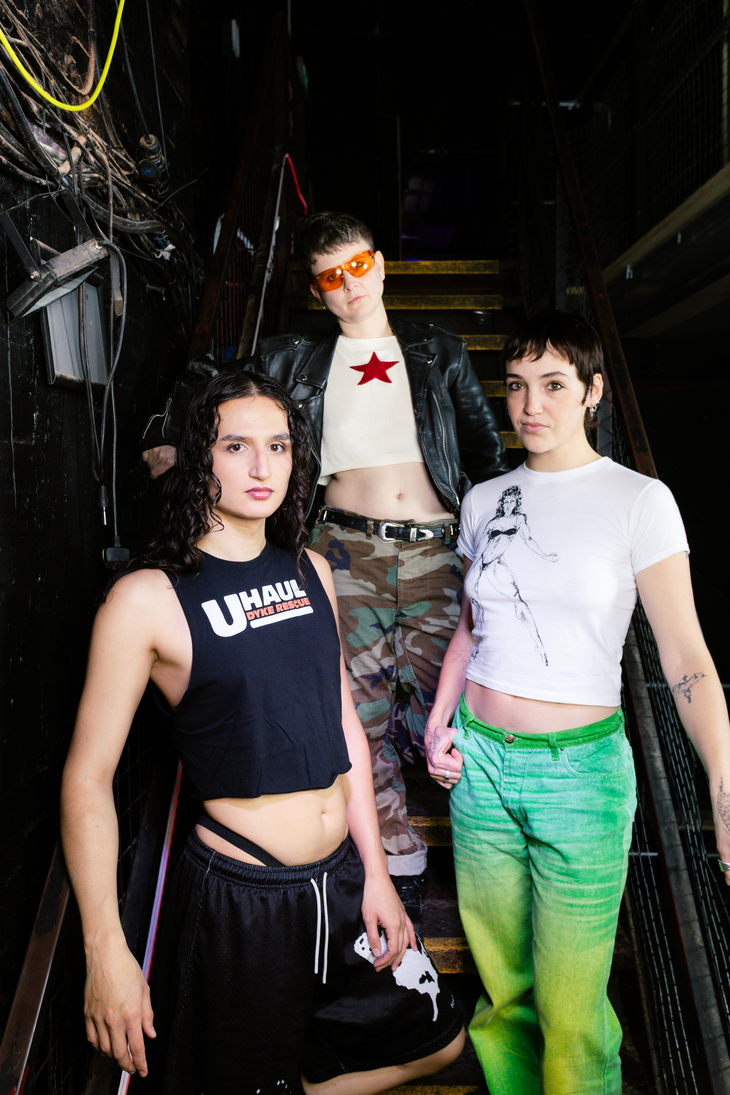
In what's been billed as an unprecedented show of solidarity, members of eight of London's leading queer nightlife collectives — INFERNO, RIOT, Queer House Party, Riposte, BUMPAH, Coven, UHAUL Dyke Rescue, and PLASTYK — converged recently to address the bleak fact that London's queer nightlife is under threat from corporate exploitation and economic abandonment, among other factors.

Posing for a photoshoot, the groups met to spell out their criticality as part of London's nightlife, and the increasingly tough challenges they face: "Together, we represent sex-positive spaces, dyke nightlife, trans femme communities, sound system culture and so much more," reads a joint statement from the groups, "We've engineered sound systems, built Mobile Dyke Bars touring in Luton vans, turned dance floors into open mics, and created spaces that have literally saved lives.
"These aren't just parties, they’re lifelines."

However, between 2006 and 2017, 58% of London's LGBTQ+ venues disappeared — from 125 to just 53. And that number continues to diminish. The reasons for this, says the group, are myriad, including an 'explosion' in venue hire which has risen from free to £1,000+; as well as communities having to choose between paying rent and going out.
In 2023, founder of former LGBTQ club night The Chateau wrote a piece for Londonist on the problems faced by queer nightlife, blaming the closure of many of London's LGBTQ+ venues on everything from rising rents, to the pandemic — as well as the 'vile vitriol' facing trans people day in, day out.
Among those venues London has lost are a number from the 'legendary' category; think the Black Cap, Madame Jojo's, G-A-Y Bar and the Joiners Arms. Bethnal Green Working Men's Club — A key player in London's LGBTQ+ and alternative scene — is currently in a battle to remain open, having previously been served a two-month eviction notice, after its owners decided to sell up.
"London's queer scene is under threat from corporate exploitation and unsustainable economics," continues the statement from the eight groups, "Corporate entertainment companies take what marginalised communities built — from Black ballroom culture to underground raves — and repackage it into £60 mega-parties while grassroots collectives fight for survival. Most venues prioritise events that guarantee high bar revenue, which often means straight raves or commercial nights, leaving queer collectives to fight for the few venues with a strong ethos that actually make space for us.
"When capitalism feeds into dance floors — spaces of mutual energy exchange — it destroys the very core of what makes them sites of liberation."

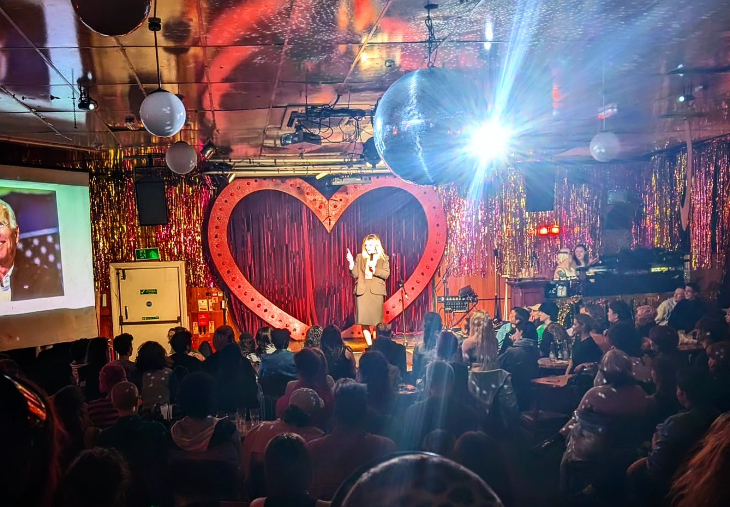
However, some aspects of London's queer nightlife are arguably enjoying a moment. "Queer people are no longer a token diversity act," wrote the comedian Kuan-wen Huang for Londonist earlier this year, "...the queer comedy scene is expanding, from professional clubs to open mics....
"With the expansion of performing opportunities comes a growing number of queer performers. In fact it's not just the number that is increasing — the queer comedy community is also becoming more diverse in style and representation."
It's also notable that London now has its own queer cinema, the Arzener in Bermondsey.
In the meantime, the collective — which claims that a 'scarcity' of funds is a lie, when government money still pours into policing and borders — is pushing for various lifelines that will help the LGBTQ+ nightlife recover, including extra government funding and support; fair venue hire models that don't price out grassroots organisers; and advance ticket purchases/paying it forward from those who can afford it.
"This is not a eulogy," concludes the statement, "This is a declaration. The question London must answer: what version of queer nightlife do we want in 10 years? One built on individualism and corporate profit, or one built on care, collectivism, and genuine liberation?"