The latest book by Darren Coffield, Hen: Mistress of Mayhem - A Portrait of Henrietta Moraes, explores the riotous (and tragic) life of the late model, muse and memoirist. In this extract, the author sets the scene as Moraes settles into Soho, making friends with the infamous barkeep, Gaston Berlemont.
When Henrietta first arrived in 1950s bohemia, Soho was still a village in the West End of London.
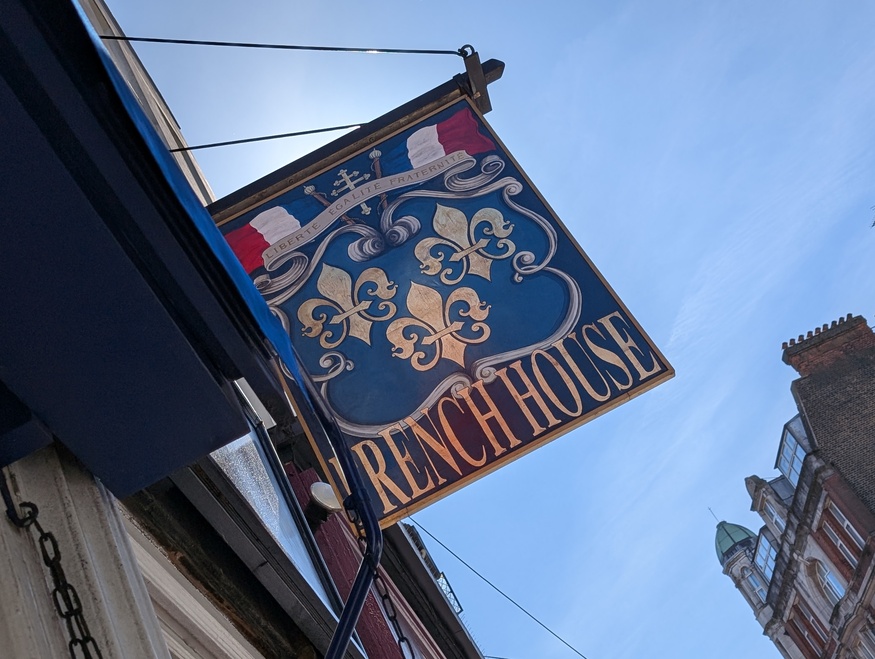
Its hub was the French pub, formerly known as the York Minster, now officially named The French House, but forever known as 'the French' to the locals. Of all the surviving pubs, the French is still the truest to the spirit of Soho: no fruit machine, no jukebox to drown the conversation and definitely no television.
For someone who led such an unconventional lifestyle, Henrietta's days fell into a set pattern. They would usually begin late morning when she'd leave the attic of the Queen Anne house at the top of Dean Street (where she lived) and amble south down the road with her boyfriend, Michael Law, until they reached the Café Torino on the corner of Old Compton Street. The place reeked of old rubber and disinfectant as a long sticky strip of paper swayed from a central light fitting, brown with glue and black-dotted with dead flies. Here they sat at one of the marble-topped tables listening to Spanish anarchists and Republicans discussing how to overthrow Spain's fascist dictator Franco. It was nicknamed 'The Madrid' and became a favourite haunt of Hen's because the café sat betwixt the Colony and the Gargoyle clubs, from which vantage point she could observe the familiar faces of her quarry going by. It also commanded a clear view of the French, so Hen and Michael would wait at the café to watch the pub fill up before entering the premises by the left-hand door.
"Part of its appeal with women was that they could go unchaperoned and not get hassled"
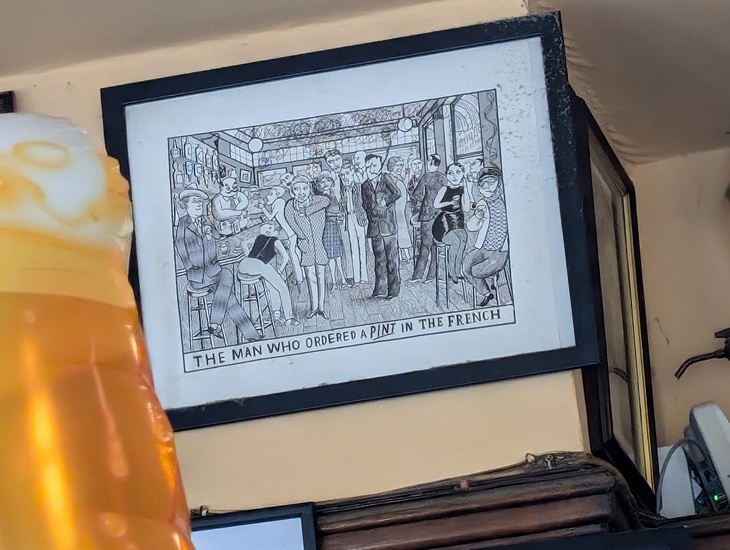
The pub itself was pretty basic, but part of its appeal with women was that they could go unchaperoned and not get hassled, which was unusual back then. Women were often segregated in the other pubs or refused admission altogether. Each day at noon, the French was where Hen would congregate with kindred spirits. It was run by Gaston Berlemont, a balding middle-aged gentleman of Gaulish heritage, who sported a dark suit and had twinkling eyes and a long twirly handlebar moustache. He was also gracious to the working girls — the local prostitutes — who regarded the French as a sanctuary. Once inside they were off-duty and would complain bitterly to Gaston if any man tried to pick them up.
The pub's oak interior had a defiantly French ambiance, the walls lined with faded sepia photographs of the many famous French artistes who'd drunk on the premises between the wars. In keeping with the continental atmosphere, Gaston never served pints of beer, only half pints, and refused to serve Coca-Cola because he said he didn't like the type of person that drank it. But he did sell quarter bottles of champagne, that’s how stylish the French was — as a woman you could go into a pub and order a quarter bottle of champagne for yourself or (as in Hen's case) persuade an unsuspecting admirer into buying you one.
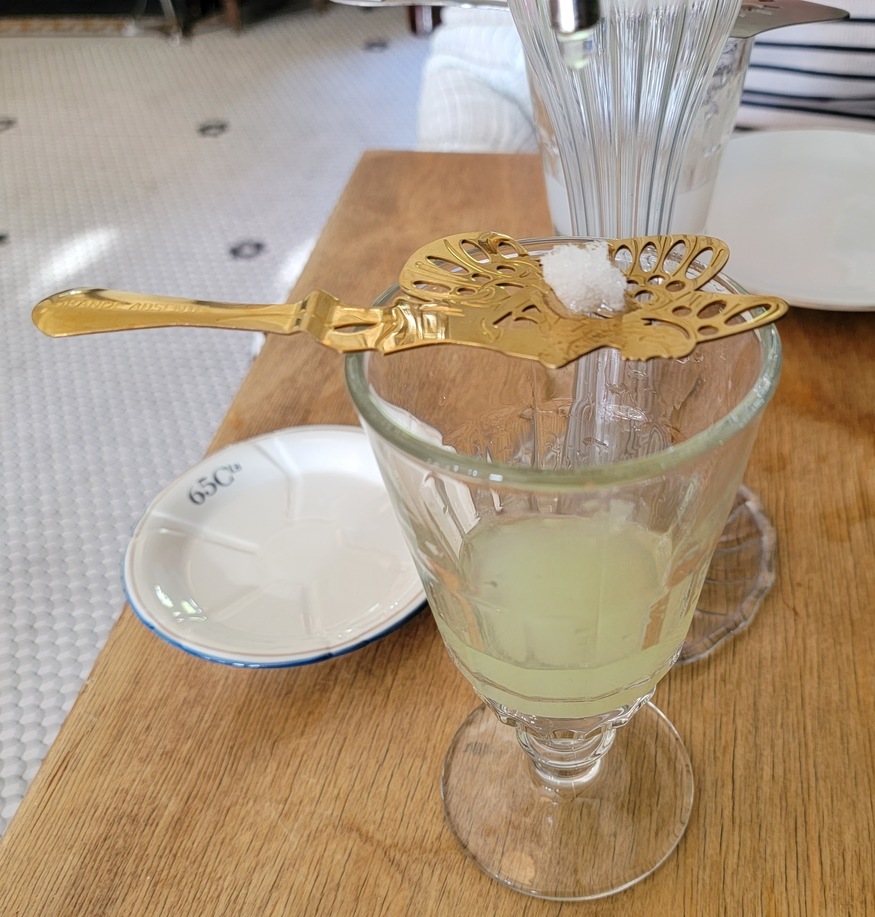
One of the quirks of the French was that Gaston ran it more as a club than a pub. There were two ends of the bar, one end was for the 'intellectuals' — artists, poets, writers, publishers, etc. It was very cliquey. When you first entered through the left-hand door, you'd see all the regulars at the other end of the bar, drinking. After a few years drinking at the 'Shallow End' of the bar you'd become established as a regular and slowly be allowed to move down the bar in a southerly direction towards the 'Deep End'. The cash register in the middle of the bar marked the demarcation line where both ends met. Once you'd got there, you'd made it to the 'Deep End' or V.I.P. (Very Inebriated Person) area. To reach it was considered an honour, despite it being where the grim reaper was regularly harvesting his crop, and Gaston expected those who'd graduated to undergo an initiation ceremony. He would bring out a bottle of 1912 pre-Prohibition French absinthe, and with all the ceremony of a high mass he would also set out paraphernalia; the bottle, the glass, the perforated spoon upon which he would place a sugar lump that helped shoot the alcohol into your system. However, some said his rare bottle of absinthe tasted suspiciously like the house Pernod…
"Gaston had his favourites, and Henrietta was certainly one of them"
Gaston had his favourites, and Henrietta was certainly one of them. He remembered her as 'smashing, voluptuous', and confessed, 'It was as much as any red-blooded man could do to keep his hands off her'. For Henrietta, Gaston was a genius of a landlord, welcoming her with a cheerfulness that lit up her day. Once she became so bored listening to a man complain about his life that she threw her glass of champagne in his face. The pub fell silent, and everybody expected Gaston to bar her. But instead, he twirled his handlebar moustache and smiled, 'Madame, I see that your glass is empty. Please allow me to refill it for you'. He was very diplomatic with drunks too: 'One of the two of us will have to go, and I'm afraid it's not going to be me!' And he would throw people out with such courtesy that they wanted to thank him.
For those bohemians perpetually short of cash, such as Henrietta, Gaston proved a very generous landlord too. The first words she'd utter upon entering were, 'Good Morning Gaston, could I have a glass of Pernod please and could you possibly lend me a fiver?' Whereupon he'd proffer a rolled banknote, handing it over to her discreetly with a nod and a wink and the reassurance that he was willing to wait for repayment. By the till he kept a list of people and their debts written in tiny handwriting in black ink. He said he loaned people money because: 'nine out of 10 people pay it back, one in 10 don't but the amount of money they spend coming in here explaining why they weren't paying me back far exceeds the debt.' So, cultivating customers like Henrietta was a shrewd business move.
But Gaston was less generous in other respects. If someone had the cheek to ask for an extra cube of ice to go with their drink there would be outrage, and if a man wanted to have a crap they had to go through the indignity of asking for the key to the gents washroom, whereupon all the customers' heads would swivel in unison as Gaston bellowed across the bar: 'Who wants the key?'
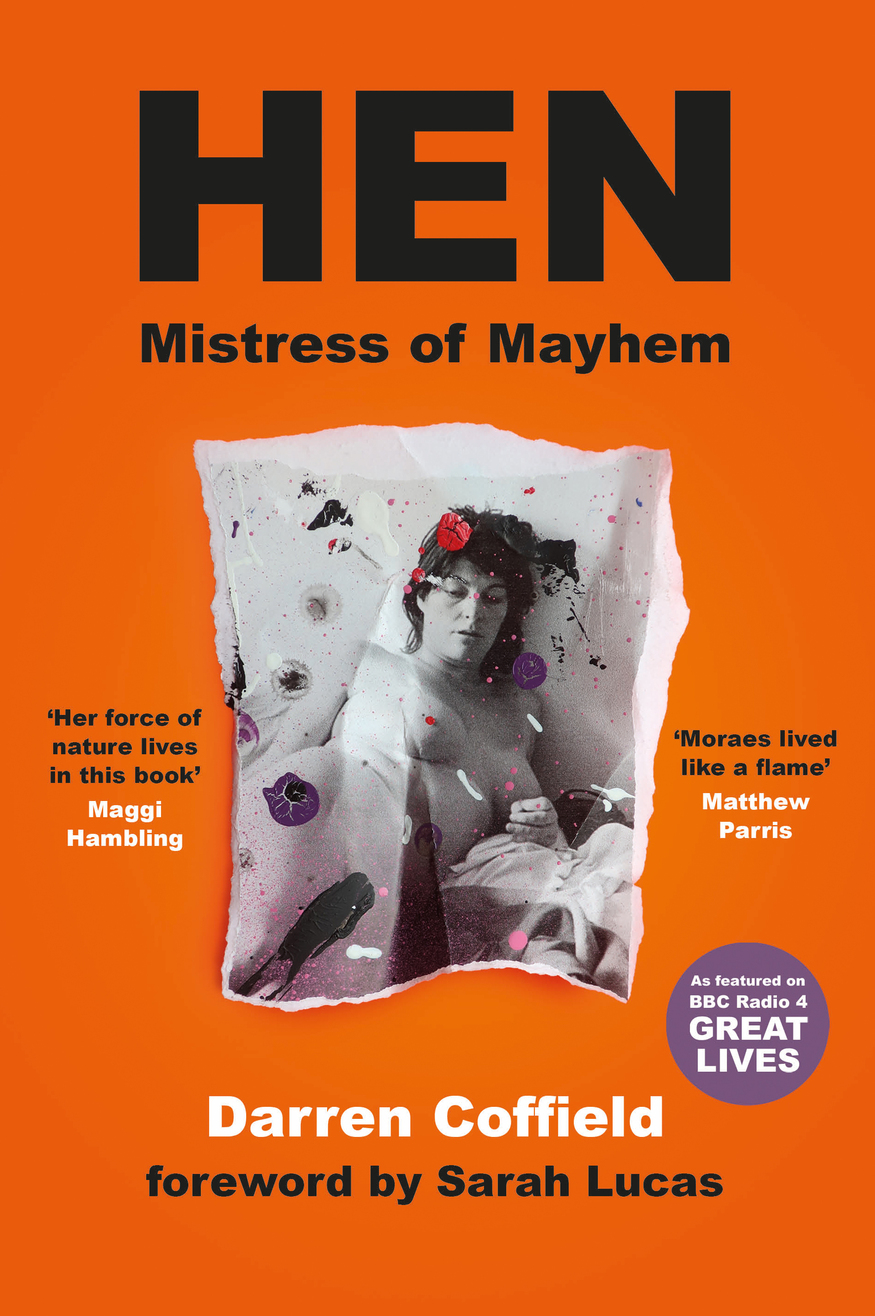
Hen, Mistress of Mayhem: A Portrait of Henrietta Moraes, by Darren Coffield, published by The History Press.
We featured this book because we know it's the kind of thing our readers will enjoy. By buying it via links in this article, Londonist may earn a commission from Bookshop.org — which also helps support independent bookshops.