Paul Mellers possesses some seriously sought-after keys.
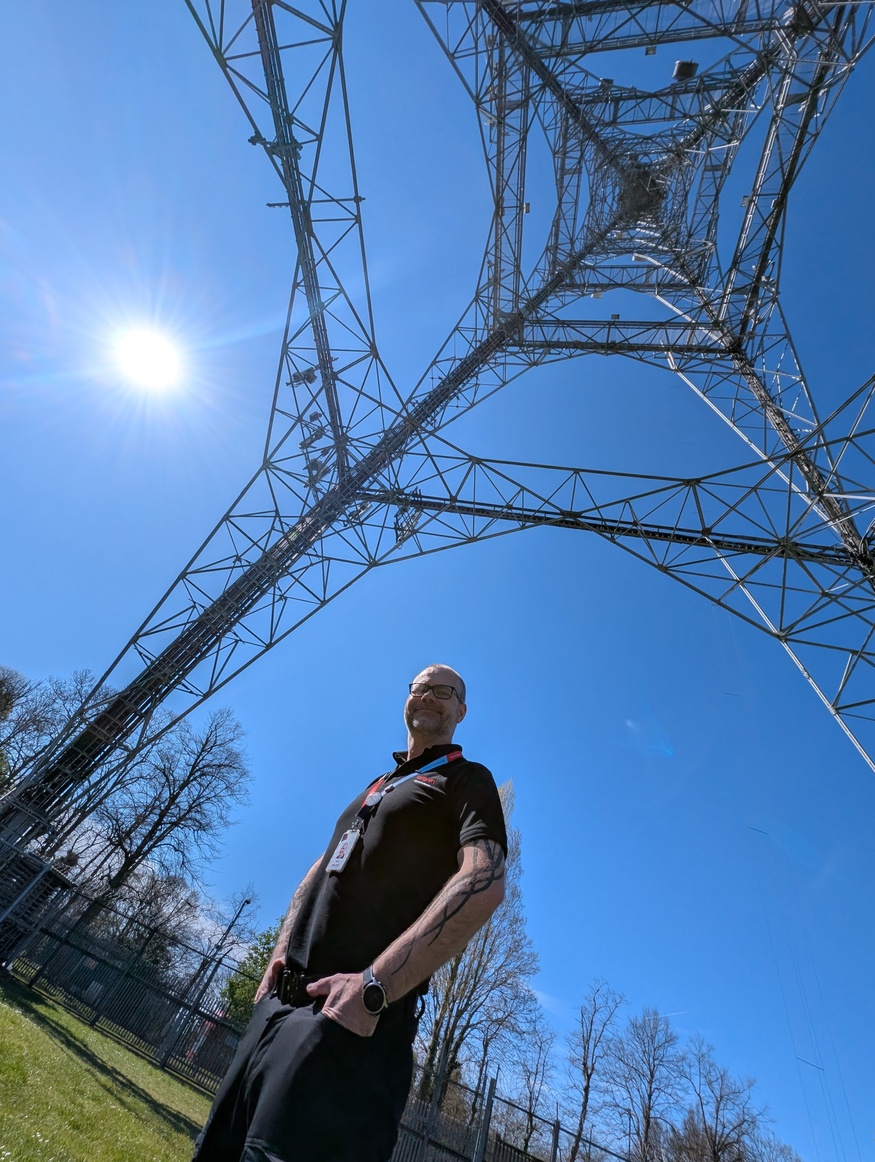
Not only does the Arqiva engineer wield a set giving him access to the BT Tower, he also has the keys to the Eiffel Tower-esque mast that looms 219 metres over Crystal Palace.
"It's the structure that touches most people in this country"
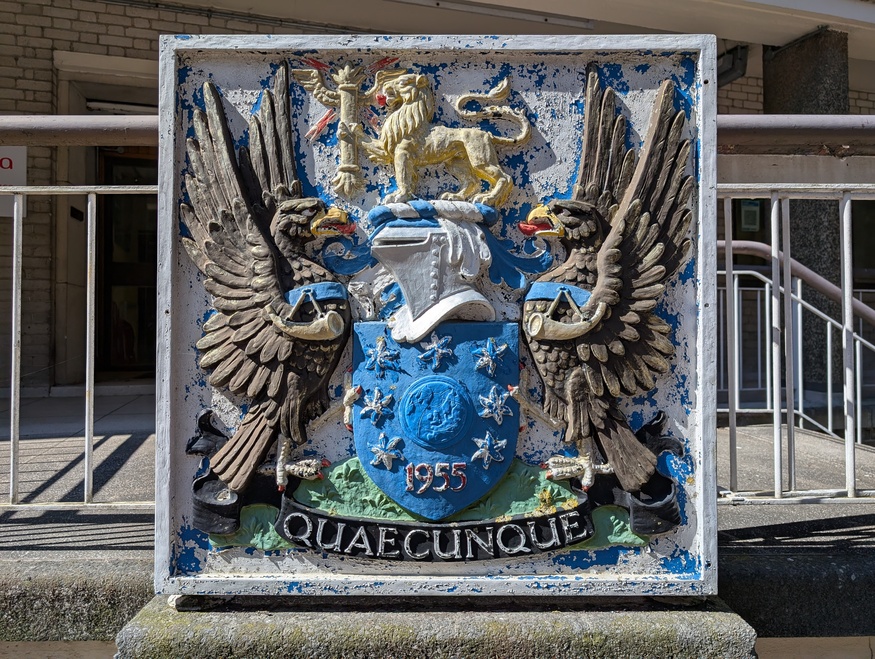
Crystal Palace is inextricably — if coincidently — intertwined with entertainment for the masses. For just shy of 80 years, the Crystal Palace — a glassy leisure centre packed with all sorts of cultural and scientific goodies — drew in funseekers from far and wide. All of that ended on the night of 30 November 1936, when a rampant blaze brought the structure crashing to the ground.
Two decades later, a second landmark would rise from the ashes of the Crystal Palace (the site of its old aquarium to be exact). But while the Palace had entertained around six million people during its lifetime, this new structure — despite being fenced off from the public — had the clout to entertain more than that in any given second.
The Crystal Palace transmitter mast is, as Paul Mellers puts it, "the structure that touches most people in this country." And that's a stone cold fact; the various signals transmitted from here reach 11 million — some 16% of the British population.
"Height is might"
In the years leading up to Crystal Palace's fire, John Logie Baird operated a small television studio here, although it was only ever experimental, and the pictures, by all accounts, were weak. Television only seriously took flight with the live broadcast of Queen Elizabeth II's coronation in June 1953 (insert boilerplate boomer memories of everyone in the street crowding into the one living room with a television set).
The BBC was the sole broadcaster at the time, initially transmitting from (and producing shows at) Alexandra Palace in north London. Realising it required a more powerful mast — capable of reaching a surging number of homes — the Beeb headed for higher ground, namely at Crystal Palace. "Even though it's nowhere near as tall as the Shard, if you were to climb up and stick your head out the top, you do look down on the Shard," says Paul. "Height is might".
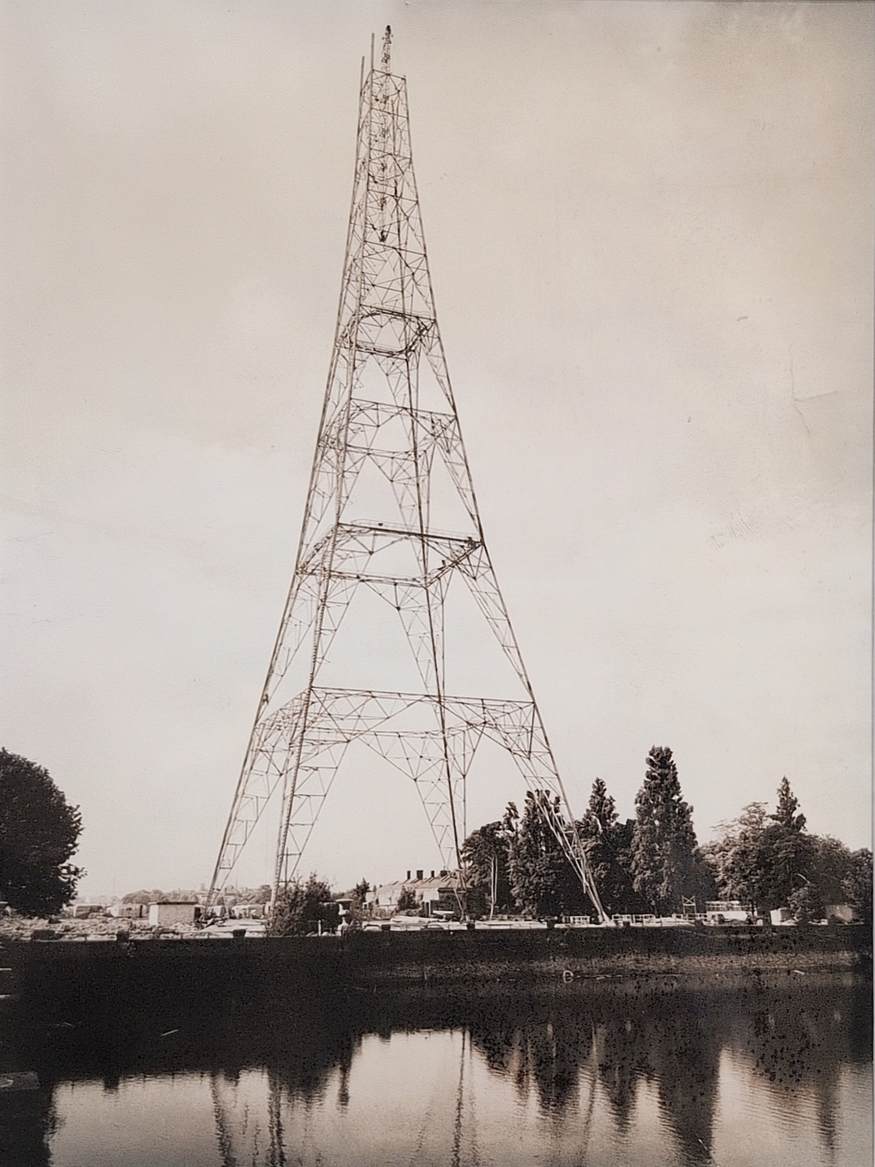
Commissioned by the BBC, and assembled by BICC Public Limited Company (now Balfour Beatty), the mast was erected between 1955 and 1956. Gladly, the undertaking was recorded for documentary The Phoenix Tower, providing butterfly-inducing shots of topless labourers piecing together the oversized Meccano set from a giddy height.
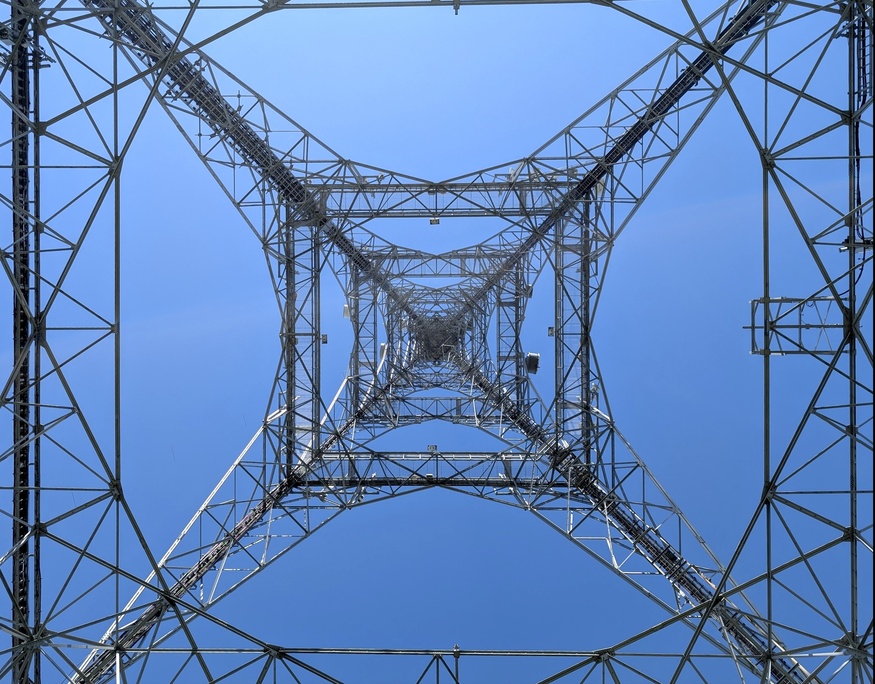
Sometimes referred to as the 'Crystal Paris' owing to its resemblance to the Eiffel Tower, the Crystal Palace transmitter mast was built the way it was, because tethering it with guy wires wasn't an option. Hemmed in by a reservoir, a busy road and a steep slope, on-site space was limited. "They wouldn't have built it in this way unless they absolutely had to," says Paul, "and they did absolutely have to." And so a London icon was built out of necessity.
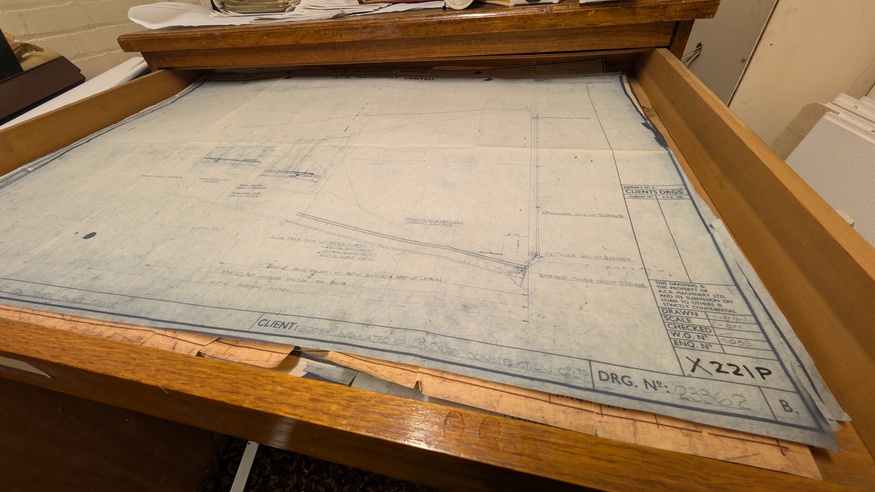
There's no proof of it, but Paul reckons the blueprints of the Parisian landmark must've been studied by BICC: "I'd be shocked if they didn't". As for the blueprints of Crystal Palace's mast; Paul pulls out a drawer in a small archive cupboard, and allows me a glimpse.
Though the BBC had the mast built in the first instance, the advent of colour TV shook things up, forcing the BBC and its newish rival ITV to share the transmitting space. "The government basically said 'OK, you two competing entities,'" says Meller, "start playing nicely, and move in together!'"
ITV built an extension onto the side of BBC's existing transmitting station, got its own set of keys cut (Paul still has both BBC and ITV keys), and became next door neighbours — it sounds like the setup to a 1950s version of W1A.
'Electrical plumbing'
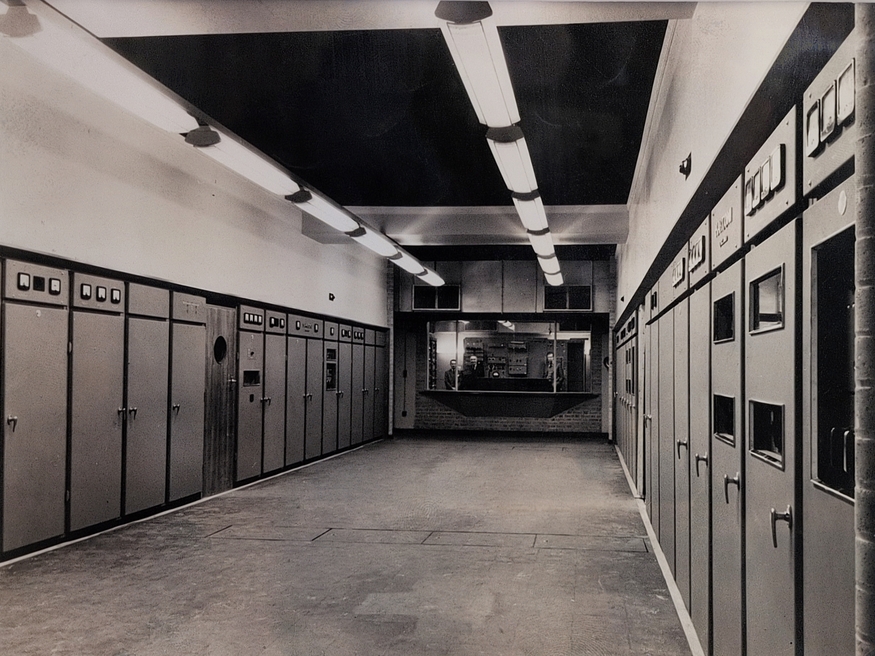
In its early days, the transmission halls were overseen by dozens of full-time engineers — most in shirts and ties, many with cigarettes dangling from their lips — fiddling with dials on chunky bits of broadcasting equipment.
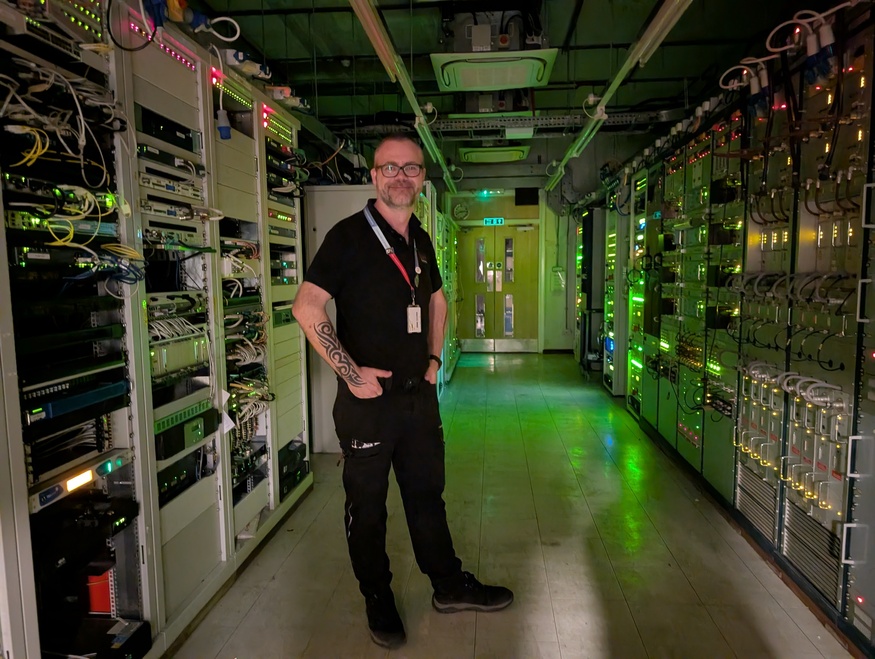
That's long changed, with Arqiva — the latest incarnation of the original engineering company — running the show with a scaled-down workforce. 100% of British TV is broadcast from Arqiva's 1,400 UK sites, as well as 90% of radio. Paul oversees a large proportion of that himself: "My job is engineering for TV, FM, DAB, AM radio... I cover London and the south-east," he says, "And we've got about a dozen people taking care of 130-odd broadcast sites, of which this is just one."
"People still deserve to be educated, informed and entertained"
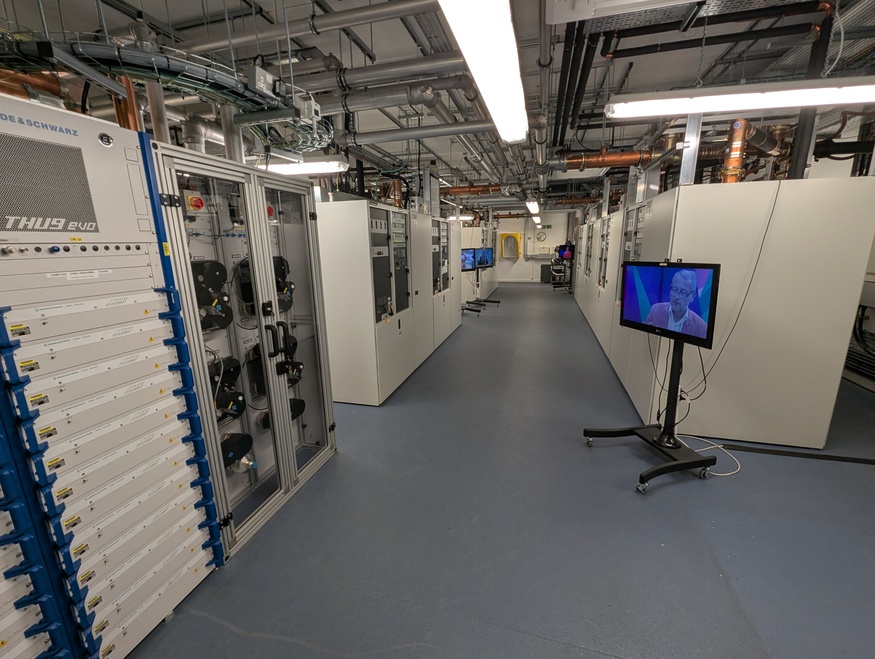
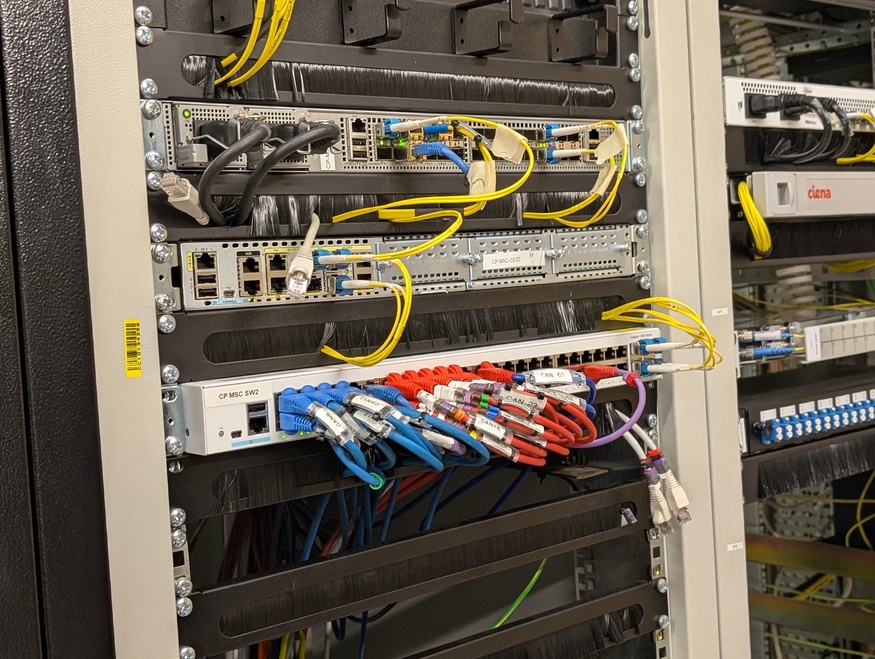
A perpetual buzz rings out through the transmitting halls, packed with transmitter equipment (whatever you do, don't call the mast itself a 'transmitter'). TVs showing QVC and Bargain Hunt are dotted around at intervals, but don't think Paul gets to watch daytime TV/listen to daytime radio for a living. The viewing pleasure of millions relies on him. "Essentially all the TV signals for the whole country come in on a fibre," explains Paul, "and that carries an awful lot of data. Our job then is to turn that into what is essentially a radio/TV signal."
TV-wise, all the stations from around the country have their signals knitted together into six multiplexes. The BBC has one multiplex. ITV and Channel 4 have one together. Public service broadcasters (including BBC, ITV, Channels 4 and 5) have one for their HD channels. There are also three fully commercial multiplexes (one owned by SDN, two by Arqiva itself). "We take care of the engineering for all the companies, even though there are competitors in that space," says Paul.
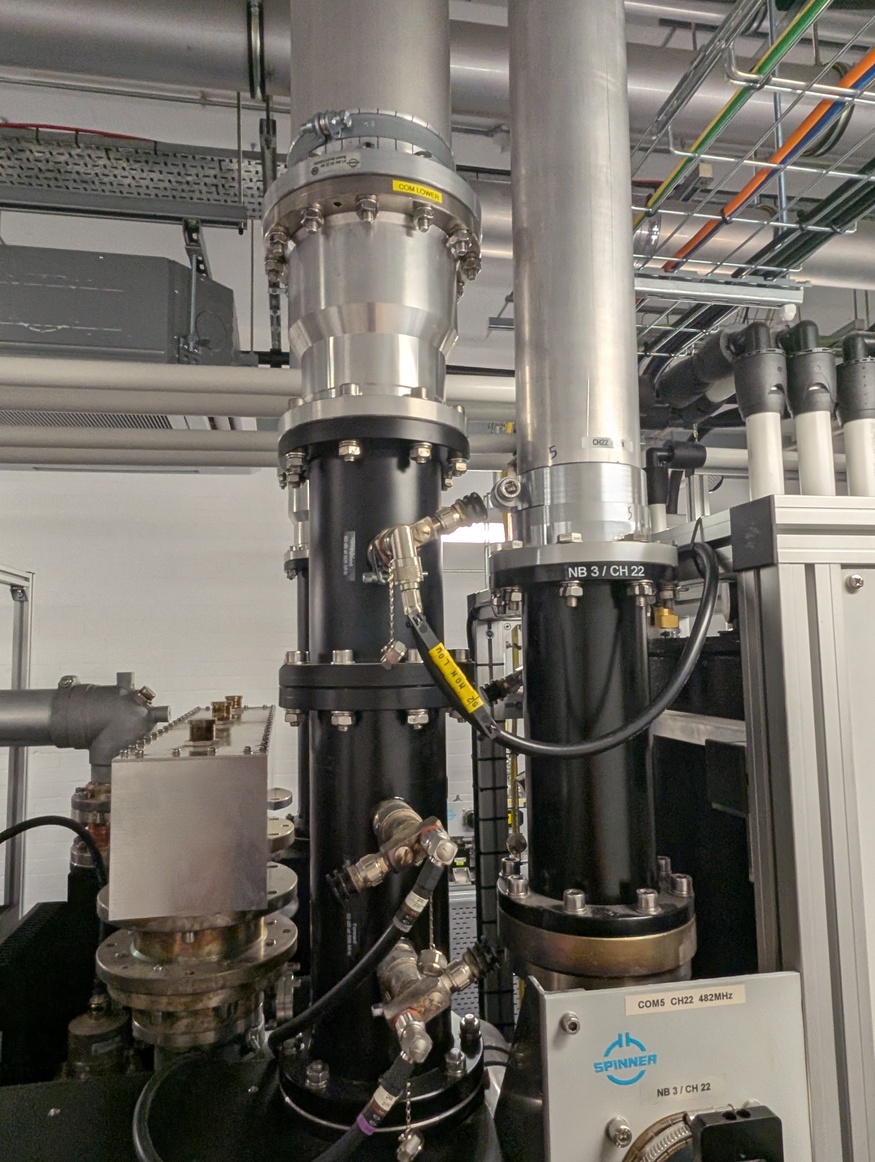
The output from multiplexes are then converged into increasingly large pipelines ("electrical plumbing" as Paul describes it), which grow thicker and thicker in girth, eventually channeled to cylinders at the top of the mast, which spread the signals far and wide. (The nearby Croydon transmitter was erected in 1962, and now transmits a handful of FM stations, as well as serving as a backup for Crystal Palace.)
Paul must ensure the smooth running of all the equipment; checking, dusting, tweaking. Stickers on the multiplexes bluntly remind him just how many people are counting on him. At the flick of a switch, he could shut down all transmission: it is the remote control to end all remote controls.
In 2012, the Crystal Palace mast was bathed in a colourful lightshow to mark the digital switchover; a technology that's cheaper to run, and allows more diversity. Explains Paul, "The DAB technology allows the broadcasters to run multiple flavours of their radio station, so Heart, Heart 80s, Heart 70s, Heart Christmas... just like that.
"In theory we could take a DIY DJ in his bedroom to a national audience by the end of the day."
The transmitter station may no longer be run by the BBC, but Paul holds true the traditional Reithian values: "There has been some debate about the future of Freeview," he says. "Arqiva have invested in the future — we've put our money where our mouths are. I used to install smart meters before this. I've been into people's homes, and there's people out there budgeting for the price of a stamp. People who couldn't offer me biscuits because they couldn't afford them.
"I don't want to be making those people subscribe to the internet just to watch TV, when they deserve to be educated, informed and entertained as they did previously."
"It appears on bottles of local gin"
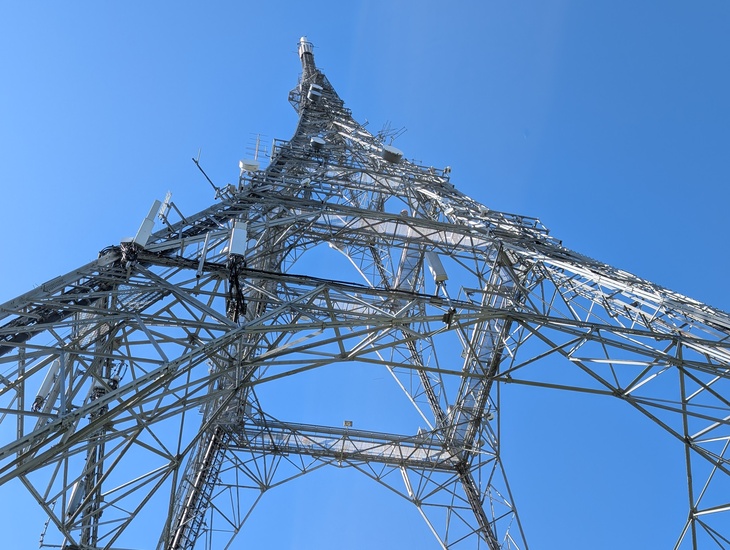
We emerge outside, directly below the mast, to appreciate its latticed form set against fortuitously blue skies. It makes you shudder to think that just a couple of years after it was built, three young men decided to scale this thing, tying a shirt to the top of it as a makeshift flag. One of them apparently came down looking "a bit green".
Up close, you also appreciate just how useful this 'climbing frame' structure is. It cost 10 times more to build it this way than it would have a normal mast. But it's certainly made up for that; various sections of the mast are rented out by phone companies, the police, the coastguard, taxi companies, energy companies, and City traders after a millisecond head-start, to secure deals worth extra millions. A prime piece of broadcasting real estate, even the lower-down sections are relatively sky high.

It's surprisingly difficult to find examples of anyone badmouthing the mast as an eyesore when it went up in the 1950s. Perhaps everyone simply loved it from the start, and has continued to do so ever since.
"I love this site particularly because of the way that it touches the locals," says Paul, "There's a point where it enters the local culture. It becomes a homing beacon.
"Business use it for their iconography. You've got Antenna Gin. You've got the Transmitter Knitters. I don't think I can speak for all their personal interests but I'm going to go out on a limb and say they've got no interest in broadcasting infrastructure..."
Even the local wildlife is a fan, peregrine falcons establishing their nests in the latticed framework. They go largely undisturbed by humans, too, because everything here is designed from an engineering perspective to keep people on the ground. The mast is inspected once a year, repainted every now and again, and apart from that, left largely unclimbed.
Even Paul has never scaled it himself. "I keep asking," he smiles.
Yet despite being out of bounds to the general public — even its own engineer — Crystal Palace's mast has grown into a bigger icon than the very Crystal Palace that stood here before it.
All images by Londonist, unless otherwise stated.