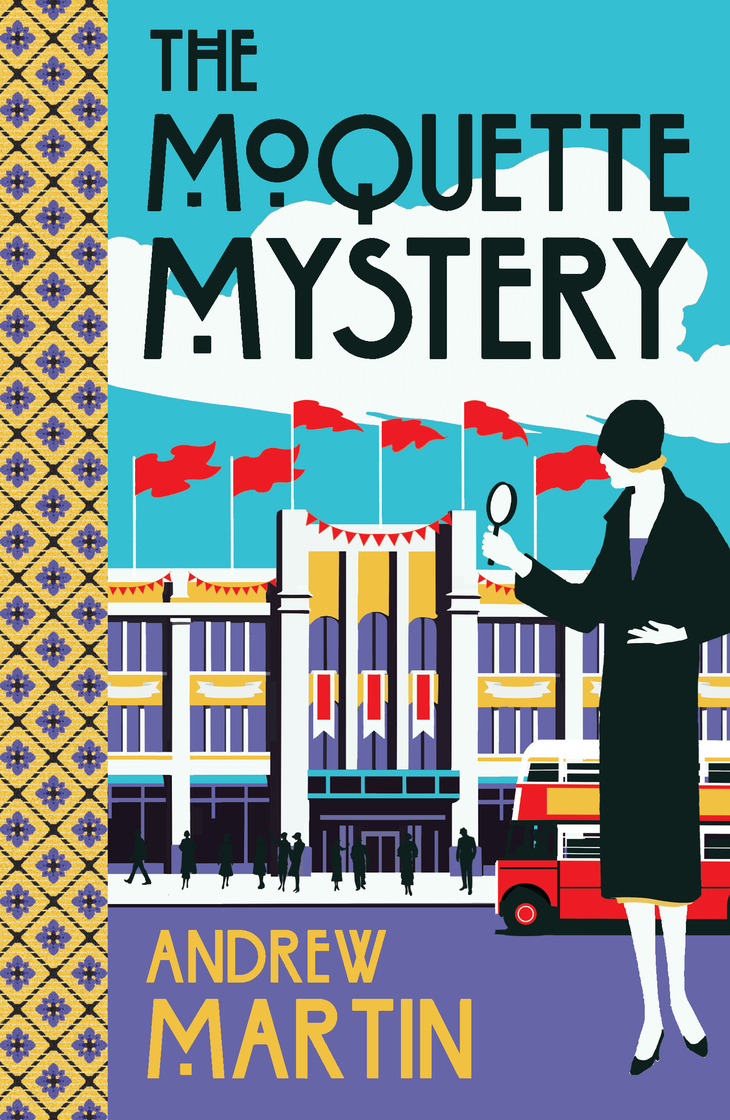
In Andrew Martin's new detective caper The Moquette Mystery, a scrap of railway moquette becomes a clue to a murder in 1930s London — as department store employee May Mitton sets out to uncover the truth. Here, Andrew writes about the research that went into the book — and what he'd do on a 1930s day out in the capital.

The Tube is full of mysteries, by which I mean mysterious people.
That pair having a flirtatious conversation: did they know each other before it began? Or I might see a man standing in the concourse at King's Cross. 25 minutes later, he's reading a paper on the platform at South Ken – which is irritating. How did he get there before me? I've written a history of the Tube. I'm supposed to know the fastest way between any two points!
The basic idea for The Moquette Mystery came from Graham Coster, its publisher. He also published my non-fiction book about moquettes, Seats of London, and that was his idea, too. But he and I think alike about most writing to do with transport: it's very dour. Moquettes, on the other hand, are all about colour, romance, beauty.
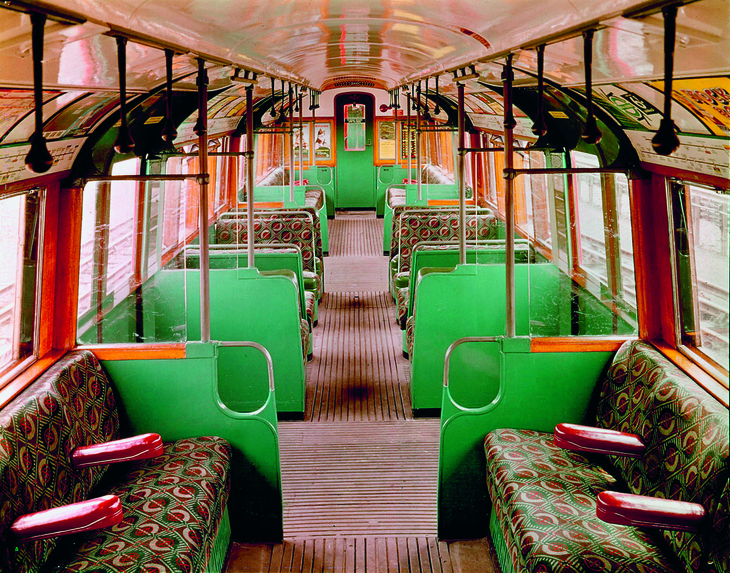
We designed a moquette especially for the story. I wanted one that suggested natural forms (for reasons to do with the plot) and that had colours distinct from those of the famous moquettes used on the Underground in the late 1930s, namely red and green. So we ended up with a purple, flower-like pattern on a yellow background. There's also black in there, for an ominous note. It's a crime novel, after all.
My favourite moquettes of all are the red and green ones for the 1938s perhaps, especially one called 'Colindale' (or 'Leaf') by Marion Dorn, which showed amusingly regimented red and green leaves. Frank Pick, who commissioned those moquettes liked red and green because the red symbolised the town, the green the country. He also felt green created a 'serene' mood. I agree. We need more green on trains today.
I have a newsletter, Reading on Trains, and I've done a lot of writing on trains, too — a lot of studying of characters, which is a useful exercise for a novelist. You note the appearance of the person sitting opposite; then it's necessary to find out if they speak like they look, so you ask them a question, such as whether this is a High Barnet train? If they do speak like they look, that's kind of satisfying, but it's more interesting if they don't.
If I had one message for aspirant writers of historical fiction, it would be: look at old photographs. It's so much quicker than reading, and you get not only the historical props — the clothes (hats especially), cars, interior décor — you also get the people. You can look at the face of someone long dead and think 'I'll have him (or her) in my story.'
And if travelling back to 1930s London for the day was an option, I'd ride on the 1938-stock red Tube trains, perhaps while smoking a cigarette, just because you could, back then. I might go to King's Cross to see off the Flying Scotsman, or the Cornish Riviera Express from Paddington.
The Moquette Mystery by Andrew Martin, published by Safe Haven.