Will NoblePhotos Of A Salty, Sordid Soho - In This Re-Release Of A Classic 1960s Book
Warning: this article contains images of nudity, which are NSFW.
"In Soho there is no routine, which is the reason why it has so much character. I mention these points at this stage of my writing because it is not really possible to divide Soho up into set patterns—the shops are mixed up with the clubs, and the market is surrounded by clip joints and barber shops, in fact Soho looks as though all its ingredients and buildings have been put into a dice shaker and tumbled out on to a baize-topped table."
"He wrote it and I took the pictures, it was something of a farce. We'd wander around Soho all day and night, having hospitality heaped on us by publicans and restauranteurs who wanted to appear in the book, and I think we were drunk for a year."
The words of pre-eminent essayist and Soho soak, Jeffrey Bernard, on the creation of the 1966 book Soho Night & Day, which Bernard put together with writer Frank Norman. "In Soho," wrote Norman (Bernard was on photo duty for the book) — "there is no routine, which is the reason why it has so much character... the shops are mixed up with the clubs, and the market is surrounded by clip joints and barber shops, in fact Soho looks as though all its ingredients and buildings have been put into a dice shaker and tumbled out on to a baize-topped table."
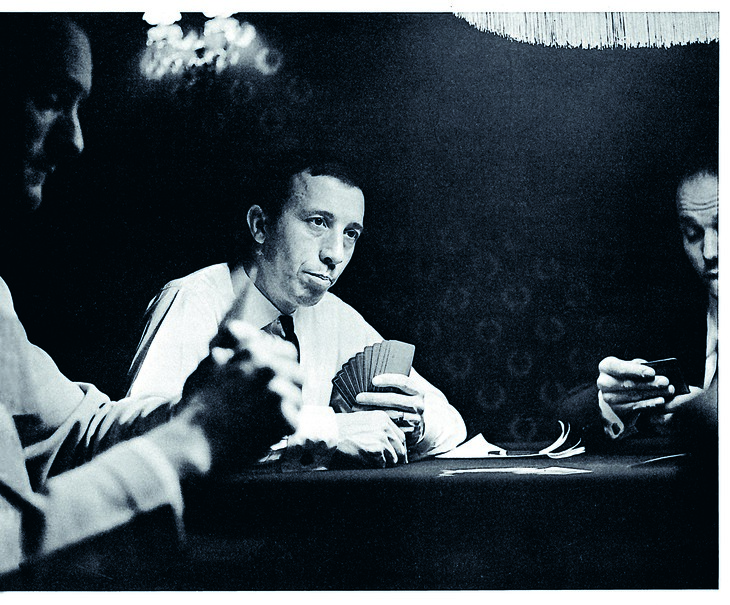
"Gamblers are a funny lot. Some of them start one night just to show off in front of some girl and the next thing they know they are hooked, and before long they are compulsive gamblers and will do anything for a bet. They will sell all their belongings in order to pay off the gambling debts, and may eventually wind up stealing other people's property in order to gamble. Eventually they find themselves in so deep that they cannot get out no matter how much they try. The girl friend that they first tried to impress has long since left them, and nothing can cure them, the reason being that just when things are at their lowest ebb they will have a big win, and for a short time things may go well for them, so they jump back on the roundabout, thinking that they are always going to win. This of course is only wishful thinking because before they know what is happening they are in dead trouble again. It does not happen very often but occasionally girls can be just as bad as men when it comes to the gambling bug."
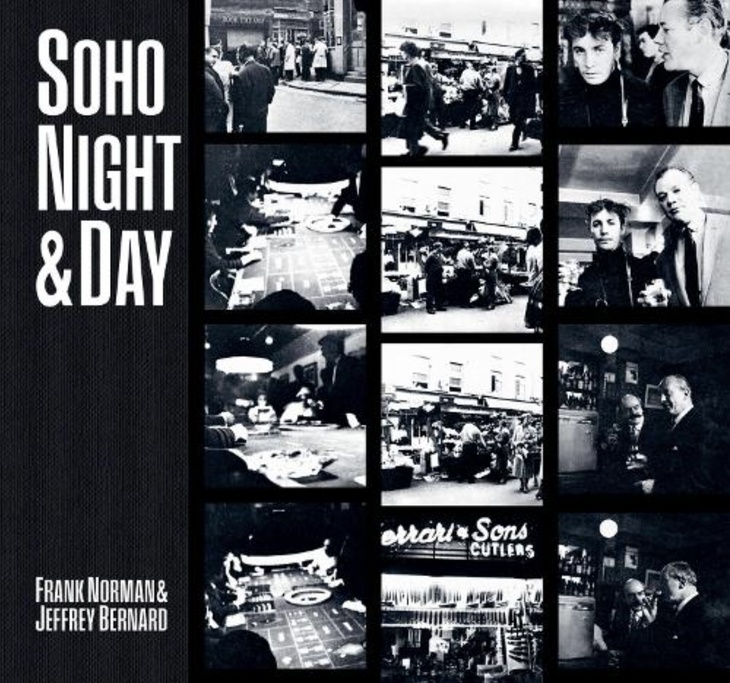
The book — characterised by Bernard's no-nonsense photos and Norman's non-PC, hyper-observant and often wandering prose — doesn't so much try to crack what makes Soho tick, but go along with the madness of it all, and jot it down along the way. It has grown into an invaluable record of a Soho that's now so often mourned as lost to time.
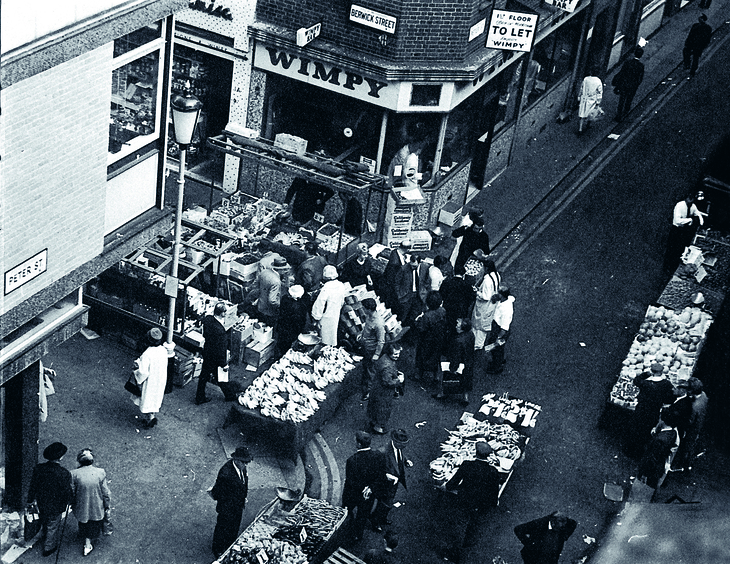
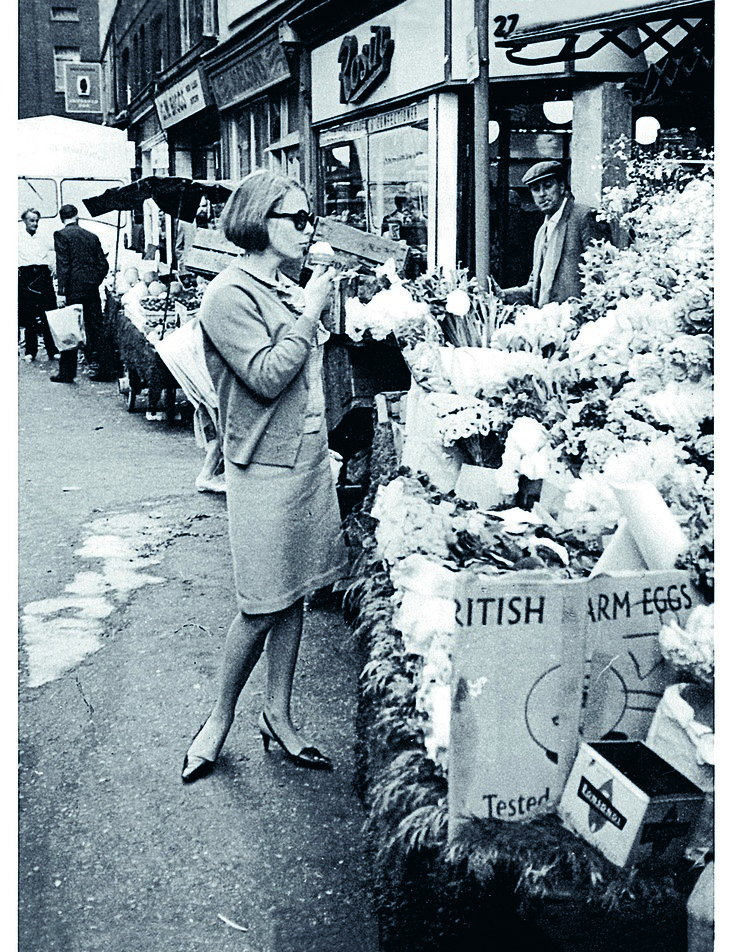
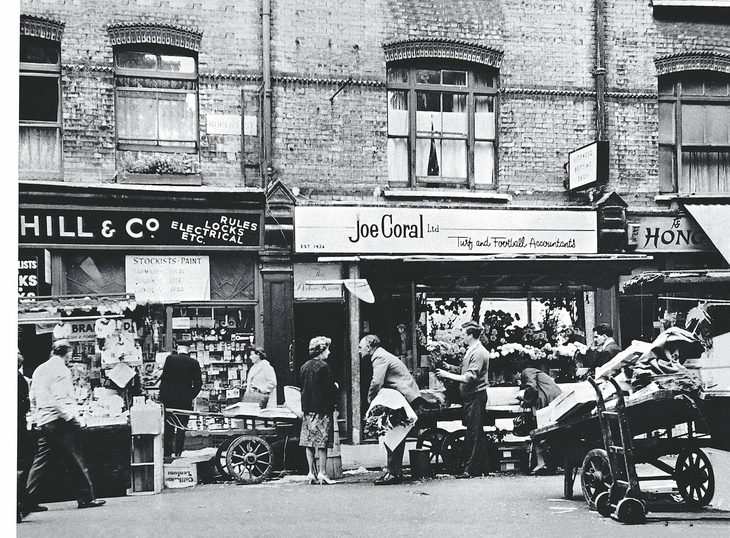
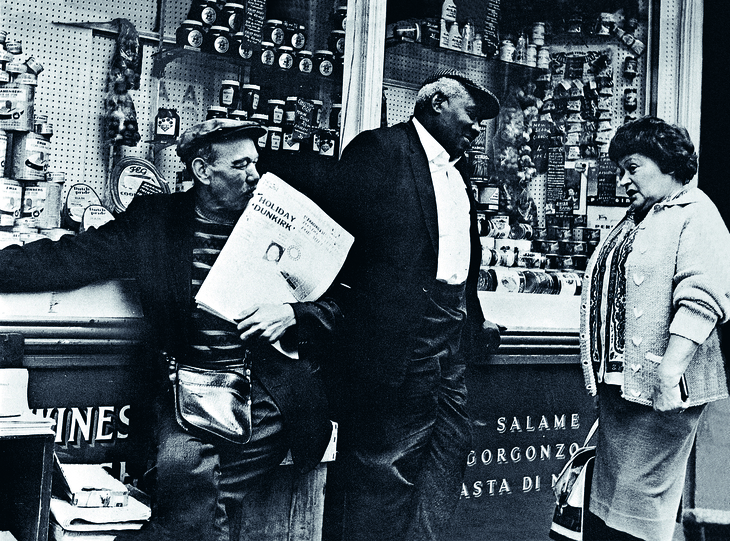
Berwick Street Market. "A French and Italian restaurant owner may meet in Berwick Street market early in the morning and ask one another how things are. 'Things is terrible,' says the Italian, 'how are things with you?' 'Terrible also.'"
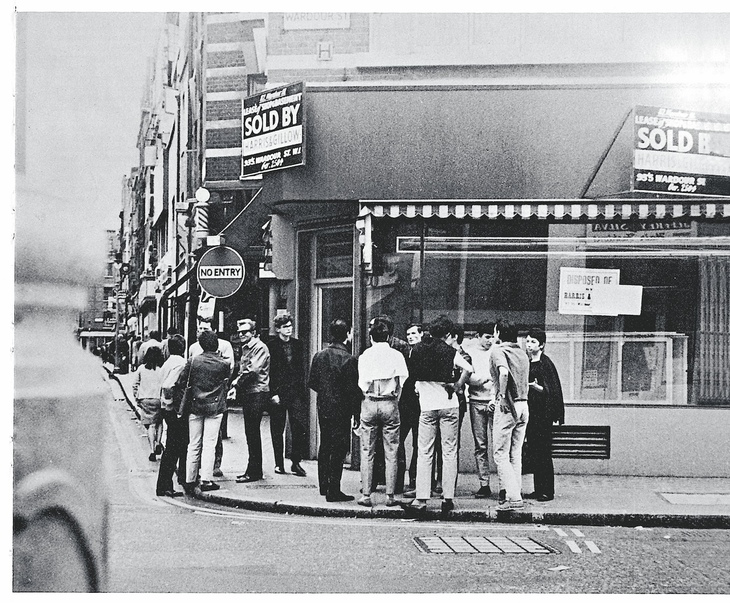
And while it's fair game to pine for a Soho that's never coming back, this is a warts and all assessment of the place. "The ideal suggestion about spending a day in Soho is—don't do it," advised Norman, "Have lunch or dinner by all means, for there are no better restaurants in London than the ones in Soho, but hanging about all day is no fun. All you can expect to get is an overdose of frustration and boredom, added to which your feet will get sore."
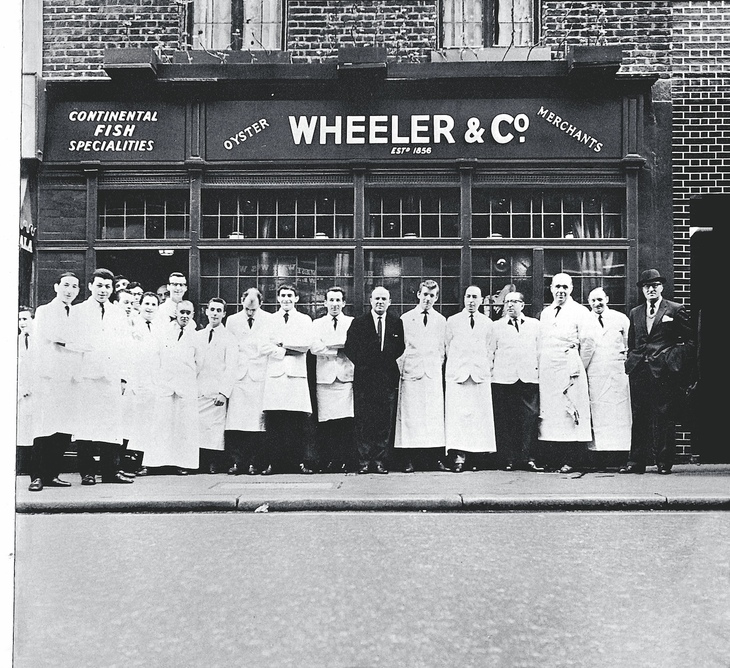
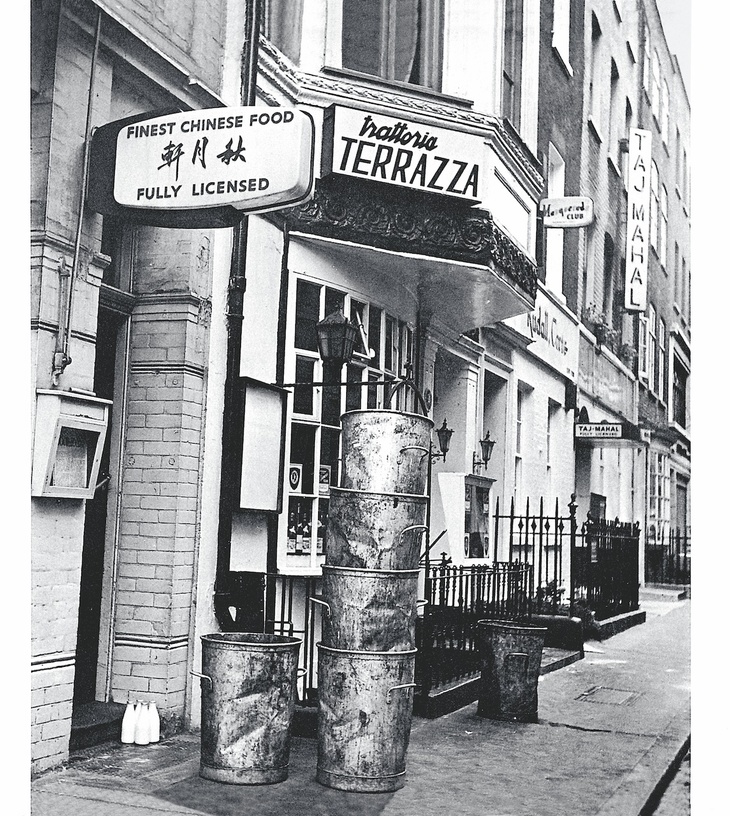
"Hundreds of tons of food are sold in Soho’s many restaurants every day, cooked by an army of chefs and served by another army of waiters wearing shiny soup-stained monkey suits. Actually Soho’s restaurants are not posh in the sense that The Caprice or The Mirabelle is posh. The main interest of a Soho restaurateur is that the food that he serves is of the best. There are not many dishes that cannot be had in these restaurants: Chinese, Indian, Italian (these days more than anything else), German, Hungarian, French, Spanish, Greek, and, except at Mrs Beaton’s restaurant at No. 4 Greek Street, I cannot remember ever having had any English."
Yes, the booze was cheap, the markets bustling and the coffee shops percolating one of the most exciting music scenes in the world. But often, Soho Night & Day shakes you into admitting the realities of a London that was sordid, unsightly and hard as nails.
"The neon lights, drunks falling out of pubs and the odd punch up are as much of the Soho kid’s life as the vicarage and the bun fight is part of the country child's," said Norman, "The difference of course is that the Soho kids grow up very fast. At ten they know as much about life as another kid of fifteen, if not more. They are quick-witted and fearless; the arse may be out of their trousers, but they are proud of themselves and the streets that are their hunting grounds."
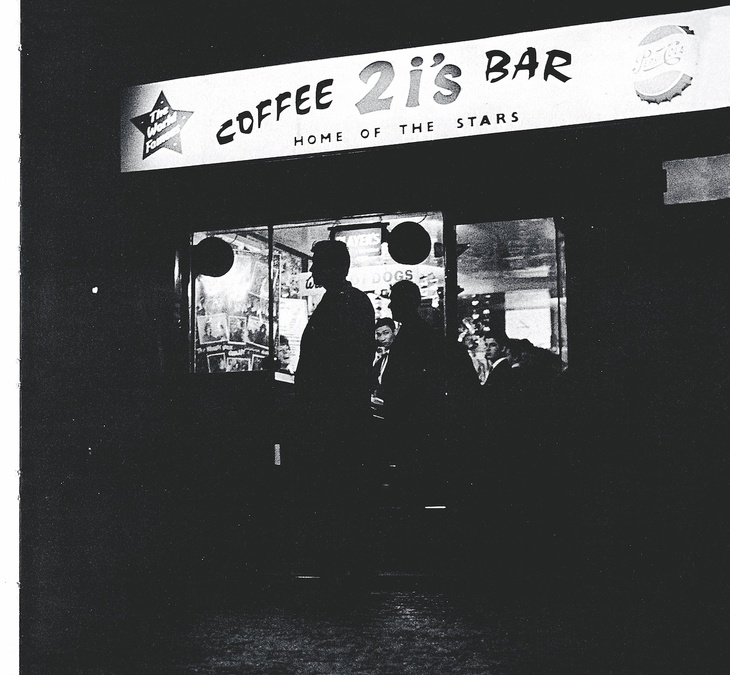
"On my visit to the 2i's I met a brunette whose ambition is to become a Screaming Lady Sutch and I was not surprised to learn that her hobbies were guitars and horror films. She assured me that she loves everybody and that it is quite safe for her to be around Soho on her own because 'No one ain't never said nuffingk inoffensive to me.' After that remark I can only wish her the very best of luck."
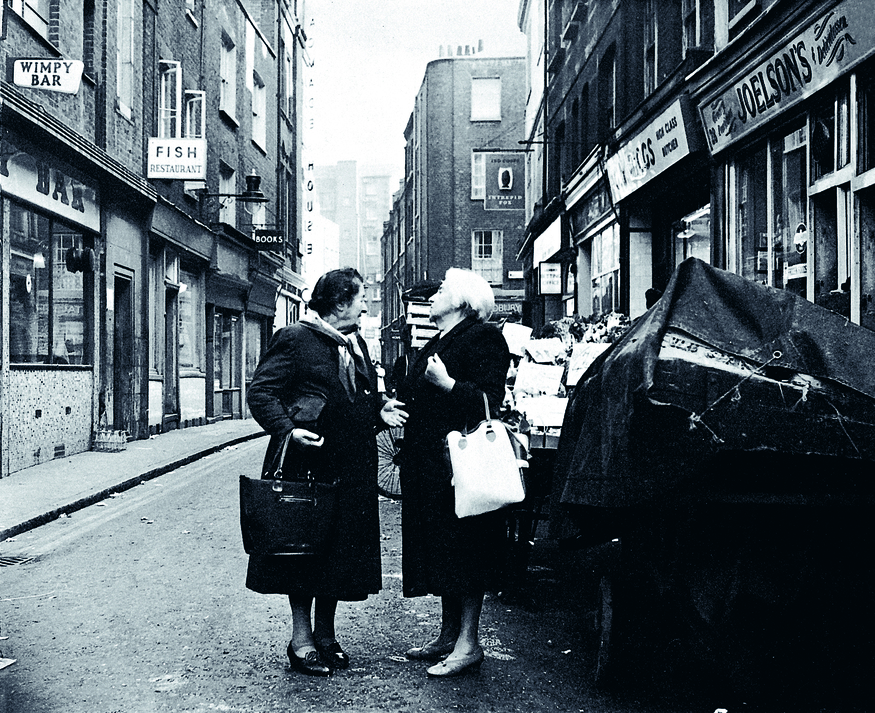
In another passage, Bernard and Norman visit Berwick Street Market — still a market now, but also know for its record shops and flat white-peddling boutiques. "Most of the stalls sell vegetables but there are also jewellery stalls of the paste variety, fly pitchers flogging nylons from suitcases and keeping an eye out for the law, hardware shops where you can buy anything from a tin opener to a bloody great casserole which can hold a hundred pints of soup," wrote the author, "They are a pretty tough lot of business people; in fact when we wandered along the street with our cameras a very hard looking barrow boy mentioned: 'If ya takes me bleedin' pickcher I'll smash both ya bleedin' 'eads in!' We beat a hasty retreat to the nearest boozer where we took sanctuary."
"One of the biggest restaurants in Soho is Wheeler’s in Old Compton Street, and the governor, Mr Bernard Walsh, is one of the greatest characters of the old school. He was born in Whitstable where his father had a small fish shop of the cockles and whelks variety. In 1928 he came to London and bought the Old Compton Street premises as a sorting house for the oysters he sold to the big hotels. At that time he used only the ground floor, but gradually people started to drop around in the mornings for a few dozen oysters to cure their hangovers, so he built a bar. And that was the beginning of one of the biggest chains of fish restaurants in the world, anyway the most famous."
The nearest boozer, of course, was where Bernard and Norman could often be found anyway (a play was written about Bernard's unplanned lock-in at Soho's Coach and Horses — and it's still performed in the pub from time to time). The York Minster — back then nicknamed 'the French' and these days officially the French House — got a favourable write up, Norman observing: "One of the greatest assets of the French Pub is that it is almost impossible to get barred. If anyone gets a bit drunk and makes a lot of noise Gaston will come over and turf him out, but the following lunch time you are allowed back in again without a word being said about the activities of the night before, no matter how rowdy they may have been."
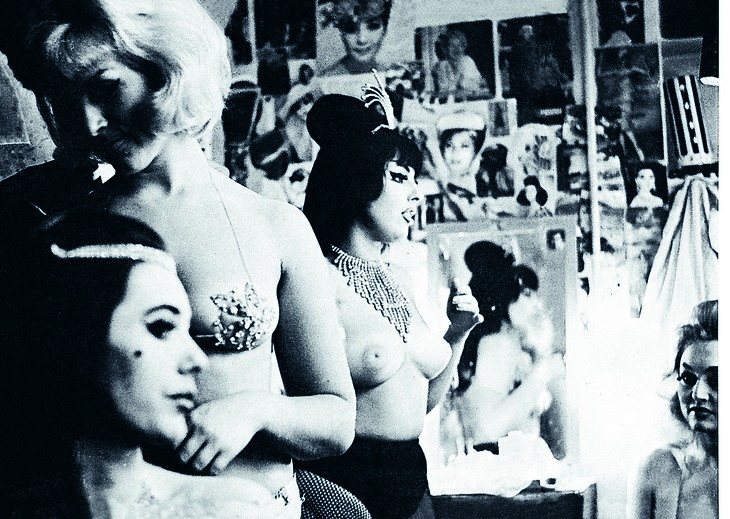
"Unlike the sleazier Soho strip joints where during the course of a day the performers go from one place to the next in rotation, the girls at the Casino de Paris are more or less a permanent company. Many of the girls have been at the club for years: one of them, for instance has been there for over five years. The club opens at 2.30pm each day, and the girls arrive at 2 o'clock, so as to have plenty of time to get their make-up on. They work eight hours a day, during which time they do four shows of about an hour and a half each. I found the show both artistic and tasteful, and the girls very pretty and some even beautiful."
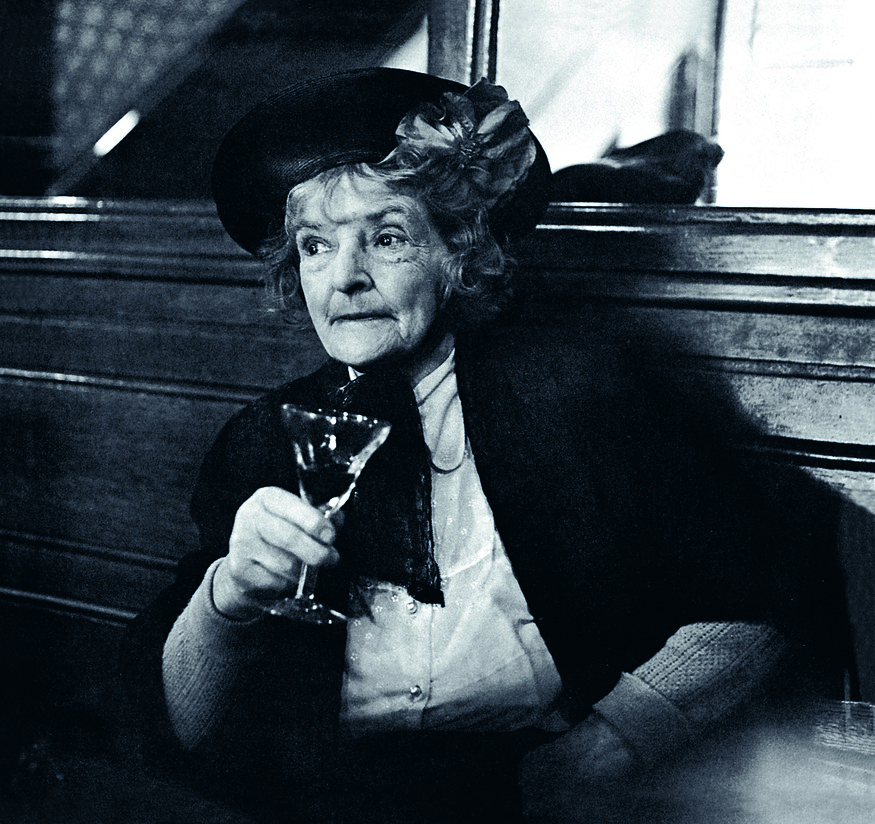
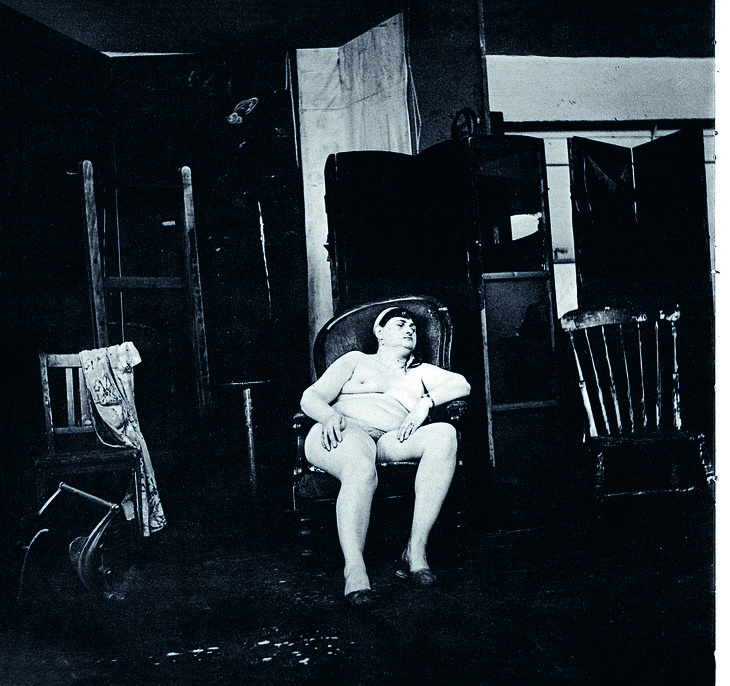
A retired chorus girl sipping a glass of sherry in the York Minster shows off Bernard's talent for capturing a candid portrait; indeed some of the photos here are very candid indeed: a line of insouciant chorus girls in various states of semi-nudity, and a sleeping model from for St Martin's College who's straight out of a Lucien Freud masterpiece.
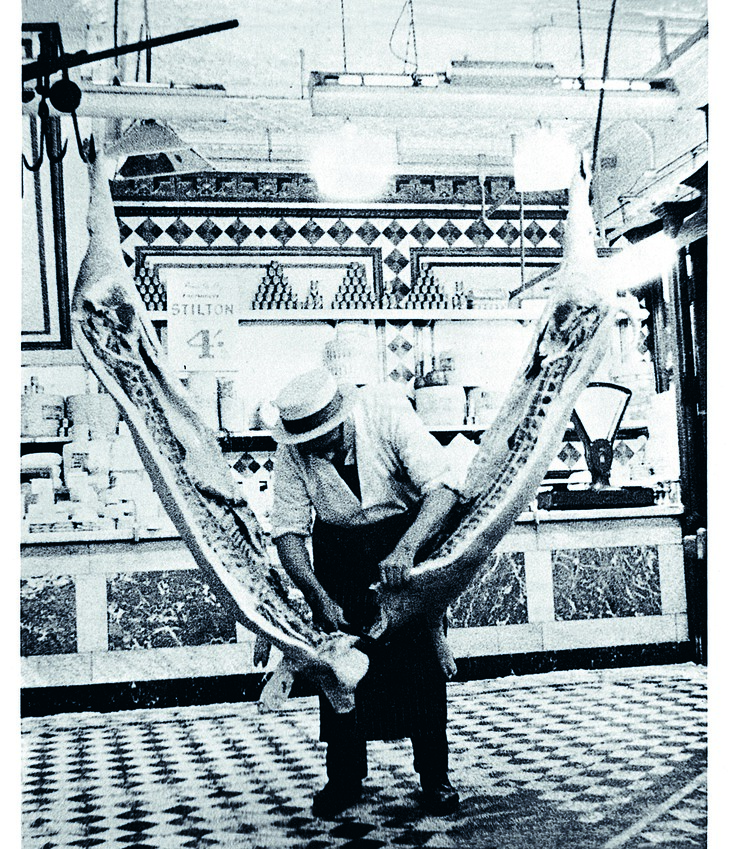
"Around the corner from Berwick Market is Brewer Street which runs from Regent Street to Wardour Street. It is a street in which most human wants can be gratified, prostitutes hang out of top floor windows and there are strip joints everywhere you look. At street level it caters for the suburban housewife with the most marvellous selection of food that you could ever wish to revolt your friends with. You can buy squid, vast lobsters, barrels of oysters or fish called John Dory whose head is so hideous that most fishmongers protect their customers by removing it before putting it on show."
More eye-opening, though, is Norman's own admission that Soho was already irrevocably on the turn back then. He chatted with the then-Mayor of Westminster over a Chinese takeaway: "I also asked him about the changing face of Soho. He told me that the Council are most careful not to upset any of the Soho people, but on the other hand it is simply impossible to please everyone. The old houses must come down and new ones must go up in their place and that is all there is to it. He was very sympathetic about old Soho folk who had lived there all their lives, but Soho had now become a place for go-ahead people, and he felt that the old would really be better off in the country, or if not better off, far more comfortable. Some of the old tailors whose shops have had to be demolished to make way for office blocks had been offered new flats in Soho with work rooms attached but they did not like the idea very much and many of them have chosen to move away rather than live in them."
"There is no set 'type' of girl who becomes a prostitute. They come from every corner of society and there are as many girls from what are called 'good' homes who turn to prostitution as there are from 'bad'. Like everything else there are as many reasons as there are girls who are doing it. In point of fact since the Street Offences Act things have become much better for the girls, because almost the whole of their business is now done on the phone. I remember years ago when things were very hard they had to hustle clients on street corners, and although the fines were not very heavy there were other things for them to watch out for, such as encroaching on another girl’s patch. A girl guilty of this used to find herself in dead bother with the other girls, and would often get beaten up by some tough brass, whose piece of pavement she had invaded."
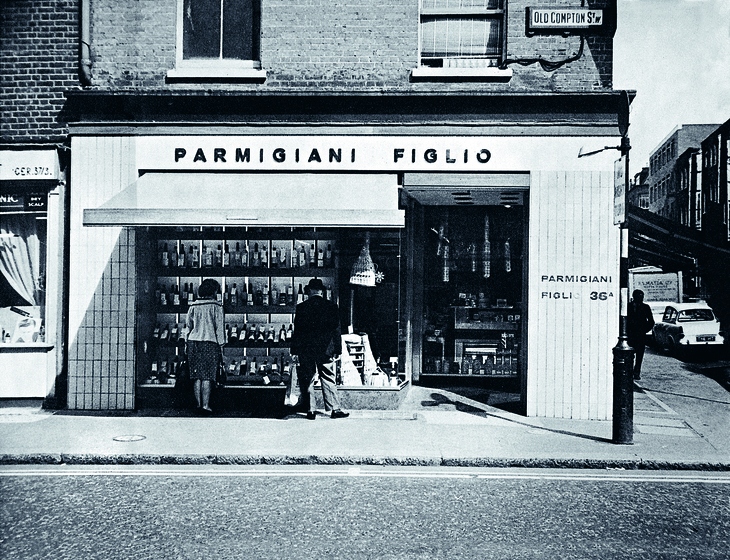
Just as interesting are the places that are still recognisable: "[Cross] the road to the other side where you will find Lina Stores, an Italian shop which is run by a whole family of aunts, nieces, nephews, neighbours and their children, all of whom chatter away in cockney Italian from morning till night. You can buy pasta of every shape and size in an atmosphere not to be found elsewhere this side of the Italian border."
"Though the French Pub is still very popular it had its heyday during the war when its customers were almost entirely Free French forces stationed in England. In fact General de Gaulle was often to be seen drinking an aperitif at the bar. In those days cheerful young French sailors could be heard to chi-ike each other in the tangy accent of Toulon."
With a new introduction by author Barry Miles, and Bernard's 1981 obituary for Frank Norman (Bernard himself died in 1997) Soho Night & Day is that rare beast of a 'back in the day' photo essay that's twinned with vital prose — the two pulling equal weight. It's a near-mandatory coffee book tome, although if the vicar's coming over for a brew, one to stash away under the sofa.
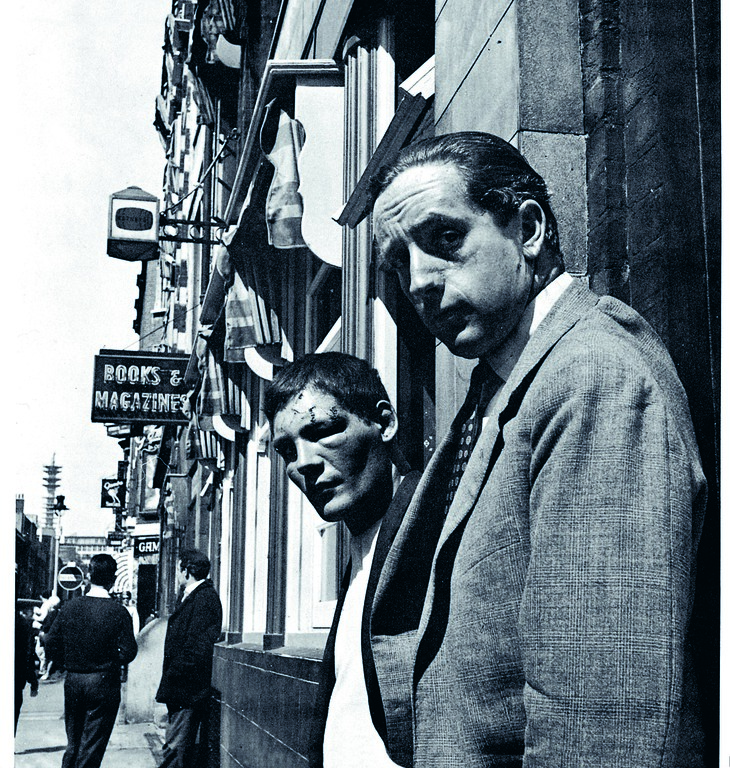
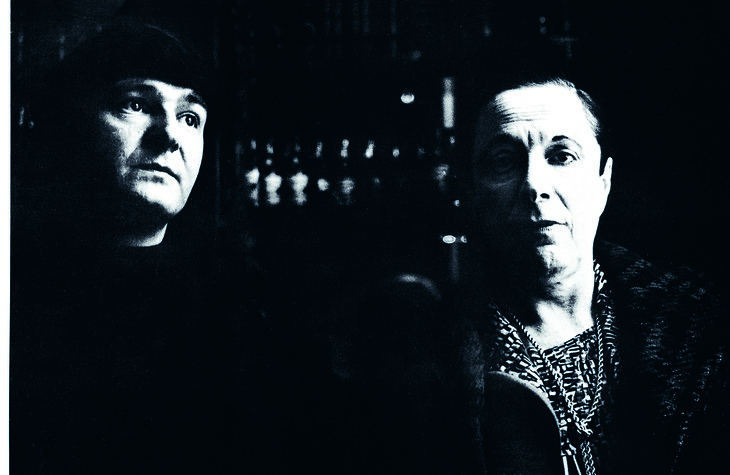
This is Charles Williams and friend, apparently, thought it's not clear from the book who they are, or which is which. You wouldn't want to mess with them, anyway."The street bookies have now turned respectable and run licensed betting shops with such names as Major Collins, Joe Coral, and of course Terry Downes, the one-time middle- weight champion of the world, who has a chain of betting shops stretching from Bermondsey to Wardour Street. All the betting shops are run in a highly honest and professional manner by clerks who know the game well. Invariably they are most helpful to the punters, especially if they are novices who are not sure how to fill in a betting slip."A St Martin's model, asleep. "People from all walks of life have lived and still do live in Soho. Lords and Ladies, Admirals and Generals, Writers and Artists, Bums and Layabouts of every nationality in the world. Few people are actually born there but many die there from many causes, from gun shot to a sudden heart attack, from drinking too much brandy or breathing petrol fumes.""For hundreds of people spending a day in Soho is a daily chore. Businessmen in bowler hats and carrying umbrellas rush up and down the narrow streets, waiters go to the restaurants where they work with a heavy step, shopkeepers open up their shutters, newspaper sellers shout 'All the latest', publicans sell drink and throw out any customers who get drunk, the copper on his beat tells people the way to wherever it is that they want to go and the tailor sits stitching in a back room. For all these people and many more Soho is just a place of work. They are accustomed to the colour and do not notice it. If you were to suggest to them that there was some romance about Soho they would likely as not laugh in your face."Miss Muriel Belcher and Ian Board (left). "Muriel is without doubt the most famous and best loved of all the club proprietors in Soho. She has been in the club business all her life and has had the Colony Room for over fifteen years, and has never been known to complain no matter how much you drink, in fact the more you drink the better she likes it. Her clients come from every social stratum one could possibly imagine: stockbrokers, layabouts, advertising men, journalists—you name them, they go to Muriel’s. She is good-natured but is very firm with liberty-takers, which I imagine accounts for her being so successful, for it is by no means an easy business running a club, in fact I would say that it is an art.""Soho is a roundabout, which sometimes spins around so fast that it is impossible to jump off. Some people can keep their balance no matter how fast it goes around, whilst others become giddy, lose their balance and hit rock bottom, together with their wives, children and self-respect. To a large extent the roundabout runs on alcohol." "From the moment the Trattoria opened it was instantly popular, it is patronized by writers and painters, film directors and extras and also a great cross-section of business-men and lovers, the atmosphere is very Italian which I am sure is part of its charm and Mario particularly is the most Italian Italian you could ever wish to find outside of Rome. The decoration is also very Italian, what with volcanoes painted on the walls and fresh grapes hanging from the ceiling. When you enter the restaurant you are greeted as though you are a long lost brother.""The ideal suggestion about spending a day in Soho is—don’t do it. Have lunch or dinner by all means, for there are no better restaurants in London than the ones in Soho, but hanging about all day is no fun. All you can expect to get is an overdose of frustration and boredom, added to which your feet will get sore. It is however the ideal place for seeking a little vice if that is your fancy, but more often than not you will find that you have bitten off a little more than you can chew, for the girls have far more meat than you've got gravy."
We featured this book because we know it's the kind of thing our readers will enjoy. By buying it via links in this article, Londonist may earn a commission from Bookshop.org — which also helps support independent bookshops.