Review: Tate's Lee Miller Retrospective Seduces And Shocks

Last Updated 02 January 2026
In the surrealist film Le sang d'un poète, Lee Miller plays a statue that comes to life. In reality, she did much the same; starting out as a young magazine model, she swiftly decided that she'd 'rather take a picture than be one'. Miller did infinitely more than just 'take a picture', however — becoming one of the most vital trailblazers of her artistic era.
Tate Britain's all-encompassing retrospective of Miller's life and craft — the UK's most extensive to date — steadily unfolds room-by-room; her nascent appearances in front of the camera in advertisements for Kotex sanitary pads usurped by her formative work with co-conspirator/lover Man Ray, in which the writhingly erotic and surreally waggish collide.
Even in this preliminary period, there is a glimpse of the startling photography that would come later on in Miller's career: a severed breast from a mastectomy is plated up and flanked with knife and fork; a grisly tableau of the medical and domestic that demands your attention.
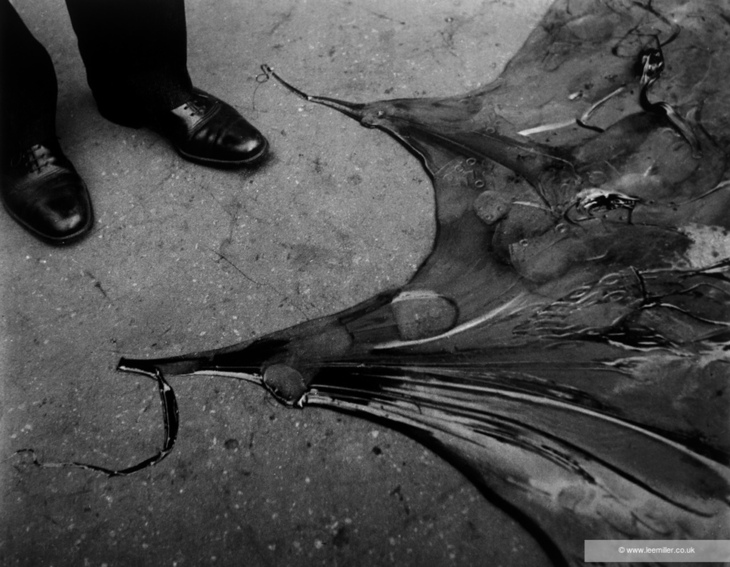
Photography wasn't particularly considered an art form when Miller was first plying her trade, and she did her damndest to change that; through her lens, a puddle of oozing tar becomes a strange sea creature or a viscous alien life form. The Great Pyramid of Giza is captured not in its corporeal form but as a doomy shadow glowering over the buildings below. Once you see it, it feels so obvious.
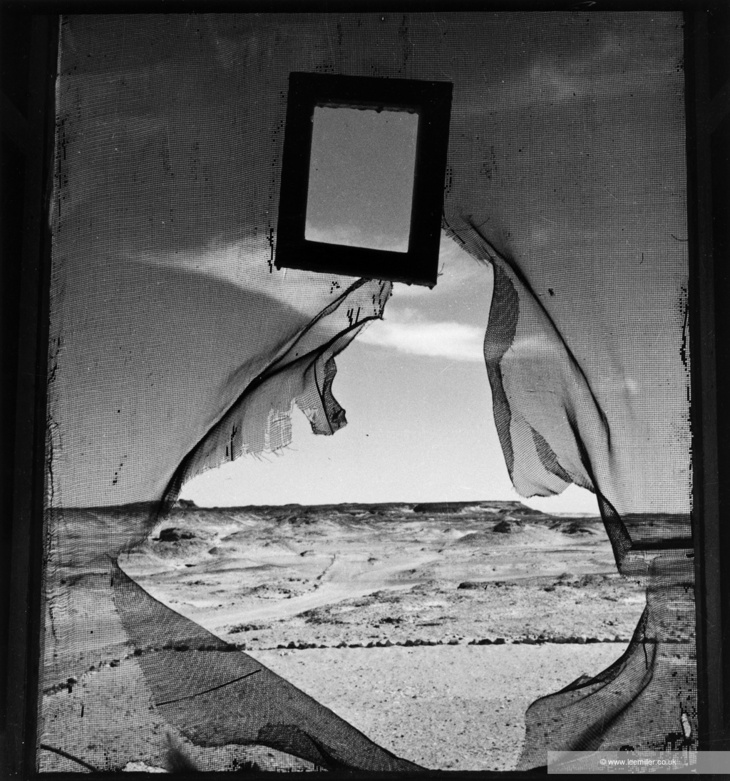
The range of subjects in this show reflects the rich, itchy-feet variety of Miller's own life: portraits of arty friends like Picasso; Romanians with dancing bears; swathes of the Egyptian desert framed by torn gauze. Whatever she turned her gaze to, Miller captured it with twists and turns of the utterly unexpected — yet wholly accessible all the same. You don't find yourself squinting to 'decipher' her pictures.
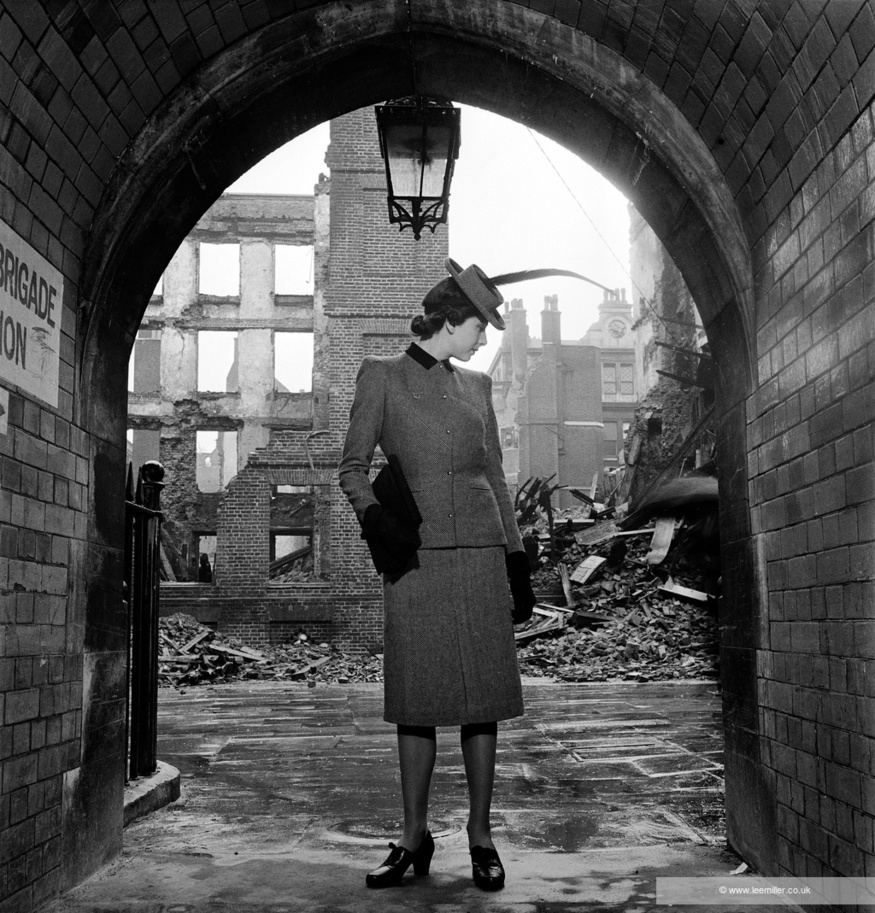
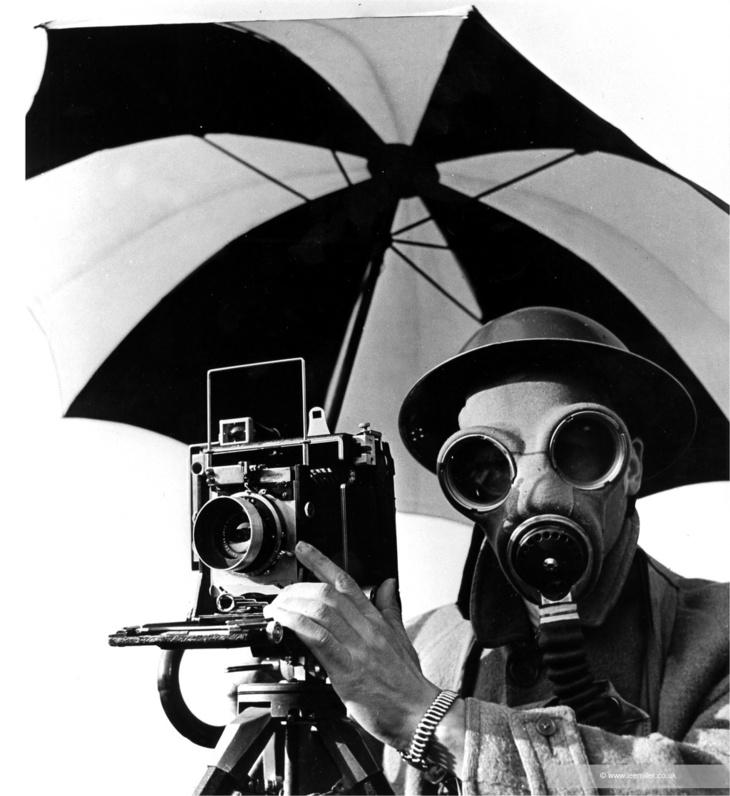
For Londoners, the icing on the cake will be the work Miller produced as a correspondent in London during the Second World War, including a powerful vignette of Blitz spirit in the form of BBC broadcaster Elizabeth Cowell standing prim, proper and undaunted in a Digby Morton suit — a scene of rubbled devastation framed behind her.
One section that reeks with death rather than sings with life is Miller's documentation of the concentration camps at Dachau and Buchenwald, shortly after their liberation. Even here, she was determined to turn the photos into art, climbing aboard a carriage of dead bodies to capture an image of two American troops surveying the horror before them. The photograph of Miller soaking in Hitler's bath — bundling together PTSD, surrealness and perhaps even a flicker of black humour — is perhaps one of the most remarkable uses of a nude female model committed to photographic film. It is odd to think that this image, and Miller's others of the concentration camps, appeared in the pages of the fashion magazine Vogue. Then again by this point, she had turned the idea of what and where photographic art should be on its head.
Lee Miller, Tate Britain, 2 October 2025-15 February 2026