Review: Watercolours Never Looked So Raunchy - Edward Burra And Ithell Colquhoun At Tate Britain

Last Updated 11 June 2025
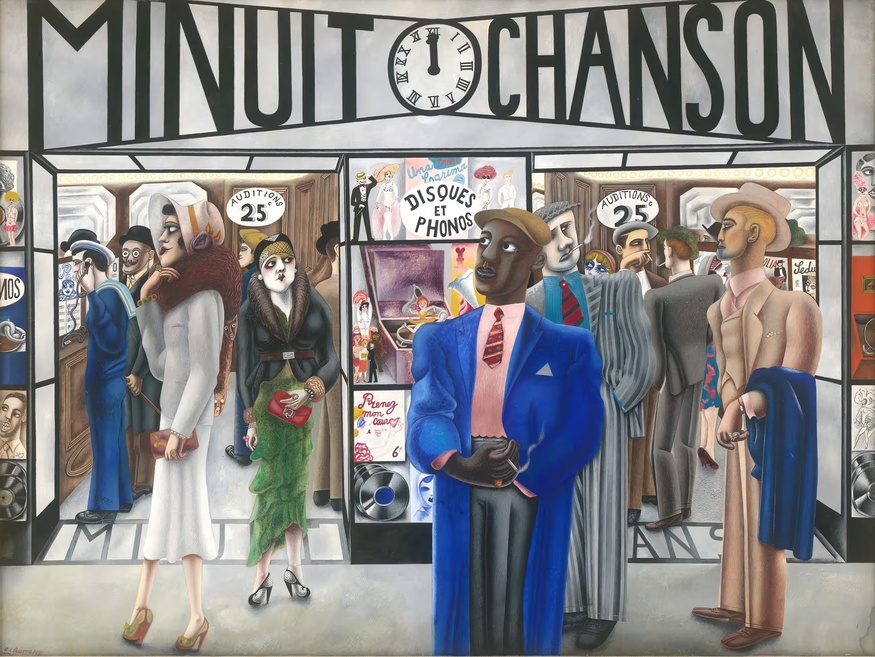
Watercolours hit different when Edward Burra was behind the brush.
The only bowl of fruit here teeters on the head of someone elbowing their way through the seething centre of mid-1920s Marseilles. Life is anything but still: naked bodies writhe and flesh ripples in Paris' erotic Folies de Belleville and Harlem Renaissance strip joints. Sailors — a Burra obsession —prop up the counter of a steamy coffee shop, dishing dirt that's doubtless just as steamy. You have to sway from side to side just to keep up with these paintings.
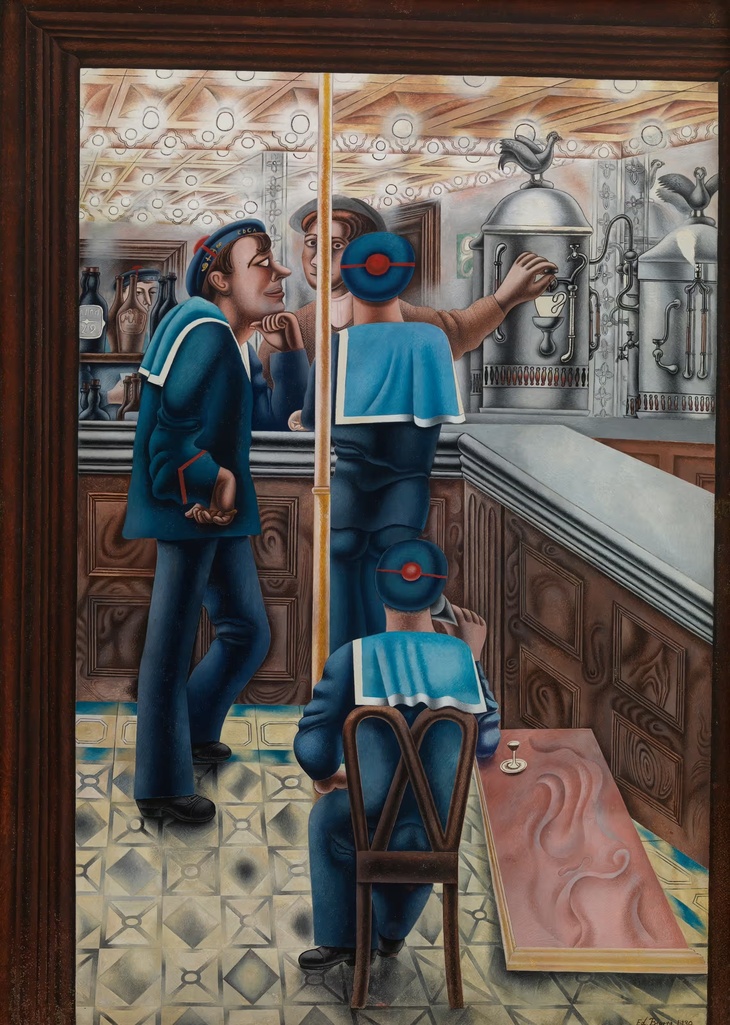
Burra, though chronically arthritic (he preferred watercolours, which he could more comfortably paint with flat on the table) was well-travelled but some of his settings only ever inhabited a place in his feverish mind. Take his 'Tea-Shop' where bare, sharp-bobbed Josephine Baker lookalikes float around pouring pots of tea on punters' heads (a hint at later surrealism to come). You can smell the Gauloises, hear the hiss of coffee machines and clank of chains on the docks. It is dirtily divine. Even so, for all the hard-edged, racy, pointed elbow madness of it all, Burra's painting style is soft and flowing, rendered like a peach skin.
As the sizeable retrospective skips from France (fleshpots galore) to Harlem (maraca-shaking and lindy hopping) to Spain (Civil War drawing out more darkness) to Britain (nightmarish Allied soldiers in Venetian masks), curatorial asides let us in on Burra's personal letters (squiggled with more tawdry characters, and opening "Well old tart"), while his achingly hip record collection name drops Cab Calloway, Lecuona Cuban Boys and Mildred Bailey. It's only in Burra's much later works that he took an interest in country landscapes, and even then, he branded them with his own devilish mark — monstrous diggers gouging into the sides of mountains for mouthfuls of coal.
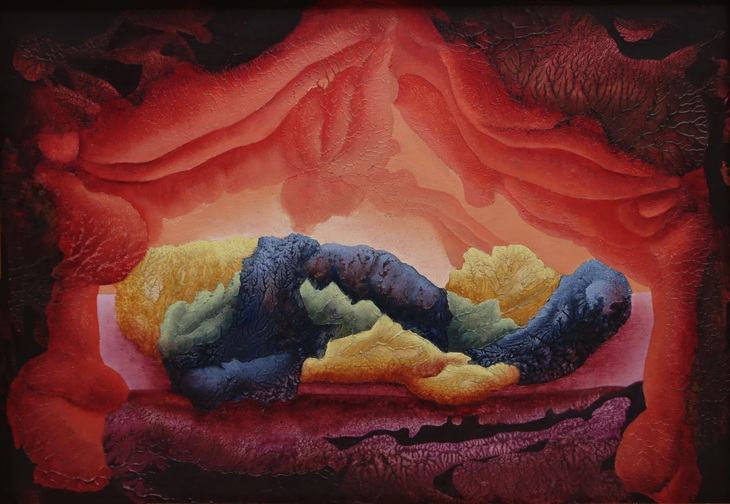
Burra's retrospective is just half of Tate Britain's twofer ticket. Supposing you do Burra first, then the phantasmagorical Ithell Colquhoun's exhibit feels like stepping off a fuggy sidewalk into a cool, vegetative cave of mysticism.
The surrealism here is more on the nose than Burra, and many of Colquhoun's works benefit from context to truly appreciate: enveloped in sex magic, occultism and the like, Colquhoun also darted from one experimental style to the next: decalcomania (a paint squidging exercise we all tried at school), superautomatism (a stream of consciousness style of drawing). Sometimes it was a case of literally throwing stuff against a canvas and seeing what stuck; take Colquhoun's set of tarot cards, eschewing the typical characters for dripped enamel paint manifestations. Even if you don't buy into the mysticism behind them, they are arrestingly pretty.
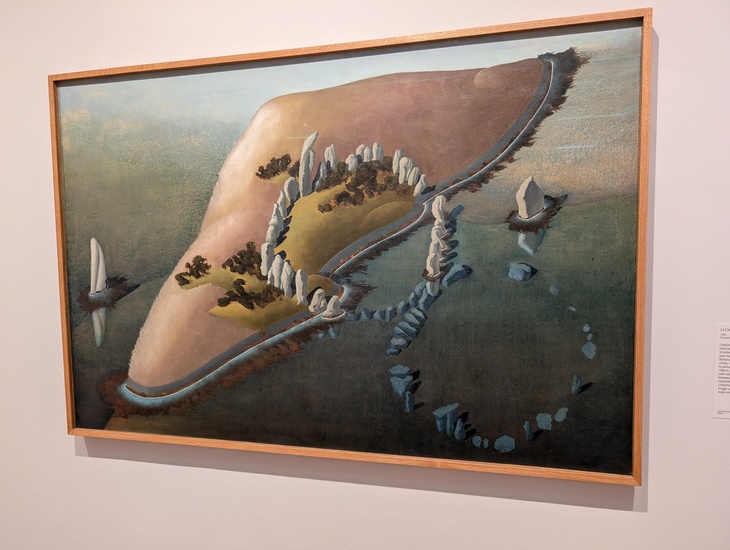
Colquhoun's most accessible works — and least in need of deciphering — depict feminine forces in the natural landscape. 1939's Scylla is a 'double image' — two craggy rocks jut out of the Med, a tangle of seaweed in the nook between them — and was in fact prompted by what Colquhoun could see of herself while lying in the bath.
Burra and Colquhoun make two unlikely bedfellows — linked not so much by outlook, technique or location, but era and under-appreciation. By honing in on these two 20th century outliers, Tate Britain has gone rogue, yet it hits an eyebrow-raising bullseye.
Edward Burra – Ithell Colquhoun, Tate Britain, 13 June-19 October 2025