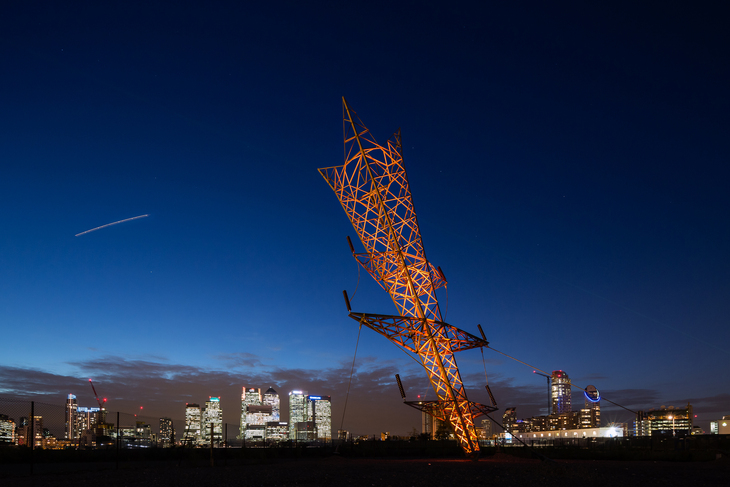
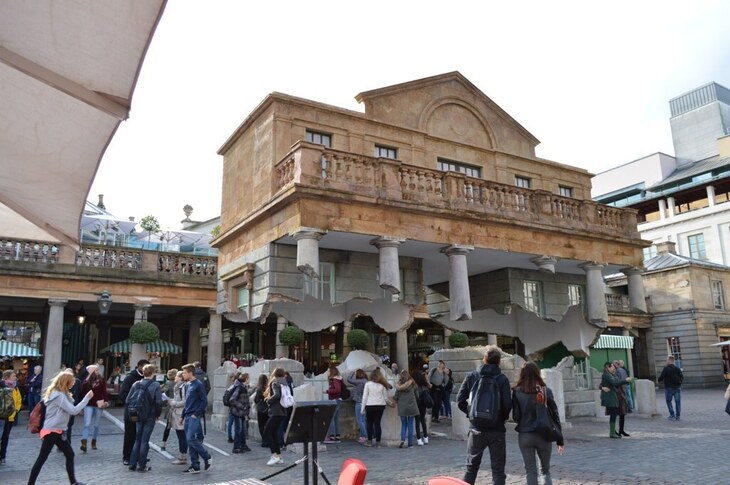
From twisted phone boxes to upside-down pylons to a levitating Covent Garden, sculptor Alex Chinneck has been distorting London this way and that for one-and-a-half decades. Here, he writes about his penchant for creating skewed art, and his new 'A week at the knees' instalment.
I've been making art in urban spaces for 14 years, including 10 public sculptures to date in London, which gives my work the chance to connect with people who wouldn't normally step inside a gallery or think that contemporary art is for them. In part, I use recognisable subjects, materials and structures as mechanisms for accessibility and as a way of inviting as broad an audience as possible to engage with the work.
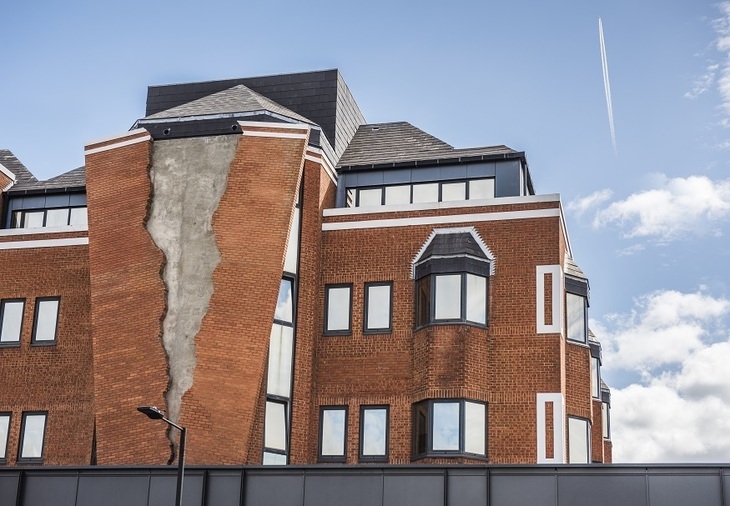
My sculptures take familiar features of daily life and make them behave in surprising ways. London is one of the best known cities on the planet, full of buildings and objects that are recognised globally. By taking those features and sculpting with the everyday world my work hopes to offer a playful escape from reality.
I try to make work that resonates with people and with places on a number of levels but that also can be understood and enjoyed at face value. Generally, I avoid attaching a specific meaning to my sculptures. I prefer that audiences are free to find their own meaning in the work — and also free not to. It's okay to enjoy a sculptural form without having to solve a conceptual puzzle.
My favourite reactions are when people don't realise that I'm the artist responsible, which is often the case. Those responses, positive or negative, are refreshingly unedited and honest. One of my first sculptures was for my final show at Chelsea College of Art. I made an interactive, kinetic, minimalist sculpture called Donald and the Judds. I remember a child interacting with the sculpture and then starting to cry when her mother took her away. I thought that was an incredible reaction and I've since prioritised accessibility in my work. I like to make sculptures, particularly in the public realm, that can be visited, understood and enjoyed by any onlooker irrespective of their age or background.
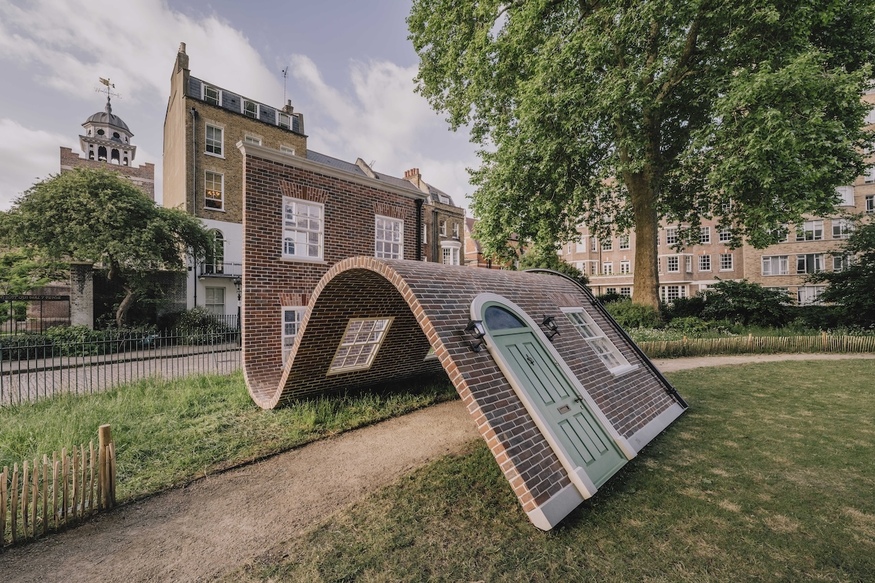
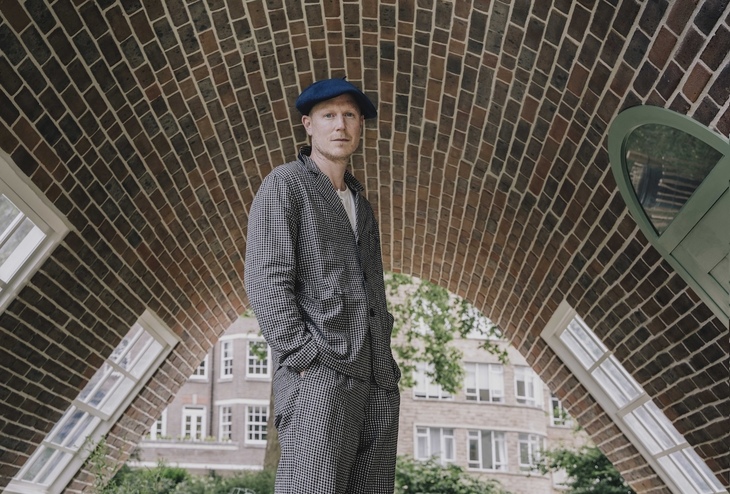
'A week at the knees', my new project for Clerkenwell, responds directly to the historic architecture of Charterhouse Square and to the paths that criss-cross it, encouraging visitors to walk beneath the work as well as around it. It contains a skeleton made from 300 metres of rolled steel that is clad in a flexible skin of stainless steel. Onto this, we have cut and bonded over 7,000 brick facias, which are then lime-pointed. The sculpture is 13 metres long and weighs 11.5 tonnes but is only 15cm thick, so we've built a highly engineered and complex structure to create a thin, ribbon-like flowing form. The work is complicated and obviously labour intensive, but I try to hide all that with apparent effortlessness and sculptural elegance.
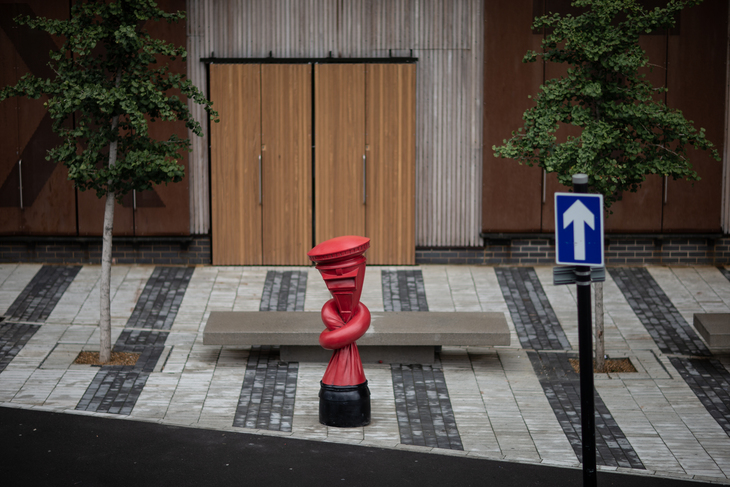
If I could do a sculpture anywhere in London? We have tied lamp posts, grandfather clocks and post boxes in knots. Doing this to one of the chimneys of Battersea Power Station would be wonderful.
See A week at the knees by Alex Chinneck, in Charterhouse Square, Smithfield during June.