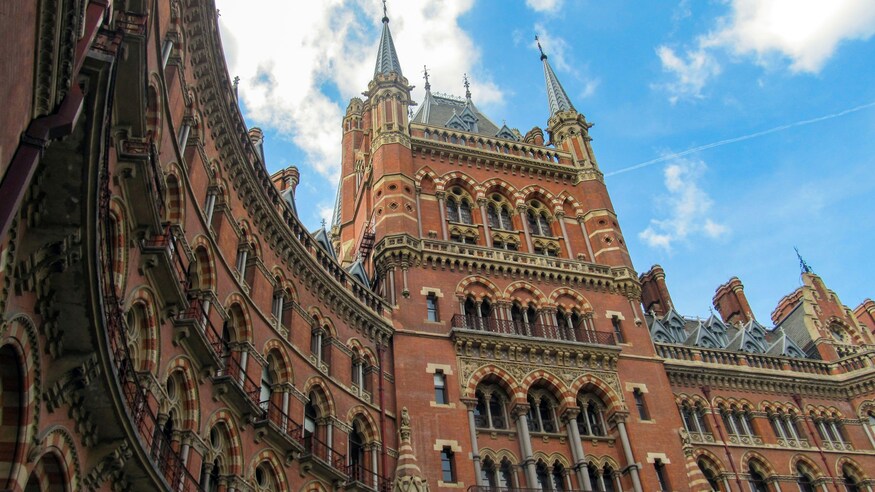
Eurostar trains have been running between London St Pancras and mainland Europe since 2007 (and before that, from Waterloo to the continent since 1994). But there could be plenty of changes to those services in the next few years...
When is Eurostar getting double-decker trains?
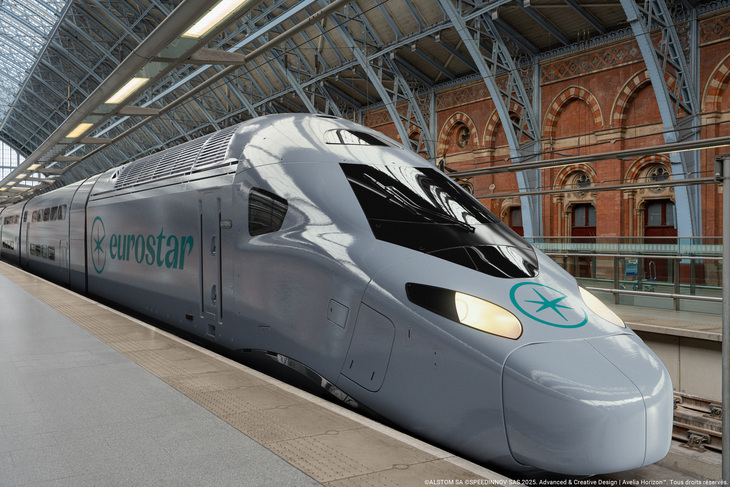
Aside from new routes (details below), the biggest change coming to Eurostar in the next few years is the addition of double-decker trains.
It was announced in autumn 2025 that Eurostar had ordered 30 of the new trains, known as 'Celestia', with the potential for a further 20 to be added to its fleet at a later date. Each all-electric train is 200 metres long with 540 seats, which means that in its usual 400-metre formation, each Eurostar service will have around 1,080 seats — around a 20% increase on the capacity of current Eurostar services.
They'll be the first double-decker trains to operate through the Channel Tunnel — though not the first on UK rails: double-decker trains were in operation between Charing Cross and Dartford from 1949.
Expect to see the double-decker trains in service from May 2031 — though as we've seen with the new Piccadilly line and DLR trains, and other transport infrastructure projects, these things have a habit of being delayed. Once in service, they're expected to serve all Eurorstar destinations, bringing the company's total fleet up to 67 trains.
Which new Eurostar routes are opening, and when?

At time of writing, Eurostar operates direct trains from London St Pancras to Paris, Lille, Brussels, Rotterdam and Amsterdam, with connecting Eurostar services available to Antwerp, Dusseldorf and Dortmund. Previous direct routes to Lyon, Marseille and Avignon have been dropped due to a lack of demand in recent years.
Of course, once you've reached any of these stations in mainland Europe, connections to train services operated by other carriers are available, to destinations including Strasbourg, Zurich and Nice. An additional Eurostar ski service to certain mountain resorts runs in the winter months, though it's been pared back in recent years. See the Eurostar route map for current available routes.
More direct routes from London St Pancras will soon be added to Eurostar's offerings:
Eurostar services from London to Antwerp: From December 2026
Starting from 13 December 2026, direct Eurostar trains will run between London and Antwerp, taking around two hours 41 minutes: compared with the 3.5 hours the journey currently takes when involving a change of train at Brussels.
There's a big caveat here: Though trains from London-Antwerp will run direct, services in the opposite direction are not able to run direct, due to a border quirk. Antwerpen-Centraal station has no UK border service, so passengers travelling to London from Antwerp have to change at Brussels to go through border checks there instead. There are no plans for this to change in the near future.
Tickets for this route in both directions are now available on the Eurostar website.
Eurostar services from London to Frankfurt: early 2030s
In summer 2025, Eurostar announced a new direct route between London and Frankfurt, the first time it has offered a direct route to Germany. No further details have been confirmed yet, so we don't know if these services will stop anywhere else along the route, though the journey is expected to take around five hours. A projected launch date of the early-2030s has been given, coinciding with new Celestia trains (above) joining the network.
Eurostar services from London to Switzerland (Geneva and Zurich): 2030s

At the same time as the Frankfurt route was announced, Eurostar dangled plans for a direct route between London and Geneva in Switzerland too. Direct links between London and Zurich, and London and Basel, have also been touted as future possibilities. London-Basel is expected to have a journey time of about five hours; London-Geneva around five and a half hours; and London-Zurich around six hours, though nothing has yet been confirmed.
As of May 2026, SBB, the Swiss national railway operator, SNCF Voyageurs, the French passenger rail operator, and Eurostar are all working together to make the London-Switzerland link happen. Eurostar said of these routes: "Implementation would be feasible at the earliest sometime in the course of the 2030s."
Will the closed Eurostar stations reopen?
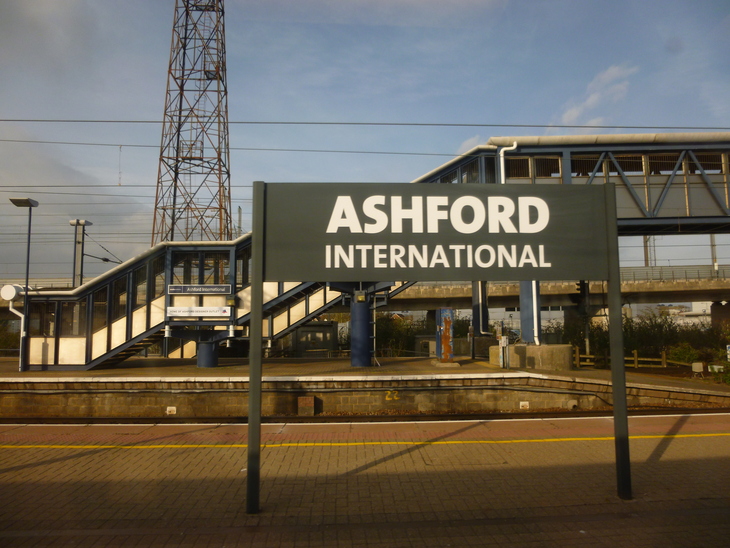
St Pancras (and Waterloo before that) wasn't always the only option for getting a train from the UK to mainland Europe. Eurostar used to operate from Ebbsfleet International and Ashford International stations in Kent too, though they closed in 2020 due to the pandemic. There was talk of them reopening in 2022, but as of summer 2026, no moves to do so have been made (though both stations still offer a domestic train service). The cost of reinstating international border checks at these stations has been cited as a reason for keeping them closed.
Then there's Stratford International which, despite its name, has never had an international train service. Initially, Eurostar trains were due to stop there when the Eurostar terminus moved from Waterloo to St Pancras in 2007, but it never happened, and to this day, trains on the St Pancras route simply whizz straight through its platforms.
When will Virgin Trains start running between London and Europe?
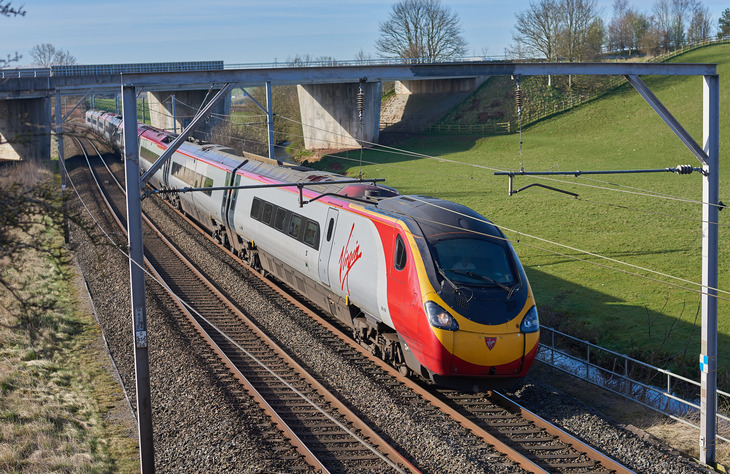
In August 2026, Virgin Trains made headlines when it was granted access to use the UK tracks to start operating rival routes to Eurostar between London and mainland Europe.
However, at the moment Virgin Trains has only got approval for routes running from St Pancras to the entrance to the Channel Tunnel — it still needs the appropriate permissions to run in mainland Europe, as well as to use the Tunnel itself. If all goes to plan, we should see Virgin Trains plying the route by 2030: the agreement which allows it to use existing UK rail infrastructure is valid for the period between 1 October 2030 and 31 December 2040.
Where will Virgin Trains' channel routes go?
Virgin Trains proposes to operate 20 daily return services between London St Pancras and Paris, Brussels and Amsterdam to begin with. Could it expand if all goes well? No further plans have been revealed yet, but who knows.
Will Virgin Trains replace Eurostar?
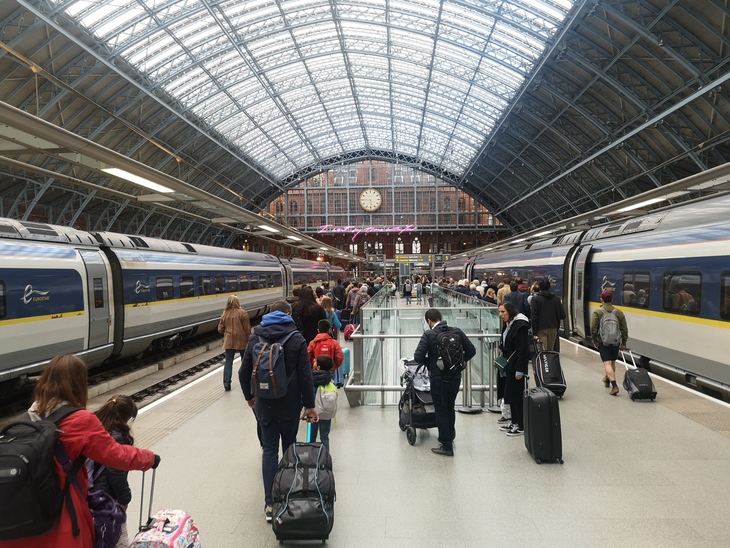
No, Virgin Trains will be a competitor to Eurostar — an interesting twist in the story of cross-channel train services, as Eurostar has held the monopoly on passenger services from London since the Channel Tunnel opened in 1994.
What exactly that means for passengers remains to be seen, but we can only hope that the competition leads to lower fares as the different operators vie for passengers. And Richard Branson isn't the only one hoping to muscle in on the route...
Why are these changes happening now?
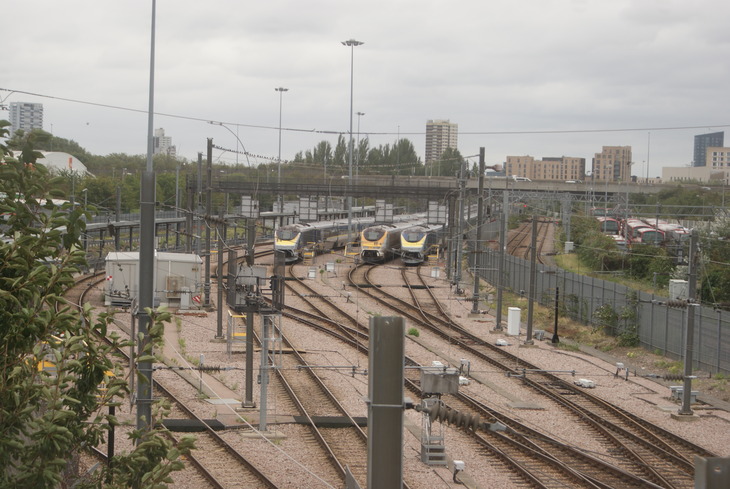
After 30 years with Eurostar as the sole operator, why are other companies suddenly talking about running passenger services through the Channel Tunnel?
It all centres around the Temple Mills depot, a train maintenance depot in Leyton which is the only one in Britain able to handle cross-channel trains (specifically, it's the only one able to accommodate trains with the larger continental European loading gauge). Capacity at the depot is limited, and with Eurostar looking to expand its own fleet significantly, there isn't all that much space for other operators to base their trains there.
In March 2025, the ORR (Office of Rail and Road — the UK rail regulator) agreed that extra capacity at the depot could be made available. In October 2025, it granted Virgin Trains the appropriate permissions to access Temple Mills. This was a huge step forward in Virgin Trains' attempts at running cross-channel services, but it's still not a done deal.
Will any other operators run train services to mainland Europe?
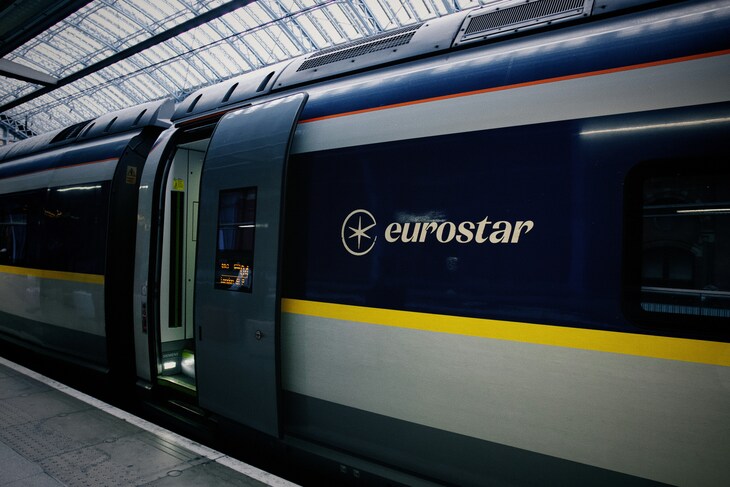
With Virgin Trains looking increasingly likely to get a share in the route, could other operators get involved too?
Currently, around 400 trains — both Eurostar passenger trains and Le Shuttle vehicle trains operating from Folkestone — use the Channel Tunnel each day, though it has capacity for around 1000 trains daily, so the potential for expansion is there. The capacity issues don't lie on the route itself, but with the Temple Mills depot, as mentioned above. So while it's not a hard 'no' to other operators plying the cross-channel route, it's logistically complex. That hasn't stopped a few companies from putting plans forward.
Trenitalia France — a subsidiary of Italy's state-run transport operator — said in April 2025 that it wants to run a high-speed service between London and Paris, and hopes to begin operating 10 daily return journeys on the route in 2029. In August 2026 it ordered 19 new high-speed trains, some of which it intends to use on the cross-channel route. It appears to be circumventing the capacity issue with plans to build its own depot near Paris, removing the need for it to use Temple Mills.

In August 2026, Transport Scotland announced that it's looking into the possibility of running direct Caledonian Sleeper services between Scotland (most likely either Glasgow or Edinburgh) and mainland Europe, via the Channel Tunnel. Further details, such as the specific route, haven't yet been announced, but a feasibility study is being undertaken — though a similar idea, the Nightstar, failed in the 1990s. Presumably such services would be based in Scotland so wouldn't need to trouble the Temple Mills depot.
Dutch company Heuro and Spanish operator Evolyn have also expressed an interest in running services on the St Pancras route. When the ORR approved plans by Virgin Trains to use the Temple Mills depot in October 2025, it rejected applications from Evolyn, Gemini and Trenitalia. While Trenitalia is persevering with plans, it's all gone quiet from Evolyn and Heuro.
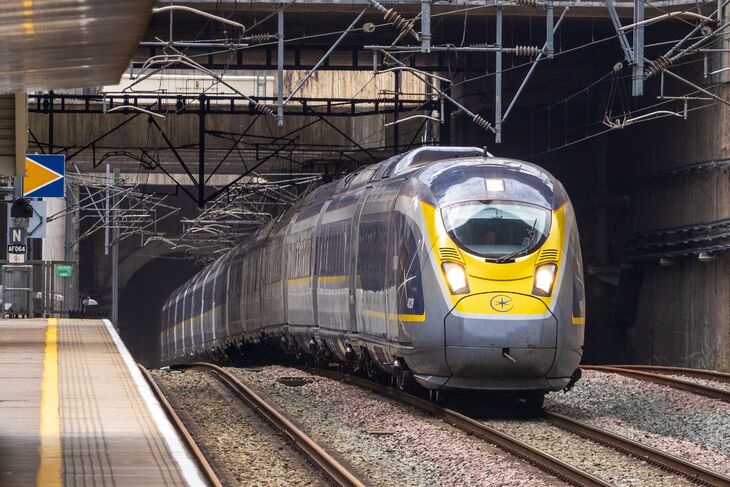
Gemini Trains, a new potential train operator, was created solely with the intention of offering cross-channel services, initially between the UK, France and Belgium, with the potential to expand to other destinations at a later date. Interestingly, Gemini proposes to use Stratford International rather than St Pancras, and may end up building its own train depot in Ashford (Kent), potentially bringing Ashford International back into use, and bypassing the need to use the Temple Mills depot.
TL;DR: the possibility of other operators running cross-channel routes in future hasn't been ruled out, but they'd likely have to provide their own alternative to basing their fleet at Temple Mills, as there isn't space for them there. Additionally, if any operator wanted to run trains from the mothballed Stratford International, Ebbsfleet International or Ashford International stations, they'd likely to have to come up with the funding for the border infrastructure themselves.
As recent Eurostar passengers, we'd also argue that the departures lounge at St Pancras could do with a bit of expansion before any more services depart from there, but given the station's footprint, there's not anywhere for it to expand to without removing some of the shops from St Pancras station.