First broadcasting on 28 November 1991, Kool FM quickly rose to the top of London’s pirate radio scene. As the jungle genre grew in 1992/1993 — then exploded in 1994 — Kool was at the forefront. It continues to this day under the Rinse umbrella.
Here, curator of the Original Kool Archives, Trevor 7oaks, explains his life-long infatuation with the station, and his self-appointed mission to archive as much of it as possible.
I discovered Kool FM in 1992, when I was 18.
You didn't have Spotify, YouTube or a streaming service where you could instantly find any set you wanted. If you wanted to hear what was happening, you had to find the frequency, tune the radio in and listen.
There was something really exciting about that. You never quite knew what you were going to hear next. A DJ could drop a tune you'd never heard before, or an exclusive dubplate. An MC could completely change the atmosphere, there may be special guests or DJ/MC combinations you had not heard before.
Suddenly you would realise that you'd just heard something special.
The whole London jungle scene felt incredibly alive. There were raves, pirate stations, record shops, tape packs, flyers and people constantly swapping recordings. The music was changing so quickly that something could sound futuristic one month and completely normal a few months later.
"Kool FM was always there for me — through great, good and difficult times"
This completely underground radio station was broadcasting from London and reaching people who were hungry for something different.
It was raw, energetic and connected directly to the clubs, raves and estates where the music was happening. You could hear DJs and MCs who were genuinely part of the scene, playing music that you simply weren't going to hear on the mainstream stations.
In 1992 the music was called hardcore. But over the coming months, a rawer sound emerged. Tracks started to adopt the style, drum patterns and samples that became known as jungle. Kool FM wasn't just broadcasting jungle — it was documenting the development of jungle and drum & bass. Its reputation spread throughout the UK and internationally.
Here was the place for producers to test their new records, so certain DJs were given exclusive early access. MCs would test new lyrics and styles before unleashing them at their next rave booking. With the weekly release of new records, the station remained fresh.
Kool FM was always there for me — on the radio at home, in the car or listening back to recordings — through great, good and difficult times.
"People used to drive to the outskirts of London, record in their cars and take the tapes back home to share with friends"
It became a meeting point for the jungle community. Whether up and coming new talent, or established artists, this was the platform they wanted to perform on. Over the years the many artists have been part of the family. From the late greats MC Skibadee and Stevie Hyper D, to Crissy Criss, Brockie, Shy FX, Mampi Swift and DJ Kane, and many, many others — they all helped create a scene that was developing incredibly quickly.
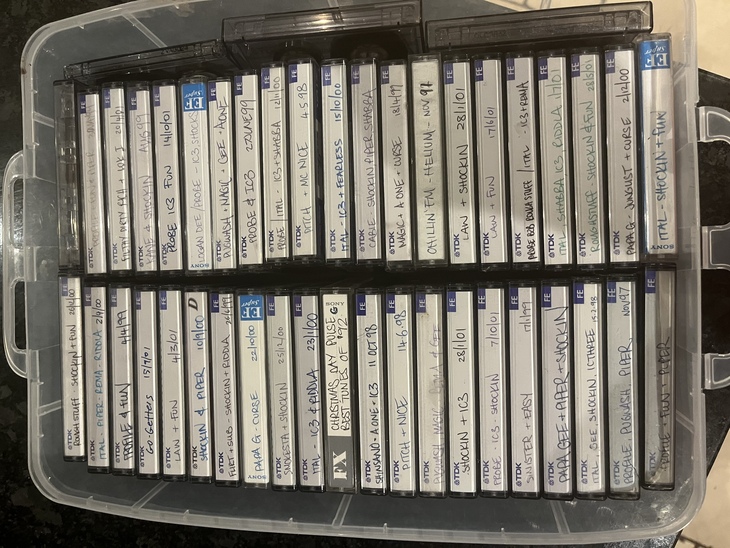
What makes pirate radio particularly interesting is that the geographical reach wasn't necessarily limited to the strength of the transmitter. People would record sets and pass them around, and as the music became more popular those recordings travelled everywhere. People used to drive to the outskirts of London, record in their cars and take the tapes back home to share with friends.
Because it was underground, the listeners really felt part of the Kool community. Over the years I have met the DJs and MCs, as well as regular listeners. Some have become good friends. A listener called Kelly from Harlow became my wife, and we now have two children.
"I realised I wasn't just collecting recordings anymore. I was preserving a piece of musical and cultural history"
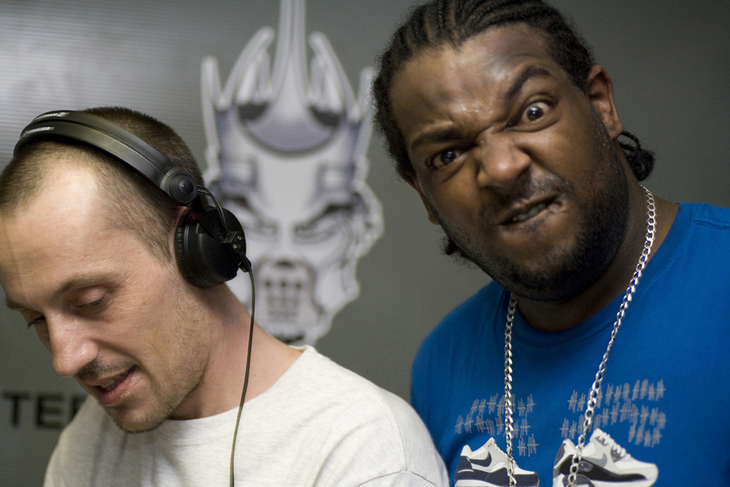
I started recording. At first my intentions were not about preservation or forming the largest archive. I just wanted to capture the live recording as it happened. It would not happen again. I had to capture it there and then so I could relive it.
Over time my recordings grew into something much bigger. I've now got more than 9,000 recordings, covering Kool FM from the early 1990s onwards. At some point I realised I wasn't just collecting recordings anymore. I was preserving a piece of musical and cultural history. That’s really how Original Kool Archives came about, and why I describe myself as a pirate archivist.
Digitising them has been a huge undertaking and something I've worked on over many years. It isn't simply a case of pressing a button and uploading them. The tapes have to be digitised, audio repaired/edited to improve quality, checked, organised, named and preserved. I still have around 150 tapes in a box I need to digitise.
It's almost like an addiction, I need to keep feeding the archive. A lot of these recordings only existed on cassette, and without people taking the time to preserve them, huge parts of that history could disappear. There are recordings sitting in people's lofts, cupboards and garages that may contain broadcasts that nobody else has heard for 30 years. That's what keeps me going.
People still want to listen, too. Downloads of MP3 recordings I have hosted online have surpassed 500,000.
"It's like being transported back to being 18 or 19 again"
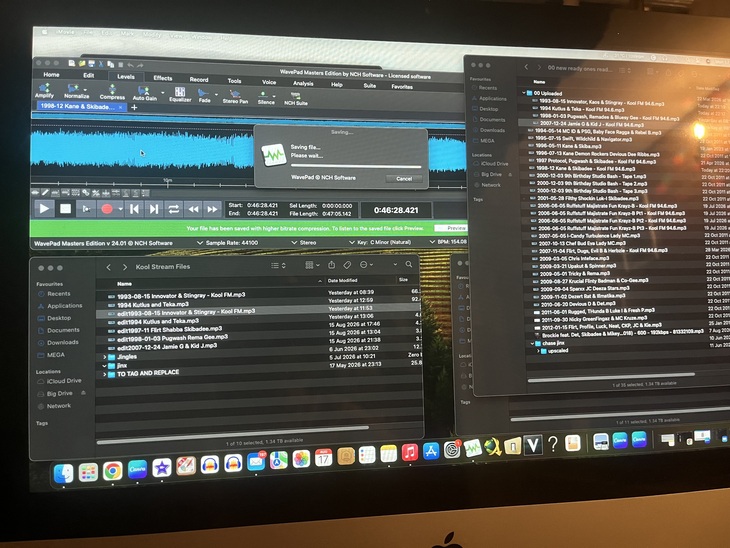
I'm not just preserving music, but people's memories of a particular period in their lives and an incredibly important period in London's musical history.
People get in touch after hearing a recording and tell me that it takes them back to a particular time in their life. They remember where they were living, who they were with, the clubs and raves they went to — or even just sitting in their bedroom with a radio or cassette recorder listening to Kool FM.
For some, it's incredibly nostalgic. They might suddenly hear a DJ or MC they haven’t heard for 30 years and it's like being transported back to being 18 or 19 again. For others it reminds them of lost friends or family.
I've had people tell me how much it means to them to be able to hear sets they thought had been lost forever.
Tune in to the Original Kool Archives, streaming 24/7.