Jack Jewers, author of Seething Lane, takes us on a trip down the historic thoroughfare.
Seething Lane is an unassuming little thoroughfare.
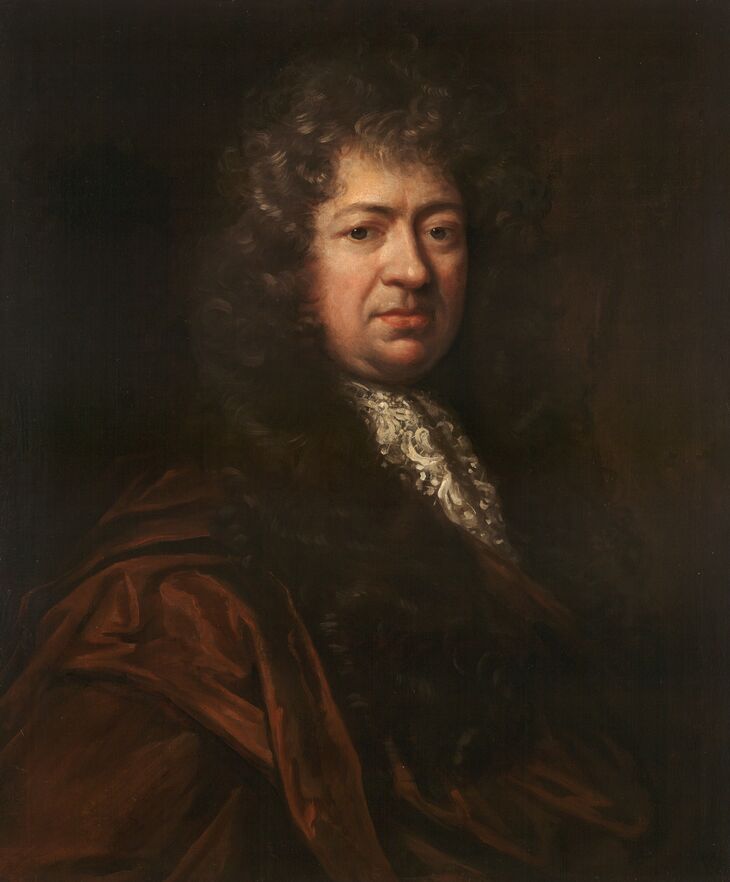
Barely 160 metres from end to end, it's tucked away among the warren of narrow byways that connect the Tower of London in the south with bustling Fenchurch Street to the north. But Seething Lane holds an essential place in the literary heritage of London, as the home of Samuel Pepys — the man who kept the most famous diary in English history.
Pepys lived and worked on Seething Lane from 1660 until 1673. For nine years of these years, he recorded his daily life in extraordinary detail. His writing can be funny and it can be tender. It is also racy, at times shocking, and utterly indiscreet. His diaries are frank and honest, whether or not they paint him in a good light — and frequently they don't.
"Pepys frequently complained about the quality of the sermons... which may be why he spent several of them lusting after the female parishioners"
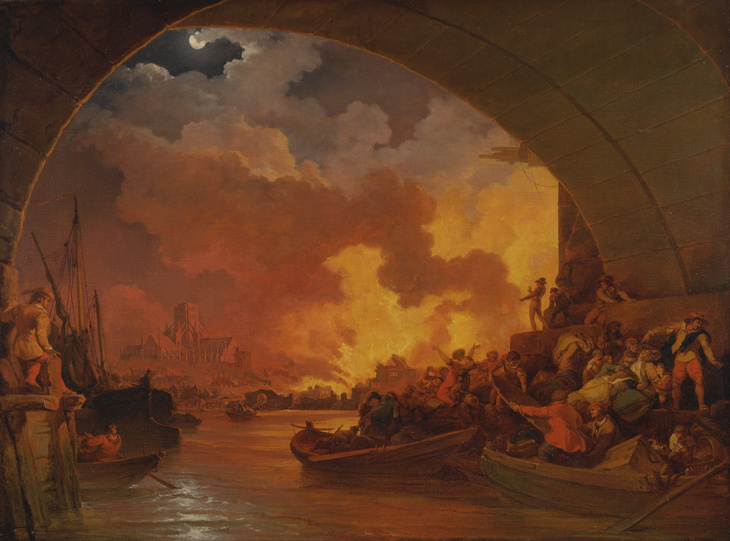
These diaries have become a staple of school history lessons, thanks to his powerful eyewitness account of the Great Fire of London. It’s hard to read Pepys' descriptions of people clambering onto boats with the flames at their heels, or pigeons falling to the ground with singed wings, and not feel a shiver down the spine. Fearing that his home was about to be engulfed by the blaze, Pepys took the precaution of burying some of his most valued possessions in his garden — including, famously, a Parmesan cheese.
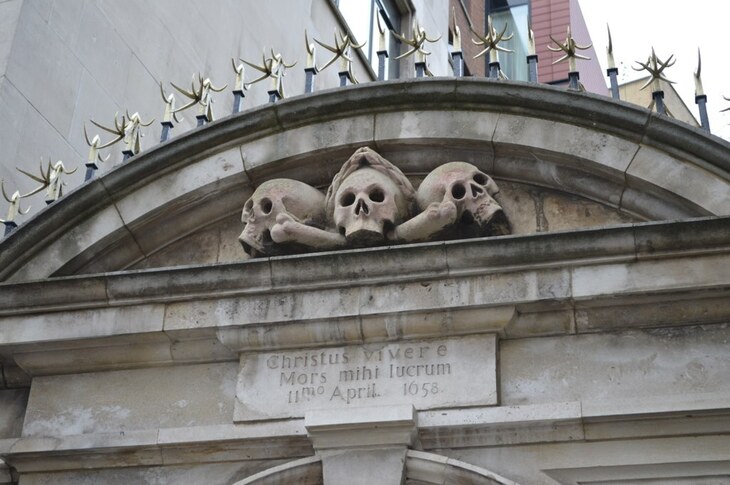
In the event, the fire didn't reach Seething Lane, but the street was not so lucky during the Blitz. On 17 April 1941, the medieval St Olave's Church, which sits on the corner of Seething Lane and Hart Street, was gutted by a bomb. The tombs of Samuel Pepys and his wife, Elisabeth, were spared from destruction by mere inches. The church still stands there today, painstakingly reconstructed, and is the only building on Seething Lane that survives from Pepys' time.
There are numerous references to St Olave's in the diaries, beginning on 19 August 1660, when Pepys and some colleagues went to demand they be given a pew (when told there were none available, Pepys resolved to have one built). He was a regular, though not always very devout, churchgoer. He frequently complained about the quality of the sermons, which may be one reason why he spent several of them lusting after the female parishioners. Today, St Olave's is a peaceful spot that makes much of its Pepysian heritage, with special services held in his honour, and an annual Pepys-related lecture in November.
"He drunkenly showed his lodgings to a boorish friend privately nicknamed 'Monsieur l'Impertinent"
We don't know precisely where Pepys' house was located, but it was no more than a few doors down from the church, on the west side of the street. It came as a perk of his job at the Navy Office, for which he was paid £350 per year. (Historical exchange rates are notoriously difficult to calculate, but that's somewhere around £100,000 in today's money). The first mention of their lodgings came on 14 July 1660, when he drunkenly showed them to a rather boorish friend called Mr. Butler — privately nicknamed 'Monsieur l'Impertinent.' Their moving day was set for 16 July, but had to be put off until the next day due to heavy rain.
The house consisted of around 10 rooms, with a small garden out back. We know it was large enough to sleep 16 on the night of 2nd March 1669, when the Pepys threw a grand house party — albeit with several guests sharing (Samuel and Elisabeth gave their room to three friends and slept in the maid's bed instead, noting with a certain surprise that it was "very good.")

"Pepys recorded beating the creature 'till she was almost dead,' as punishment for escaping her cage"
The diaries contain scant description of how the house actually looked, but as a grace-and-favour residence, it was likely smart, without being overly grand. Pepys certainly saw room for improvement and set about redecorating the place straight away, paying for new carpentry, plastering and a fresh paint job by the end of their first year as residents. We know that the dining room was finished in green with a fine, gold pattern.
Pepys continued to make improvements throughout the time they lived there, for example, adding a small balcony to their bedroom, completed only months before the Great Fire of London.
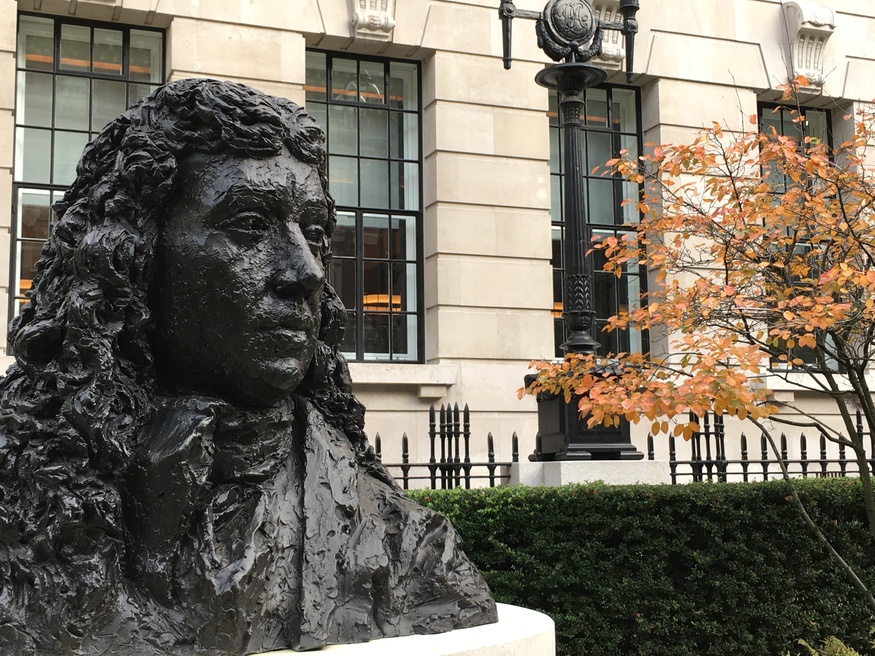
The site of the Navy Office is now marked by the Seething Lane Gardens. This idyllic enclave is criss-crossed by footpaths, converging on a bust of Samuel Pepys himself. The paths are inset with a series of carved stones. Designed by sculptor Alan Lamb in 2017, the carvings reference different events from Pepys' life. There are stones depicting the Great Fire, for example, and his beloved cheese. A pair of forceps represents an operation Pepys had to remove bladder stones (an ordeal he faced without anaesthetic), while carvings of a monkey and a lion refer to two exotic pets he kept at the Navy Office — the latter being a somewhat pointed gift, from a man whose wife he had been sleeping with for several years. Though the lion stayed in the office until it grew too large and was sent to live in the menagerie at the Tower of London, the monkey divided her time between the office and Pepys' home. It was here when, on 18 January 1661 — shockingly to modern eyes — Pepys recorded beating the creature "till she was almost dead," as punishment for escaping her cage.
"My contribution to Samuel Pepys lore has been to turn him into a reluctant detective"
In the winter of 1670, when my book, Seething Lane, takes place, not only was the city still recovering from the Great Fire — the rubble of its ancient, timber-framed buildings slowly replaced by brick and stone — but the capital itself was in the grip of a cultural resurgence. At the forefront of this was the bawdy, exhilarating world of Restoration theatre. Just a decade earlier, theatres had reopened in England after a ban that lasted nearly 20 years. And, most exciting of all, for the first time ever, women were allowed on the stage. London had a new cultural phenomenon: the celebrity actress. This new world in which Samuel Pepys found himself must have felt radically different to the one in which he'd grown up.
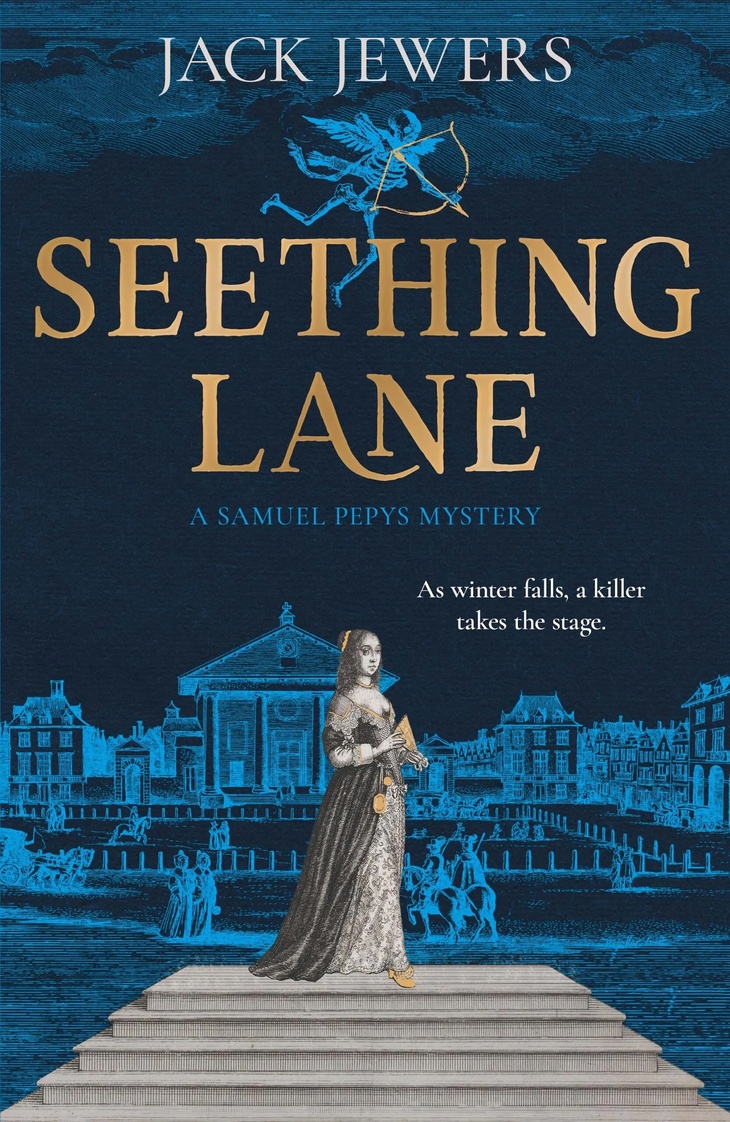
My contribution to Samuel Pepys lore has been to turn him into a reluctant detective, working on clandestine missions for the Crown. In Seething Lane, I send him into the glamorous world of Covent Garden theatres, where he is tasked with solving a brutal double murder. And Seething Lane itself sits at the centre of the action, a shadowy corner of historic London, where the very old sits alongside the very new. A place of sanctuary — and a place of danger. Because sometimes, the greatest threats lie closest to home…
Seething Lane by Jack Jewers, published in hardback, eBook and audio on 3 September 2026 by Moonflower.
Jack is also giving the annual Pepys lecture on 10 November 2026, at St Olave's.
We featured this book because we know it's the kind of thing our readers will enjoy. By buying it via links in this article, Londonist may earn a commission from Bookshop.org — which also helps support independent bookshops.