"Line upon line of soot-blackened buildings set among bombed-cleared spaces. Row upon row of big and little shops, cinemas, hoardings. A work-a-day, grey little suburb of South London. There is little outward evidence that this is the setting for the world's greatest experiment in human health..."
For a brief moment in time, one extraordinary building in Peckham revolutionised how the world approached health. But the Pioneer Health Centre was ahead of its time, and 90 years later, perhaps it still is.
"An oasis of glass in a desert of brick"
In the mid 1920s, George Scott Williamson and Innes Pearse — two pathologists working at the Royal Free Hospital — were rethinking the concept of health. Health wasn't, they reasoned, the absence of disease, but the full expression of life. And now they set out to prove this theory.
Williamson and Pearse established the Peckham Experiment, a makeshift 'health centre', in a rented house on Queen's Road Peckham. For sixpence a week, members (who must live "within pram-pushing distance") had access to a small range of activities and facilities, as well as health check-ups — whether they believed they were ill or not.
Peckham was chosen, not because it was a particularly unhealthy or poverty-stricken area, but because of its diversity of residents: artisans, labourers and professionals. When Williamson and Pearse began to examine members of the new club, two thirds were found to be less healthy than they thought. A lack of nourishment and exercise were to blame, but so too was a sense of isolation; a dearth of active community.
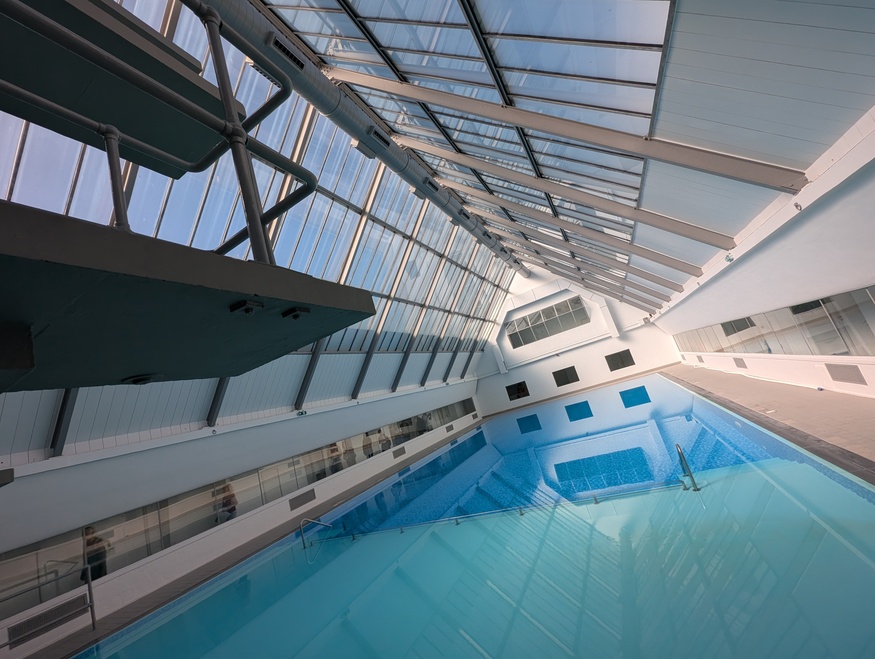
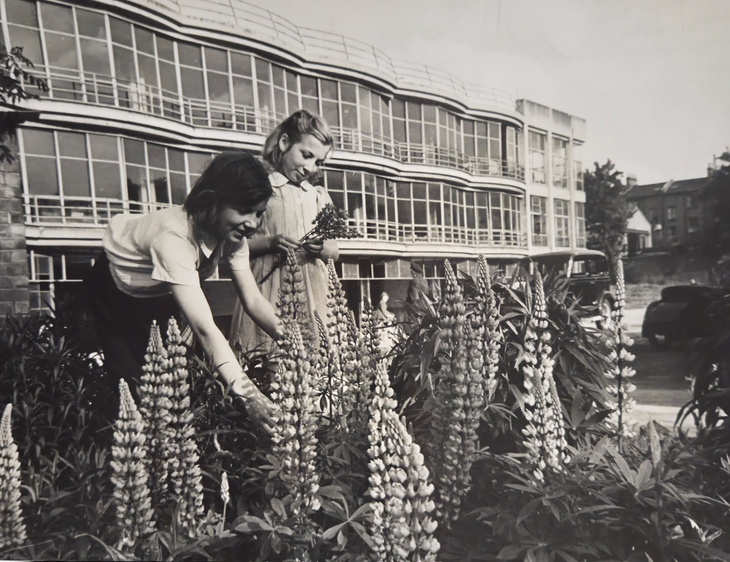
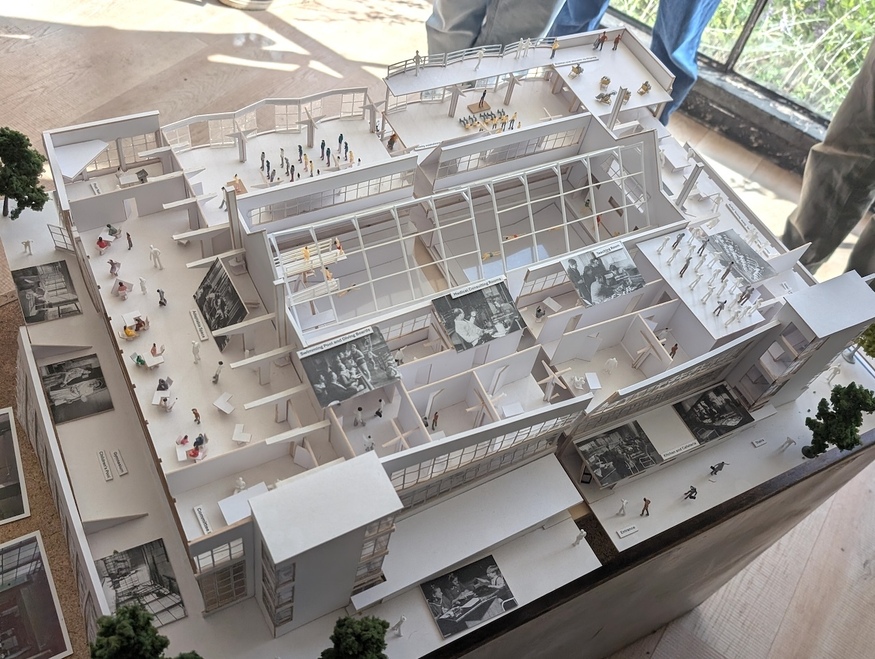
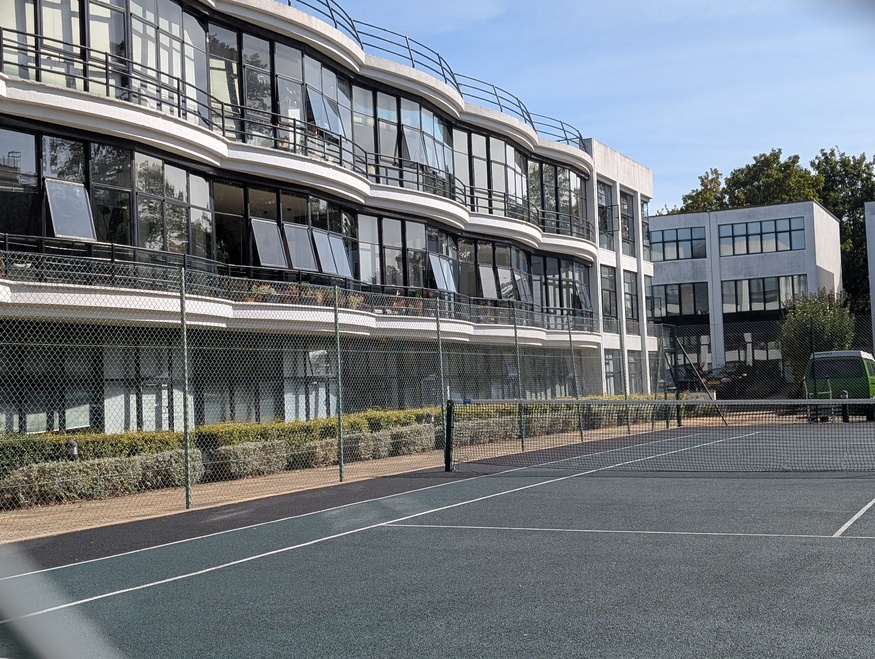
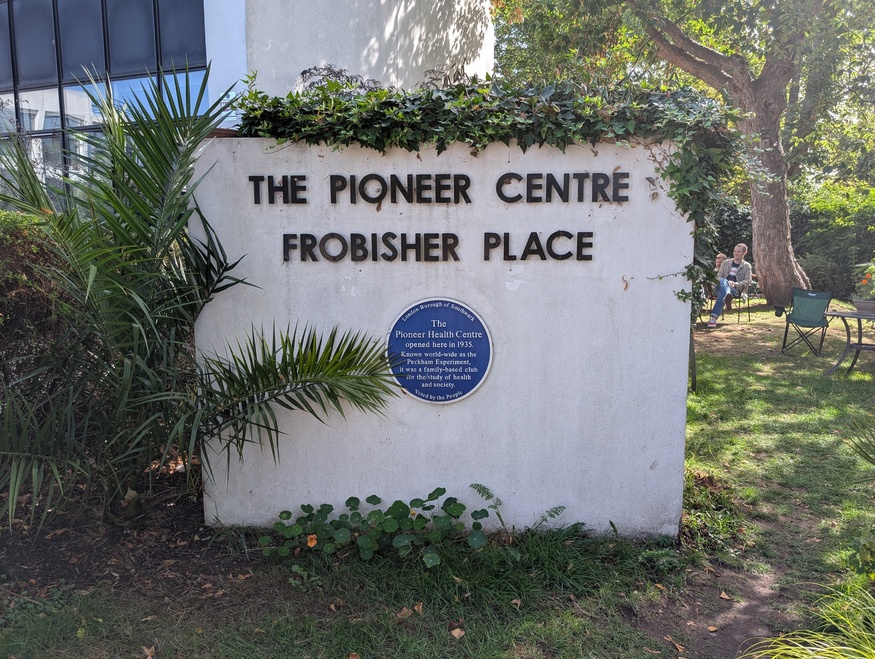
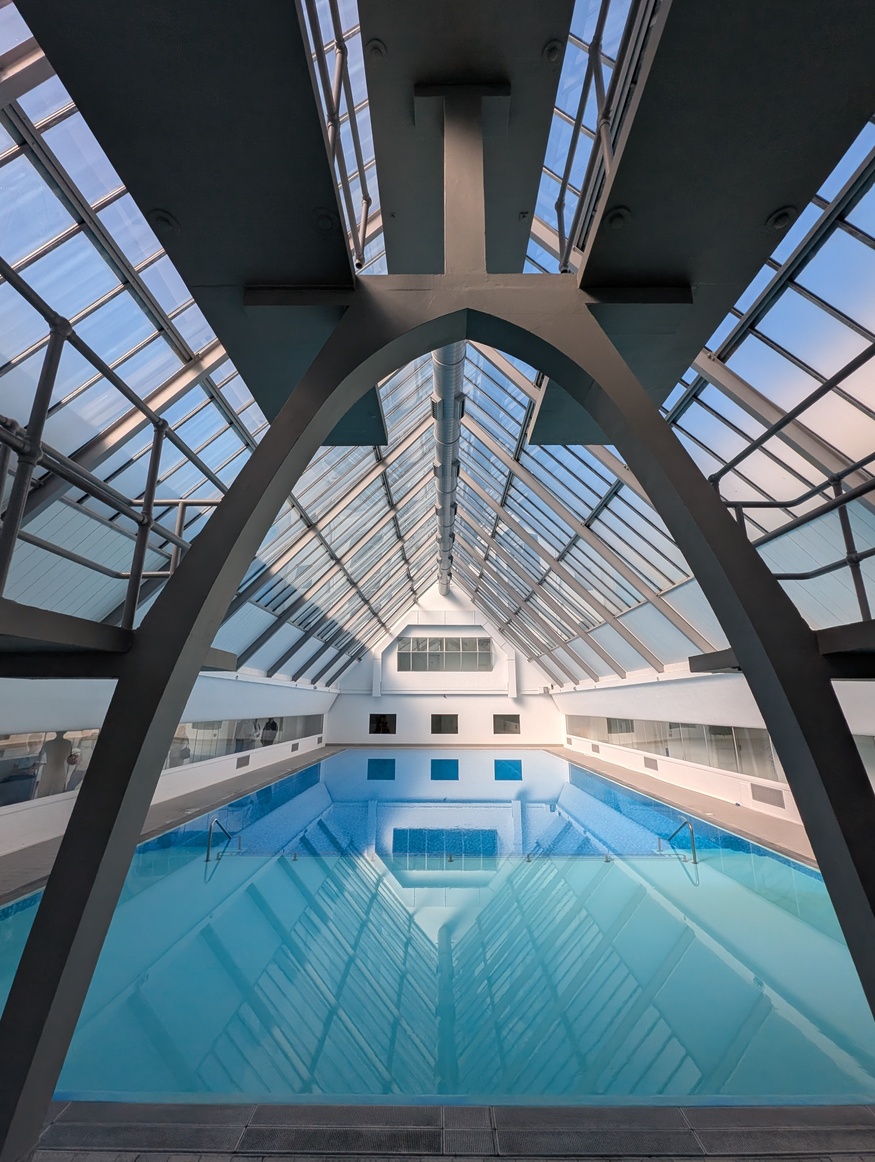
With a successful pilot under their belt, things were ramped up. In 1935, the Pioneer Health Centre was built on St Mary's Road — an uncanny new neighbour for those 'work-a-day' rows of terraced houses. The design might've been rattled off by architect Owen Williams in just 10 weeks, but it was revolutionary. Enshrouded in glass, it beckoned in natural light. Open planned — around a liquid 'heart' that was the swimming pool — it encouraged communal, flexible behaviour. The design also meant doctors could watch members at play, in this "laboratory of life". Bauhaus founder Walter Gropius extolled it as "an oasis of glass in a desert of brick".
"It was deemed by the founder to be the first health centre in the world, and by their reckoning it still is the only health centre," says Dan Liston, one of the three co-founders of the Peckham Experiment CIC, which celebrates the history and legacy of Williamson and Pearse's project. "Because actually this was not a building to treat sickness, but rather it was a building to nurture health."
"They can do what they like, when they like, as they like"
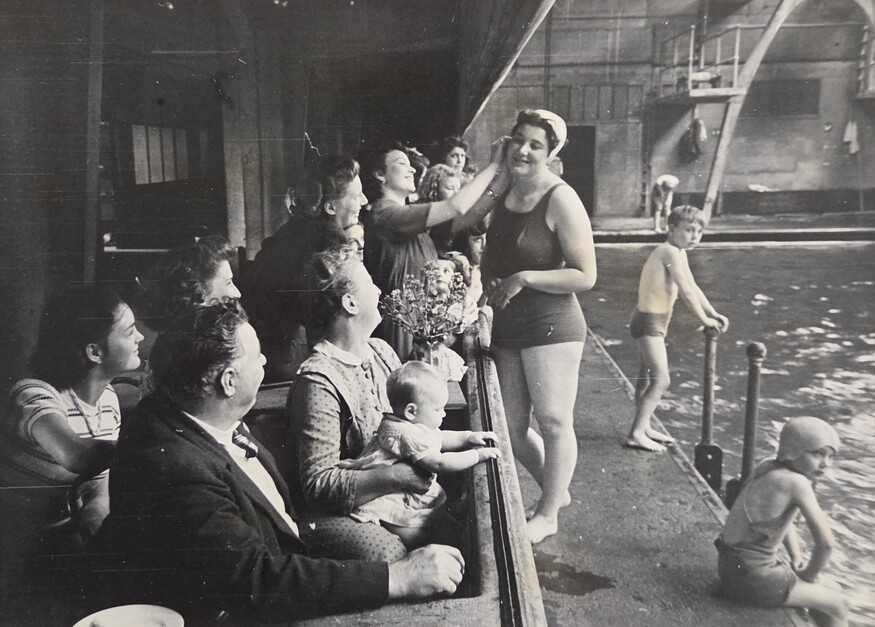
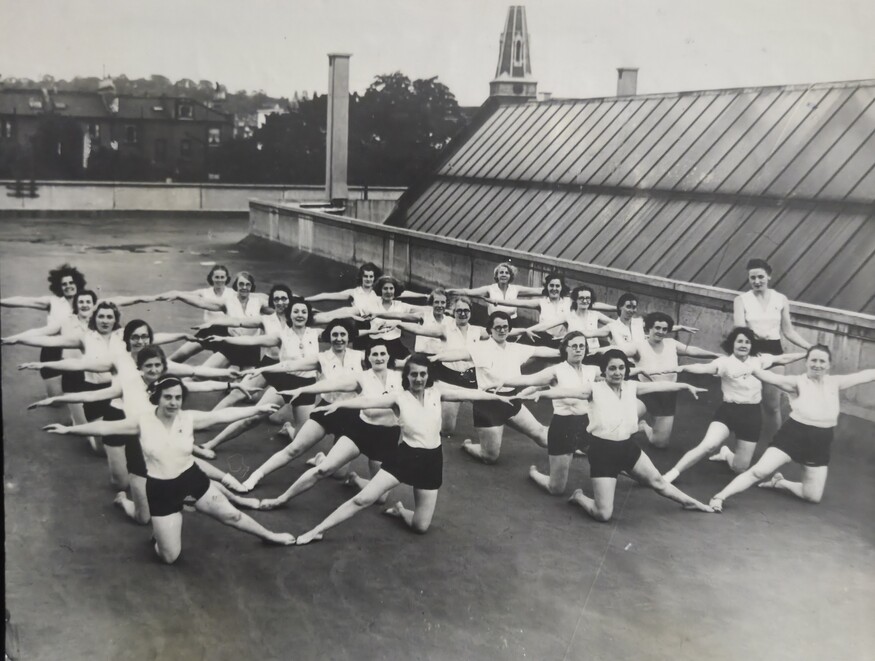
The Pioneer Centre was a forerunner to the leisure centres that began sprouting up in the UK in the 1960s, yet it was more than that alone. Aside from the pool, gymnasium and cafeteria, there was a library, a creche, a solarium and gardens. The canteen's food was plucked from a farm in nearby Brockley; organic and seasonal. There were classes for children, who learned through play, exploration and movement. "There is an air of real industry..." wrote the Times of one of these classes. "...There is comparative harmony and no perceptible adult direction here." Here was a village green, hall, church, school and pub rolled into one.
Few rules were set out, the founders recognising that members didn't want to be told what to do. As 1948 documentary The Centre (which you can watch above) put it: "They can do what they like, when they like, as they like." 'Everyday anarchy' evolved, activities arising spontaneously. Members created their own dance, the 'Pioneer Waltz'. Plays and revues were devised and performed. Competitions were held. The resulting sense of community and camaraderie played into Williamson and Pearse's reangled concept of health.
Many members benefitted directly from their time here. When 11-year-old member Maureen Baynton was sidelined from swimming after contracting glandular fever, she began playing on the Centre's billiard tables instead. She ended up being a multiple-time snooker and billiard champion.
Others cherish their memories of the Centre to this day; while being shown around, we bumped into Ken Marley, who came here every day after school as a child. He particularly loved rollerskating on the roof — an activity that features in the film The Centre.
It is hard to imagine the impact of such a place, and such radical, utopian thinking almost a century ago. Surprisingly, the press was overwhelmingly positive. The Peckham Experiment, supposed the Picture Post "may do more to revolutionise England than anything since the coming of electricity".
Ironically, some members were initially sceptical. In The Centre, a 'Mrs Jones' feels uneasy about the doctors: "I think they're cranks," she tells her husband, who's already been won over by the amenities and new friendships. "I'm not going to that place anymore." She comes around in the end.
"We've fallen in love with the building all over again"
Sadly, 'Mrs Jones' wouldn't have had long left to enjoy the Pioneer Centre.
Closed down during the Second World War, the Centre had rallied afterwards, its members clubbing together with brushes and tools to bring it back to its former glory. But this renaissance wasn't to last for long. In 1948 — the same year in which The Centre was released — the National Health Service took flight. Its approach to health was markedly different: treatment rather than prevention. The Pioneer Centre's subscription model was no longer sustainable. Come 1950, despite protestations from its founders and members, the Experiment was over.
Fortunately, Williams' landmark building lives on; since 2000, sympathetically repurposed into beautiful open-plan apartments. "I honestly don’t think I could go back to living in a traditional house now," says Nina Farrell, long-time resident, and another of the Peckham Experiment CIC's co-founders.
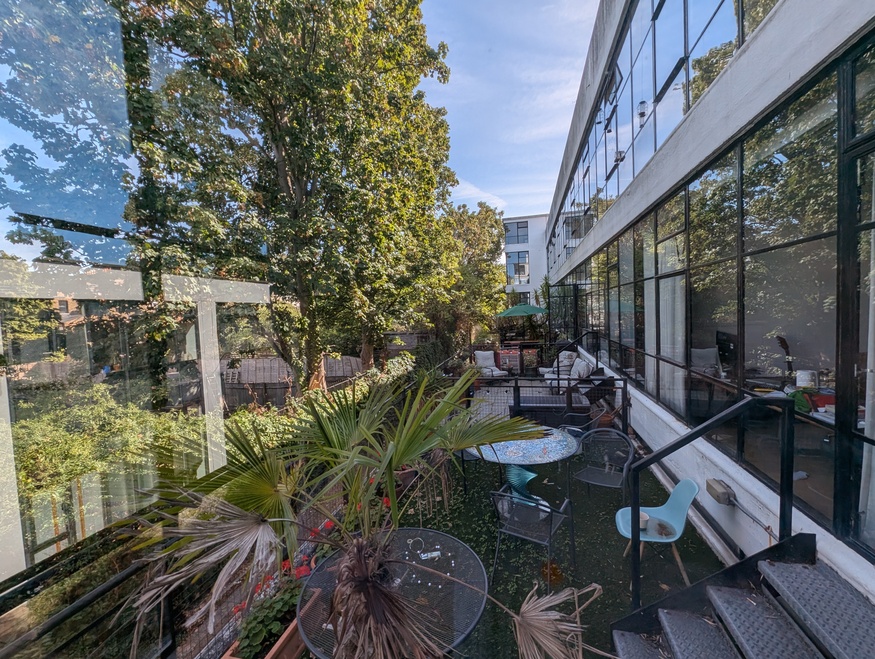
Within these apartments, a second-coming of the Peckham Experiment has emerged. "You never tire of having a swimming pool outside your front door," says Nina, "But the most special thing is the community. Some of us have lived here for more than 20 years.
"We've seen babies born here who are now adults, and over that time an incredible support system has grown around us. It really is true that it takes a village to raise a child.
"Like the original Experiment, it probably isn’t for everyone! You have to learn how to live together, respect each other's privacy and share facilities. There are compromises that come with that.
"But there is a sense of safety in having so many neighbours around who know your family and look out for one another."
Aspects of the Peckham Experiment live on in a wider context, too: the importance of eating organic, seasonal food is now widely recognised, if not yet widely implemented. Many teaching methods have grown to be more relaxed. Wellbeing clubs of one type or another can be found in every corner of London, and the country.
But because it all ended so abruptly — and without any concrete conclusions — you can't help wondering what might have been, were the Experiment allowed to continue and flourish in the post-war years. What if more centres like this had sprung up, offering a subsidised way to relax, exercise and interact? Would we be living in a more vibrant — and less insular — society?
"Surprisingly, the Pioneer Centre is still not widely known, even here in Peckham," says Nina. "For us, one of the first jobs of the CIC is simply to change that.
"We want to put the history and those questions in front of as many people as possible and see what happens next.
"If someone encounters the Peckham Experiment and it plants a seed that they take into their own work, neighbourhood, practice or way of thinking, then the legacy continues to grow. The centenary gives us an opportunity to open the story up again and see what a new generation might do with it.
"I don't think most of us really understood the full significance of the building when we first moved in. The more stories we uncover, the more former members we meet and the more we learn about what happened here, the more extraordinary it becomes.
"We've fallen in love with the building all over again."
Learn more about the Peckham Experiment on the official website. An in-depth archival website is also planned for the near future.
PEX 100: A Place to Belong is a free exhibition marking the story of the Pioneer Centre, and a centenary since the start of Peckham Experiment, is on at Copeland Gallery, Peckham 19-22 November 2026.
And by the way, apartments do show up for rent/sale here every now and then. Just in case you were interested.