Simon Wroe, author of Ghost Month — a novel in which the spirits of the dead return to London every September — shares five of his favourite literary ghosts which are supposed to haunt the city.
1. Sherlock creator's ghostly Albert Hall appearance
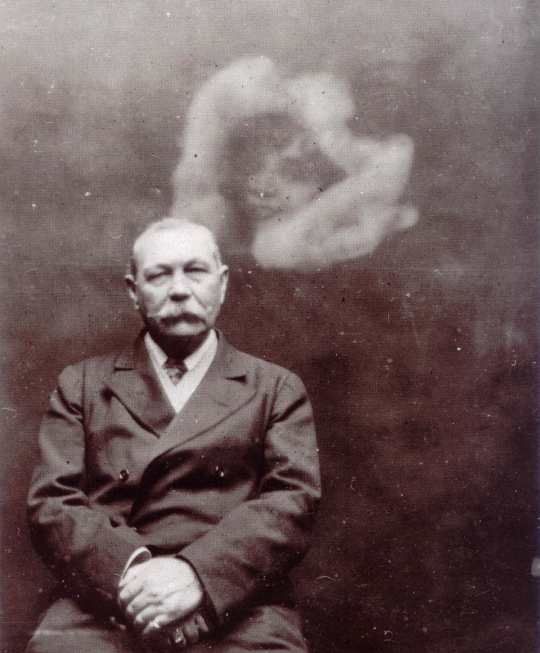
The creator of Sherlock Holmes, Arthur Conan Doyle, was a keen spiritualist and hunter of ghosts, but it is claimed he also became a ghost himself. Less than a week after Conan Doyle died in July 1930, the Spiritualist Association rented the Royal Albert Hall to commune with his spirit, even being thoughtful enough to leave an empty seat for the recently-departed next to his widow. 5,000 people watched as the medium, Estelle Roberts, summoned the writer's ghost, who was, according to Roberts, "wearing evening clothes". The ghost had a private message for his wife, but as the medium whispered it to Lady Conan Doyle, the Albert Hall's organ struck up and obscured the words from beyond the grave...
2. The vanishing hermit of Spitalfields
No one has claimed there is a poltergeist of the mysterious scholar Joseph Rodinsky, who disappeared from his attic room above a synagogue in Spitalfields in 1980. But there is something undeniably haunting about his story. Rodinsky lived like a hermit as the city changed around him. His door was always locked; his life unknown. His room was covered in indecipherable esoteric writings in 15 different languages, some of them long dead and barely known to a soul. He seemed to have been codifying the city in some way, or creating his own world system. Then, one day, he vanished leaving behind a half-drunk cup of tea and a pot of porridge on the stove.
3. The Woman in White
Wilkie Collins' mystery novel The Woman in White begins with a chance encounter at the intersection of the Hampstead, Finchley, West End and London roads, somewhere around where Finchley Road Tube station now stands. Walter Hartwright is stopped, his blood frozen, by "the touch of a hand laid lightly and suddenly" upon his shoulder. The hand belongs to a mysterious woman dressed all in white. Her name is Anne Catherick and she says she has escaped from an insane asylum. Whether Anne Catherick is or isn't strictly a ghost should not be spoiled here. But it's not hard to imagine her ghostly presence lingering on that stretch of the Finchley Road...
4. The floating head of Oliver Goldsmith
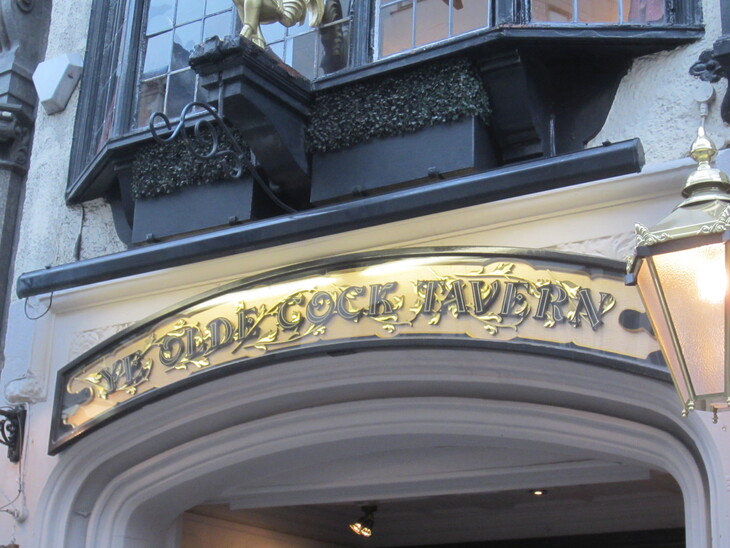
Stories circulate online of a young woman working at Ye Olde Cock Tavern in 1984, letting out huge screams at the sight of a floating, grinning head — supposedly the apparition of the 18th century poet and writer Olivier Goldsmith. It's probable that Goldsmith drank at the Cock on occasion when in the land of the living, and claims that he was buried outside the pub are semi-true; his final resting place is actually a couple of minutes' away, at Temple Church. But why, in death, Goldsmith's head would be severed from his body, when he wasn't decapitated, is a mystery. Makes for better haunting, presumably.
5. The fraudulent 'Scratching Fanny'
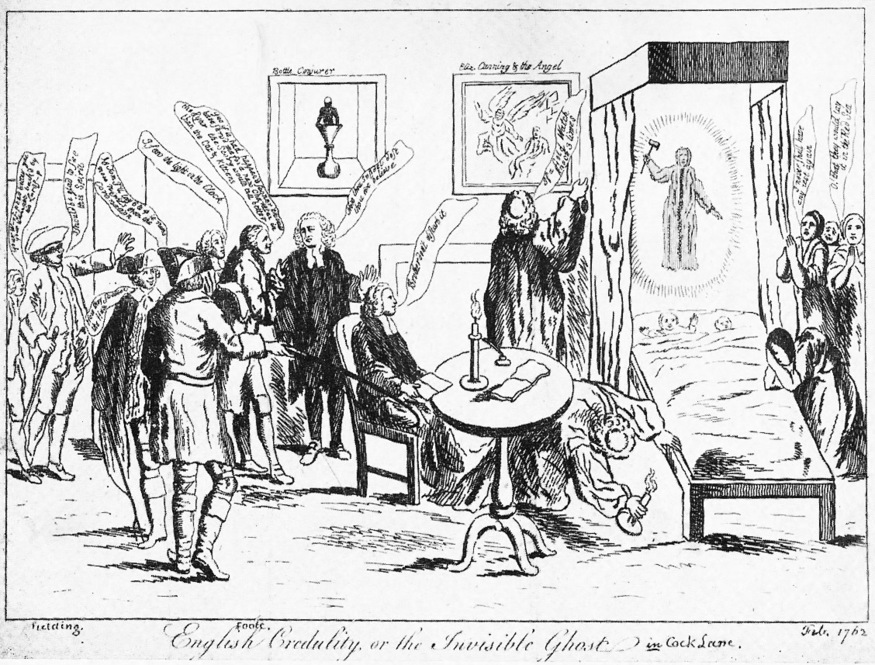
The haunting days of the Cock Lane ghost may be well over, but the legacy of this 18th century Smithfield spirit lives on. The ghost was said to be that of a murdered girl who, trying to communicate the tale of her killing and the identity of her killer. Her method of communication was scratching and knocking around the bed of 12-year-old Elizabeth Parsons, daughter of the house's owner, Richard Parsons. The story quickly became a sensation which engulfed literary London. Dickens was inspired by it. Hogarth depicted it (twice). Oliver Goldsmith satirised it. Samuel Johnson denounced the whole thing as a fraud, but not so strongly as to avoid being mocked for his credulity. The affair wound up in court, where the testimony of someone who claimed to have seen Scratching Fanny was met with howls of laughter. It wasn't a laughing matter for Richard Parsons in the end; charged with conspiracy, he was sentenced to two years in prison.
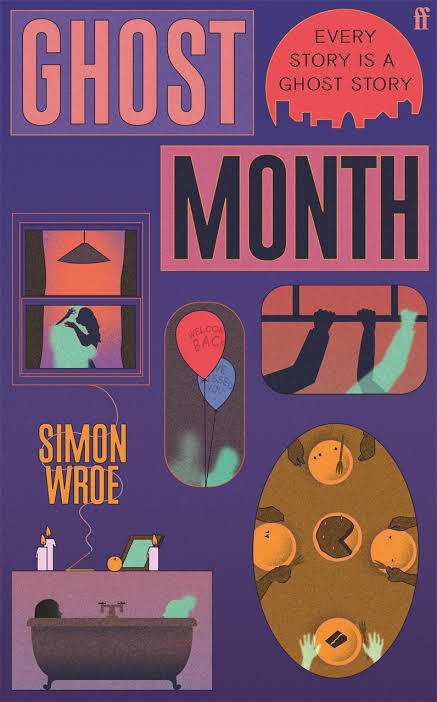
Ghost Month by Simon Wroe, published by Faber
We featured this book because we know it's the kind of thing our readers will enjoy. By buying it via links in this article, Londonist may earn a commission from Bookshop.org — which also helps support independent bookshops.