Drawing on 25 years of insider knowledge at Kew Gardens, Jonathan S. Farley has gathered chilling firsthand accounts of ghostly goings on from staff, visitors and the archive collection, to write his book Ghosts, Myths and Oddities of the Royal Botanic Gardens, Kew.
Here, we share five spine-chilling tales.
The Runaway Carriage
In the mid-1800s, an unsettling haunting was a frequent occurrence at Kew, captivating locals and staff alike. A phantom carriage was seen and heard on several occasions, a spectral replay of a long-ago tragedy. The vehicle was a 'High Flyer Phaeton', a notoriously unstable and lightweight carriage popular during the Regency era. Witnesses described the terrifying scene with consistent detail. The ghostly vehicle would appear, thundering down the path with a terrifying speed, seemingly out of control. The horse appeared to have bolted, its spectral form galloping furiously, while the driver desperately struggled to regain command. A female passenger could be heard screaming for assistance, her cries of panic echoing across the grounds. At a certain point, near the area of what is now the Wilderness, the entire scene would simply vanish, and the sound of the carriage, the horse's hooves and the woman’s desperate screams would fade away into silence.The haunting came to an abrupt end in the late 19th century. According to local folklore, during the laying out of the Royal Mid-Surrey Golf Course in the 1890s, a team of workers reportedly discovered a broken carriage wheel buried in the ground. Since that time, the phantom carriage has never been seen or heard again. It is believed that the discovery of the lost wheel allowed the trapped spirits of the driver and passenger to finally find peace, ending their perpetual reenactment of the fatal accident.
The Foggy Day Ghost
When a thick, still fog settles over Kew Gardens, visitors walking the Broad Walk may experience a peculiar and unsettling sound. From within the dense, grey silence, the unmistakable drone of a single-engine aeroplane with a rough-sounding motor can be heard. The sound seems to come from very low, as if the plane is just above the treetops. However, as the noise reaches its peak and the engine appears to be directly overhead, it abruptly cuts out, and silence returns. This eerie phenomenon is believed to be the phantom echo of a tragic aviation accident. While historical records are sparse, several small planes crashed in the area during the early days of aviation when the airspace around London was less regulated. The ghost plane's appearance is always tied to the conditions of a dense fog, a detail that hints at a pilot being disoriented by the weather. The sudden silence is the most chilling part, representing the final, fatal moment before impact.
The Phantom Hound
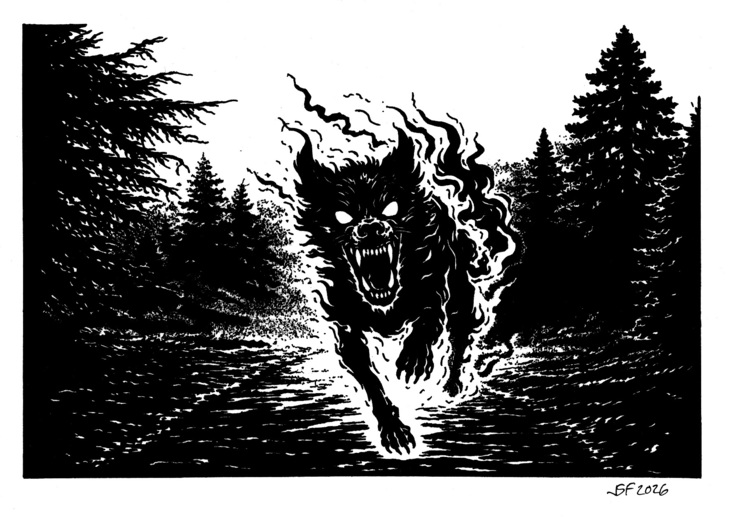
A ghostly black dog is occasionally seen running along Holly Walk. This apparition is considered to be a classic 'shuck' or 'wisht-hound', a spectral canine from British folklore. Aggressive, and sometimes accompanied by a low growl, its eyes are often described as glowing a fiery red. This behaviour, common to shucks across the UK, is explained by the belief that these animals are guard dogs that do not know they have died. Their loyalty is so profound that their spirits continue their earthly duties, defending a master, a home or a piece of land that is now long gone or fundamentally changed. The Holly Walk dog's ceaseless patrol is a poignant and rather sad reminder of a bygone era, a loyal servant forever on duty in a world that has long forgotten the need for its protection.
These Boots Are Made For Haunting
A phenomenon has been reported over a period of several decades. It involves a pair of men's leather boots, unmistakably Elizabethan in style, reaching just below the knee and weathered as if from years of use. These boots, by all accounts, walk entirely on their own. Witnesses describe the scene with remarkable consistency: the boots appear suddenly at dusk, always walking in the same direction and pacing steadily as if worn by an invisible figure. They don't shuffle or drag but move with the confident rhythm of someone walking with purpose. Their gait is too natural, too precise, to be the result of wind or mechanical trickery. And yet, no body, no shadow, no outline accompanies them, only the boots themselves, striding silently forward before vanishing just as abruptly as they appeared.
The most recent sighting occurred in 2008. The gardens had just closed to the public and two members of staff were walking back to the Herbarium from Museum No. 1, where they had been attending in-house training. As they made their way along the path, they noticed two shapes approaching in the distance. At first, they assumed it was a pair of foxes but as the forms drew closer, they were stunned to see a pair of knee-length boots walking upright, entirely on their own. The boots passed within touching distance, moving with the steady stride of an unseen wearer. When the staff turned to watch them continue down the path, the boots had completely vanished.
The Fairy Mimosa
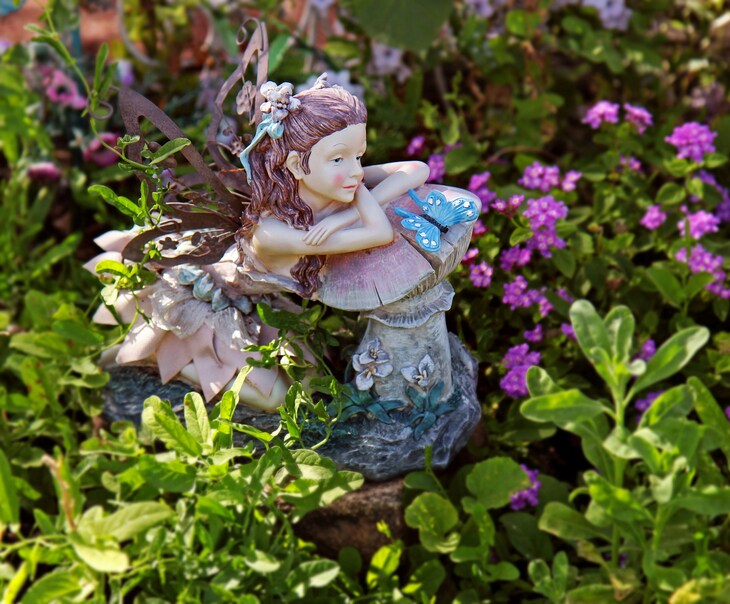
One of the more enchanting tales of Kew Gardens involves a benevolent spirit known as the Fairy Mimosa. The story dates back to at least the 1910s, when a child, whose family were not unknown to the director, reportedly became separated from their parents and was lost for several hours, instigating a massive search by Kew's Constabulary. The child was eventually found asleep on a bench near the main gates. When questioned, they recounted a magical story: after crying in distress, they were comforted by the Fairy Mimosa, who lived in a secret home within the Pagoda. The child claimed the fairy served them tea and cakes before they fell asleep, only to wake up on the bench. When taken back to the Pagoda, the child pointed to where the fairy's door had been but it was nowhere to be found. The myth was seemingly reinforced in the 1920s, when the father of the first child (a local vicar) was informed by the director that an almost identical incident had occurred again. A second lost child, with no knowledge of the previous story, was found asleep in the same spot. They too told of being entertained with tea and cakes by the Fairy Mimosa, who lived in a hidden cave under the Pagoda. These charming, parallel accounts have become a cherished part of Kew’s folklore, suggesting a protective, magical presence watching over the gardens' youngest visitors.
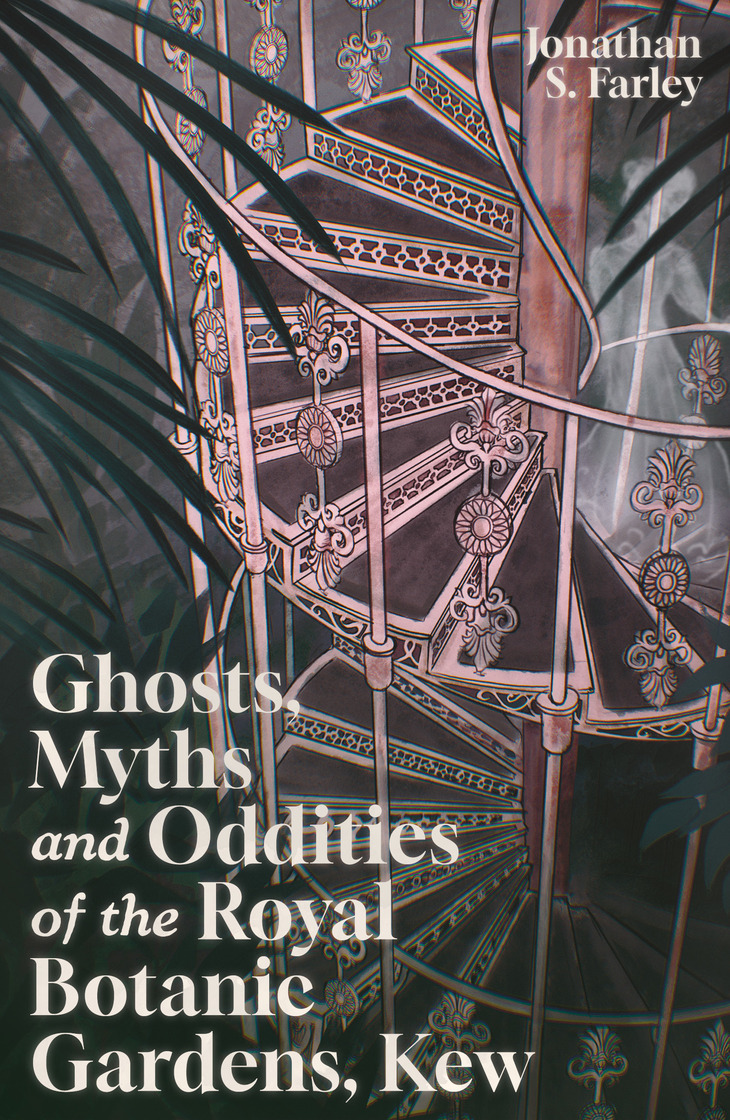
Ghosts, Myths and Oddities of the Royal Botanic Gardens, Kew by Jonathan S. Farley, published by the History Press