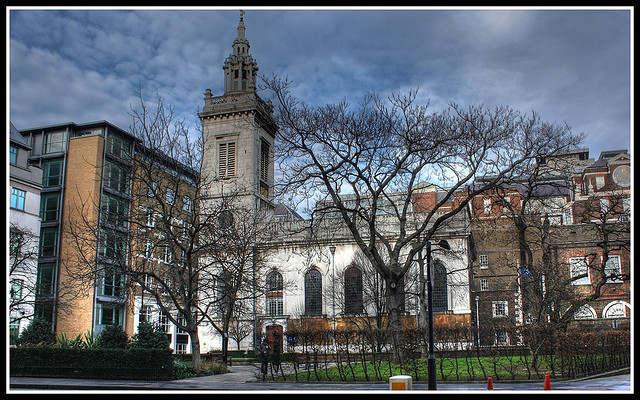
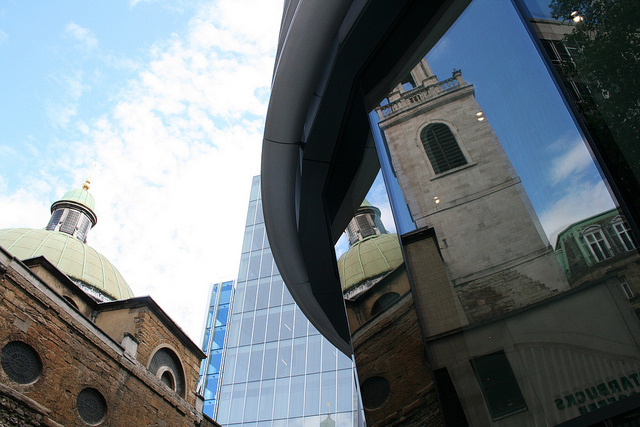
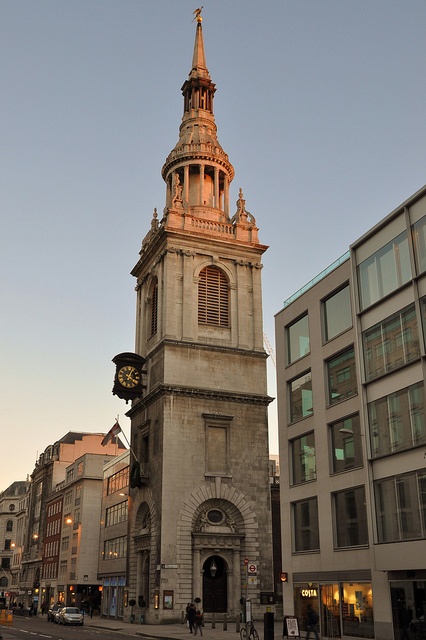
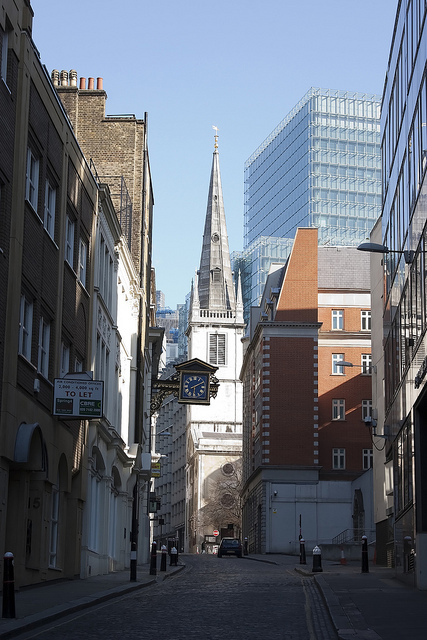


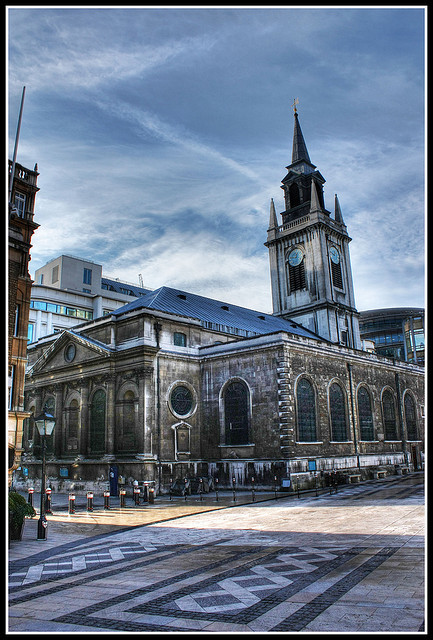

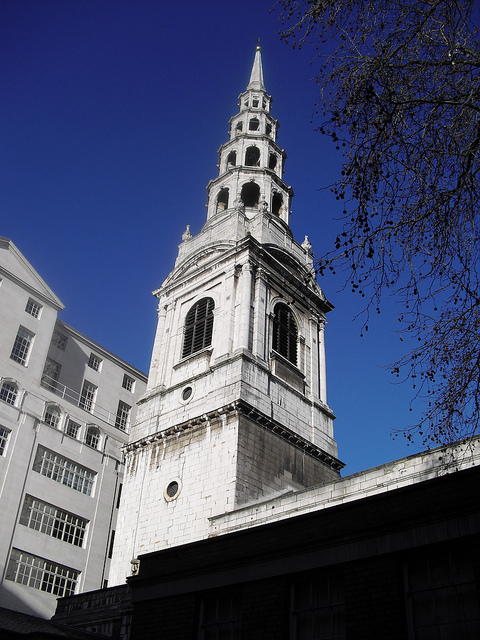

In a neat segue from last week's Glass and Steel, this selection looks at some of the dozens of churches built by, or under the auspices of, Sir Christopher Wren after the Great Fire of London. Today these numerous and magnificent pieces of architecture, whether built of red brick or Portland stone, are hemmed in by the commercial buildings of the City (see St Margaret Patten, St Vedast and St Bride's, above).
The spires of Wren's churches once dominated views of London. Describing a painting of the 1680s in his seminal biography of London, Peter Ackryod writes about:
"The great steeple of St Mary-le-Bow... followed by that of St Clements Eastcheap and St Peter upon Cornhill, St Stephen Walbrook and St Michael Crooked Lane, as well as those of forty-seven other churches designed by Wren and his colleagues."
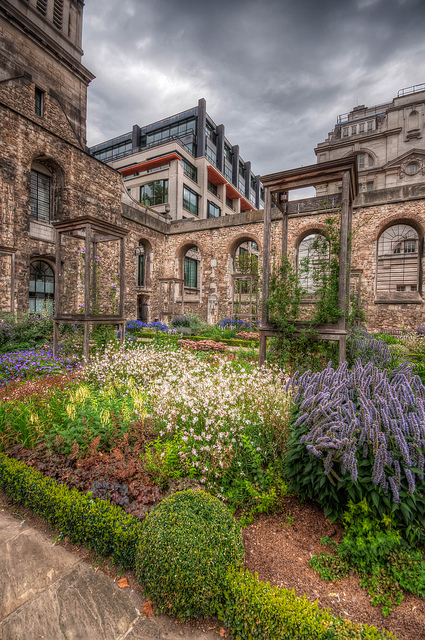
Just as Wren rebuilt churches of centuries standing after the Fire, many of his own buildings were damaged or destroyed in the Blitz and it is remarkable that so many survived. Even those that didn't, like Christ Church Greyfriars (last in the selection above) have been put to good use as public gardens.
Today, some face threats to their survival no less real (albeit less dramatic) than the Blitz. Decay, for example, is jeopardising the journalists' church, St Bride's (image nine). But whatever their usage, Wren's churches — like St Paul's towering above them — are as important to London as all the glass and steel in the world. All together now:
Oranges and lemons, Say the bells of St. Clement’s.
You owe me five farthings, Say the bells of St. Martin's.
...
With thanks to contributors to the Londonist Flickr pool for their images: Brron, tezzer57, Karenb Photos, Lux ex Tenebris, Downtime_1882, curry15, richwat2011, paulitzerPix and tonybill.