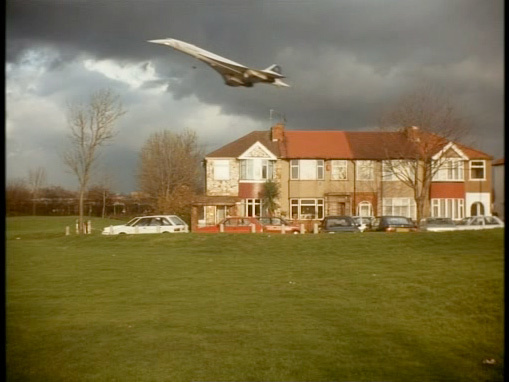
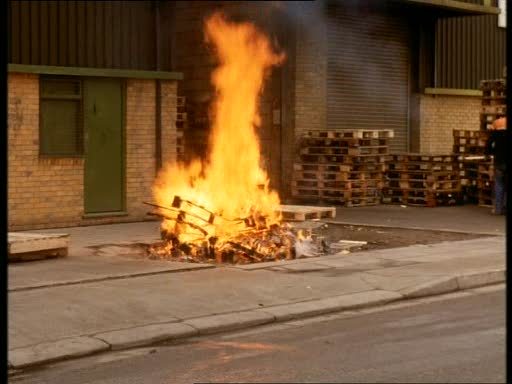
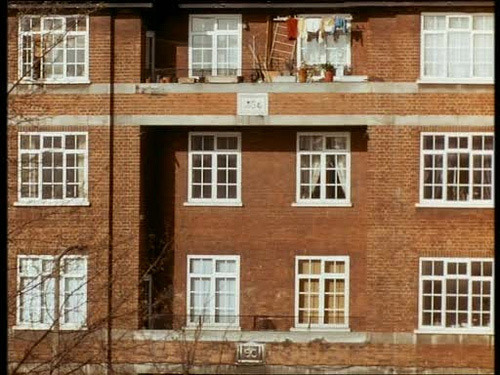
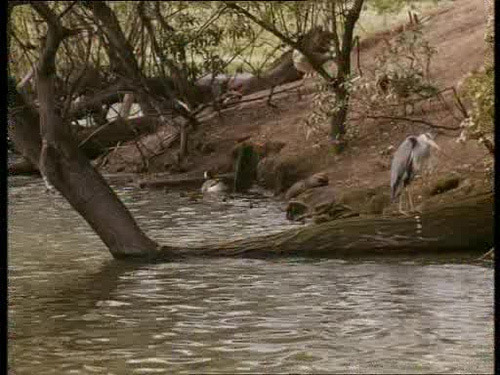
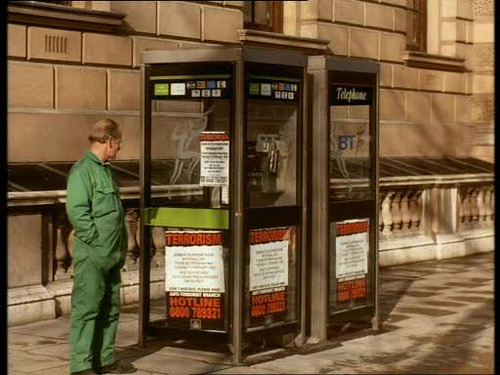
London Photo Hunt: Can You Identify These Mystery Locations?

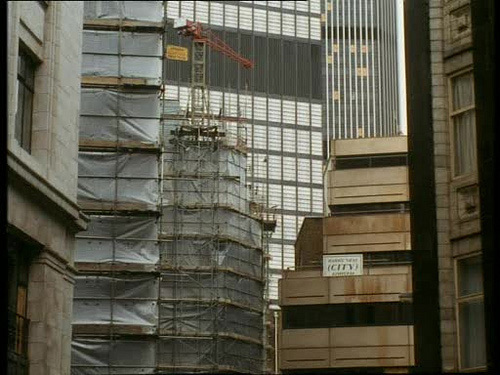
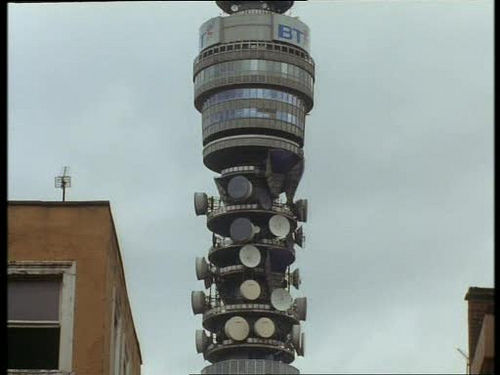
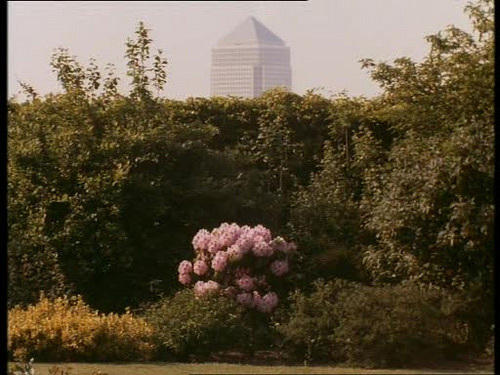
Do you recognise any of the locations shown above? If so, filmmaker James Bridle wants to know: he’s directing a shot-by-shot remake of Patrick Keiller’s 1992 film, London

Set in a city besieged by bombings, ballots, banking crises, and bristling ructions amongst the Royal Family, London is a remarkable document of the period. Avoiding the easy conventions of documentary and fiction, the film is narrated by an unseen, Rimbaud-quoting narrator who returns to the city after spending some time abroad; the audience accompanies him on a peripatetic journey around his old haunts, and in the process, paints a whimsical picture of a place suffering the depredations of recession, led by a crippled and uncredited government, and facing an acute identity crisis. An atmosphere, one might surmise, not unlike our own.

Back in 2010, filmmaker James Bridle has set out on the thankless task of re-shooting London, to show how the city has changed in the past 19 years. But he needs your help. Keiller’s film tramps high and low about the city, pitching out to Brentford, Dalston, the Isle of Dogs, Perivale, and often to nonexistent places, like the “University of Barking”. Scouting out all those locations isn’t easy. Click through the picture gallery and see if you recognise any, then drop a note here or in the Flickr group that James has set up.

Beyond our gallery above, here’s a complete list of the undiscovered locations. You can also visit the project website to see how the re-shoot is going.

  • http://undefined Matt

    I would say that this is quite possibly the worst idea I have heard all morning. @Londonist (join the fun and get on Twitter today, folks – I’m @Mankauf) asked me, “Why so? Won’t it be fascinating to see how places have changed in 20 years?”

    Whilst I agree that this would make for an astonishing photographic exhibition, planning to remake London shot-for-shot seems to me to be an entirely pointless ego-trip, as the film already grapples with themes of London’s change since the time of Rimbaud.

    Indeed, that is Robinson’s (the never-seen, never-heard main character whose journey is described by Paul Scofield’s Narrator) obsession, the whole point of his journey; it is his pilgrimage to the forgotten & decayed London of the Poets, now sunk and covered in grime. The changes studied in the film are over a hundred years, not 20. Has London’s face changed so much since the early 1990s? Re-filming London shot-for-shot, with the addition of a little glass and steel and some beige paving slabs, strikes me in fact as highly offensive (as remakes often are). The city changed an inordinate amount over the 20th Century. Since 1992 the only noticeable changes to London’s face seem to be the addition of the Millennium Dome and a slight increase in dog mess on the pavements, although not the popular white variety I recall from my youth.

    I find myself now very angry about this idea. Think about it: who would narrate such a piece, now that Mr. Scofield has passed on? A third-rate impressionist. Piss of the palest order, to steal a phrase.

    If London is London’s epitaph then it follows that a shot-for-shot remake would be akin to digging up its rotted bones and engaging in a practice which was made illegal in the United Kingdom under the Sexual Offences Act 2003.

  • http://undefined Matt

    I would say that this is quite possibly the worst idea I have heard all morning. @Londonist (join the fun and get on Twitter today, folks – I’m @Mankauf) asked me, “Why so? Won’t it be fascinating to see how places have changed in 20 years?”

    Whilst I agree that this would make for an astonishing photographic exhibition, planning to remake London shot-for-shot seems to me to be an entirely pointless ego-trip, as the film already grapples with themes of London’s change since the time of Rimbaud.

    Indeed, that is Robinson’s (the never-seen, never-heard main character whose journey is described by Paul Scofield’s Narrator) obsession, the whole point of his journey; it is his pilgrimage to the forgotten & decayed London of the Poets, now sunk and covered in grime. The changes studied in the film are over a hundred years, not 20. Has London’s face changed so much since the early 1990s? Re-filming London shot-for-shot, with the addition of a little glass and steel and some beige paving slabs, strikes me in fact as highly offensive (as remakes often are). The city changed an inordinate amount over the 20th Century. Since 1992 the only noticeable changes to London’s face seem to be the addition of the Millennium Dome and a slight increase in dog mess on the pavements (although not the popular white variety I recall from my youth).

    I find myself now very angry about this idea. Think about it: who would narrate such a piece, now that Mr. Scofield has passed on? A third-rate impressionist. Piss of the palest order, to steal a phrase.

    If London is London’s epitaph then it follows that a shot-for-shot remake would be akin to digging up its rotted bones and engaging in a practice which was made illegal in the United Kingdom under the Sexual Offences Act 2003.